The short version
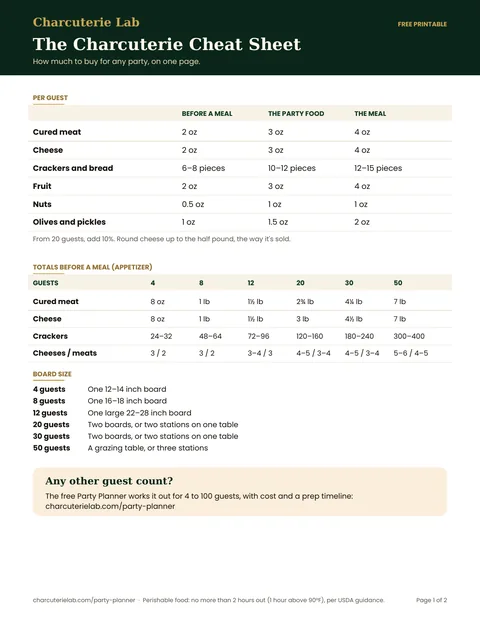
The most expensive common nut and the richest — roughly 75% fat, with a soft, almost creamy break. Macadamias don't crunch so much as give way. Use half an ounce a head, put them somewhere they'll be noticed, and don't try to make them the board's crunch element.
What it is
The seed of an Australian tree, grown commercially in Australia, Hawaii and South Africa. Sold roasted, salted, and sometimes honey-coated. The shell is the hardest of any nut, which is most of why they cost what they do.
- Taste
- sweet, buttery, faintly coconut, mildly milky
- Texture
- dense and soft; breaks rather than snaps
- Look
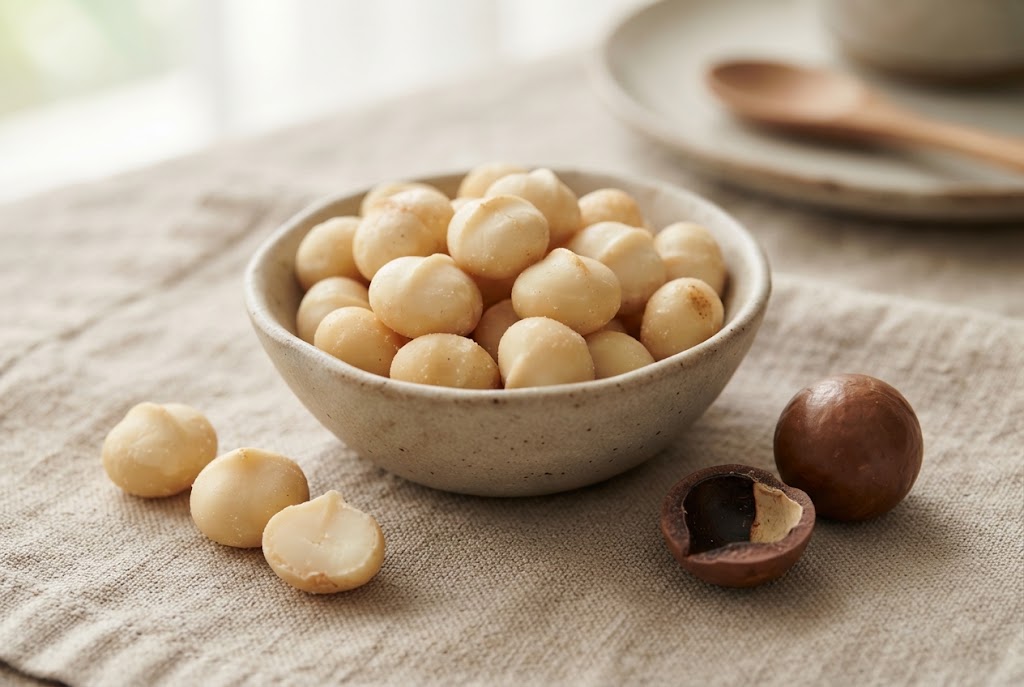
- pale ivory spheres, uniform and glossy
The mechanism is pure fat with no bitterness. Where a walnut cuts through richness, a macadamia adds to it — which sounds like a flaw and isn't, on a board where the cheese is sharp or the fruit is acidic. It works like a small piece of extra cheese, extending the finish rather than resetting it.
What it pairs with — and why
| Pair it with | Why it works |
|---|---|
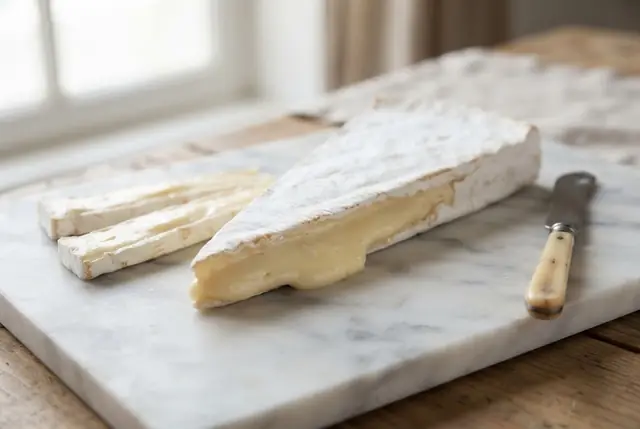
| Brie and soft-ripened cheese | Fat on fat, with the nut's faint sweetness reading like a cracker's would. Unusual and good. |
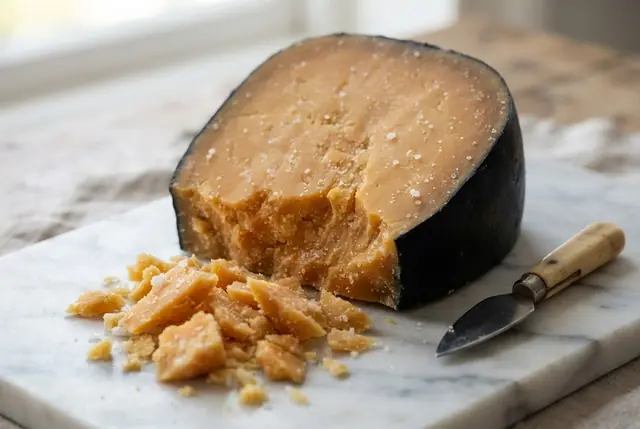
| Aged gouda | Butterscotch against buttery. Both sweet, neither sharp. |
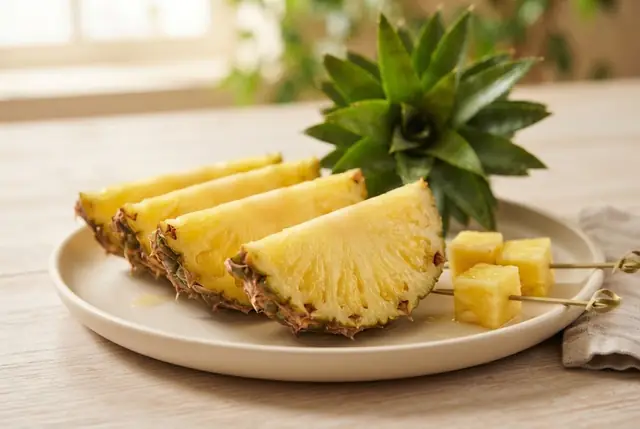
| Dried mango and pineapple | Tropical logic, and the fruit's acid is what the nut is missing. |
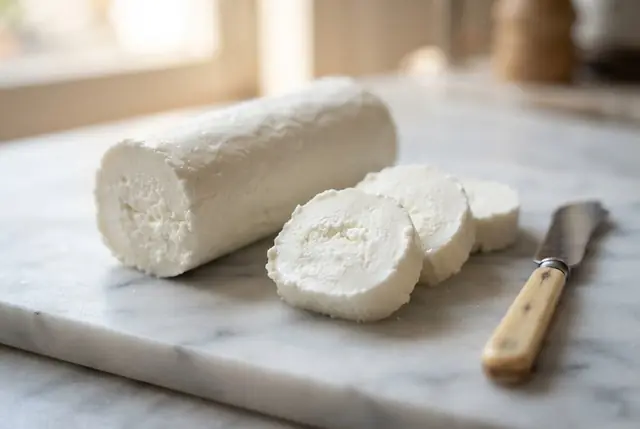
| Fresh goat cheese | Tang cutting fat directly — the clearest contrast a macadamia gets. |
| Dark chocolate | The classic confection. Dessert corner. |
| Honey | Drizzled, with sharp cheese. Very rich, and a small amount goes far. |
Skip it with: other rich nuts. Macadamias plus cashews plus brie is a board with no edges.
How to prep it for the board
- No prep. Buy roasted and salted.
- Serve in a small bowl and keep the quantity modest — they're expensive and very rich.
- Halve them if you want them to go further; the cut face looks clean.
- Serve 0.5 oz per person. Nobody needs more.
- Put something acidic nearby — citrus, tart fruit, a sharp cheese.
- Keep them cold. Very high fat means fast rancidity.
- Fix: bland? Under-salted macadamias taste of very little. Toss with flaky salt and warm briefly.
What to buy
| Product | Where | Notes |
|---|---|---|
| Roasted salted macadamias | Grocery, Trader Joe's, Costco | The default. Costco is the best value by a distance. |
| Hawaiian macadamias (Mauna Loa) | Grocery, gift shops | The famous ones. Good, and priced for tourists. |
| Australian macadamias | Specialty, online | Often fresher and cheaper than Hawaiian. |
| Honey-roasted macadamias | Grocery | Dessert corner. Very sweet. |
| Raw macadamias | Health stores | Milder and softer. Toast them lightly at 300°F for 6 minutes. |
Label check: they should smell sweet and milky. Rancid macadamias smell like crayons and it happens fast — check the date and buy small.
Skip: macadamia pieces, and anything that's been sitting in a warm shop.
Quick FAQ
Why are macadamia nuts so expensive?
The shell is extremely hard and the trees take years to bear. Processing costs drive the price.
Are macadamias good on a cheese board?
Yes, in small quantities. They're very rich, so they work as a luxury accent rather than the board's main nut.
What goes with macadamia nuts?
Brie, aged gouda, tropical dried fruit, fresh goat cheese, and dark chocolate.
How much per person?
Half an ounce. They're rich enough that people take two or three.
How do I store them?
In the fridge or freezer. Their fat content makes them go rancid quickly.