The short version
The plain square cracker that Britain and Ireland put cheese on by default. There's no cream in it, and it isn't a water cracker — it's flakier, drier and more absorbent than either name suggests. Buttered, with a slab of cheddar, it is the national cheese course.
What it is
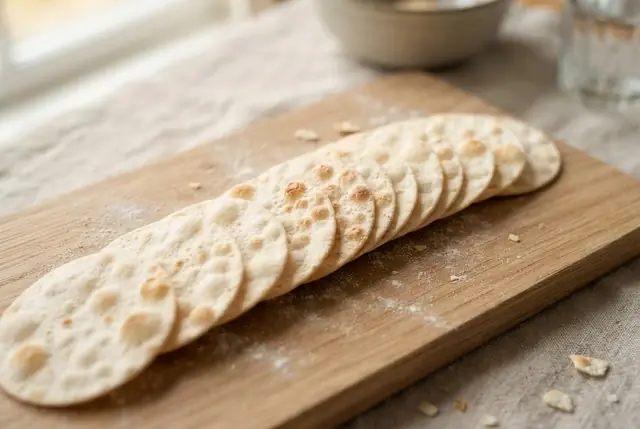
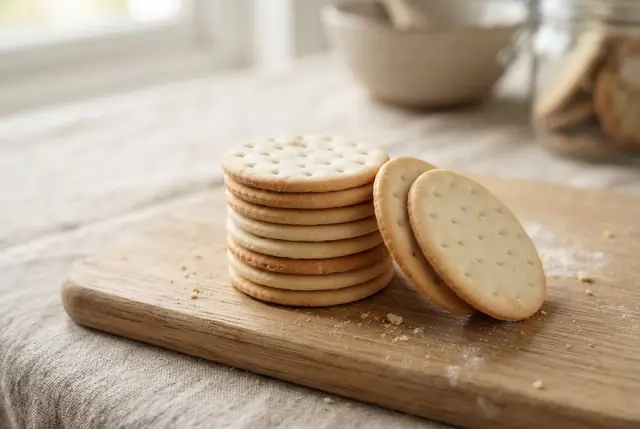
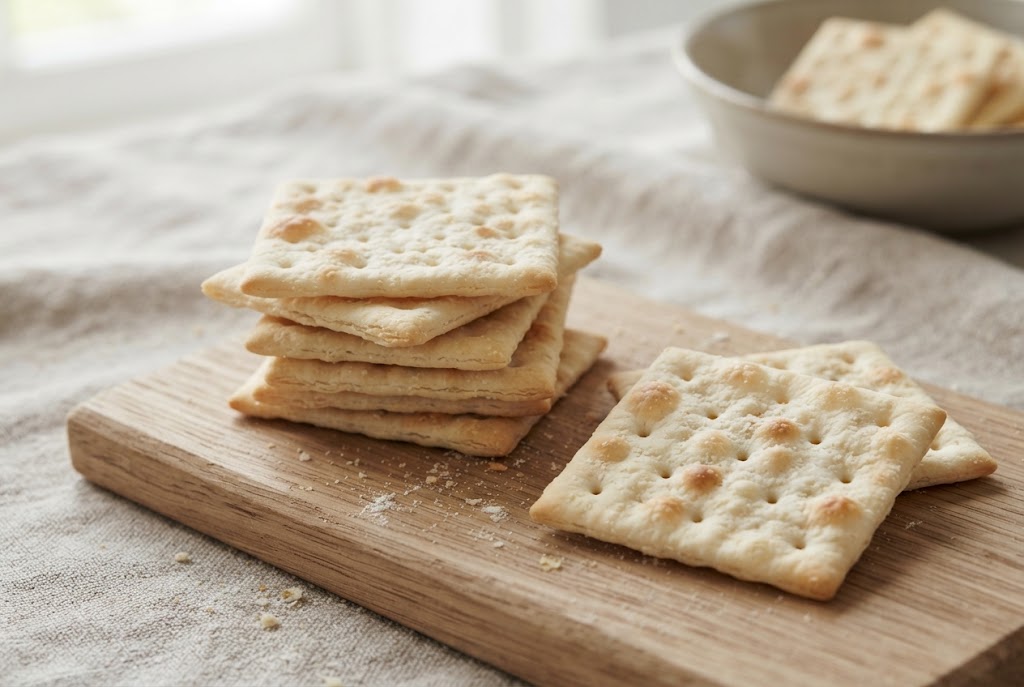
Cream crackers are made by a laminating process: the dough is rolled, folded and rolled again many times, which produces the layered, flaky interior. The name comes from the old technique of "creaming" the dough — beating it — not from any dairy. They're baked very dry and docked with holes to keep them flat.
- Taste
- plain, faintly yeasty, lightly salted
- Texture
- flaky and layered, dry and absorbent, crumbles rather than snaps
- Look
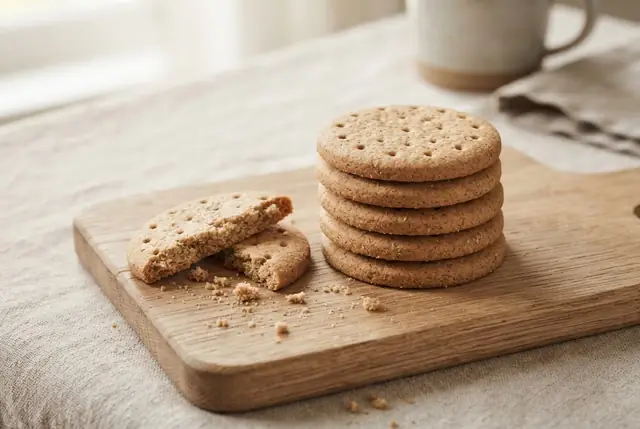
- pale square, heavily docked, slightly puffed at the edges
Absorbency is the mechanism, and it's the real difference from a water cracker. A water cracker is dense and glassy; a cream cracker is layered and porous, so it drinks up butter. That's why the British serve them buttered and the French never would — the cracker is designed to take on fat rather than stay separate from it.
What it pairs with — and why
| Pair it with | Why it works |
|---|---|
| Butter and sharp cheddar | The point of the cracker. The layers absorb the butter, and the cheddar sits on top. |
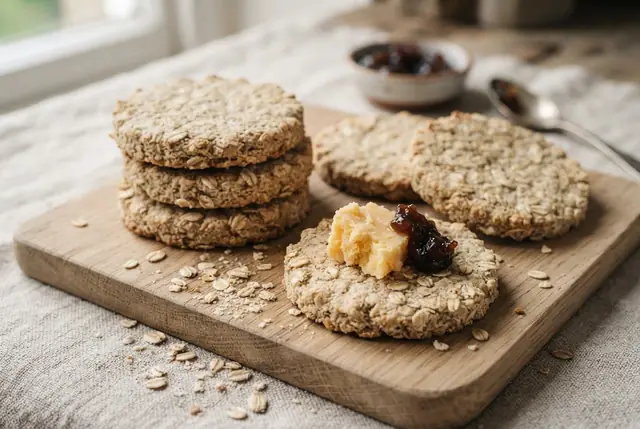
| Mature cheddar and chutney | The Ploughman's plate. Acid, sweetness and salt on a plain flaky base. |
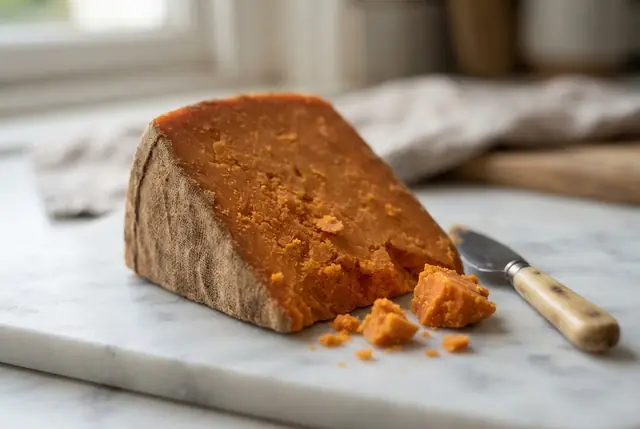
| Red Leicester and Wensleydale | British territorial cheeses, on the cracker they were meant for. |
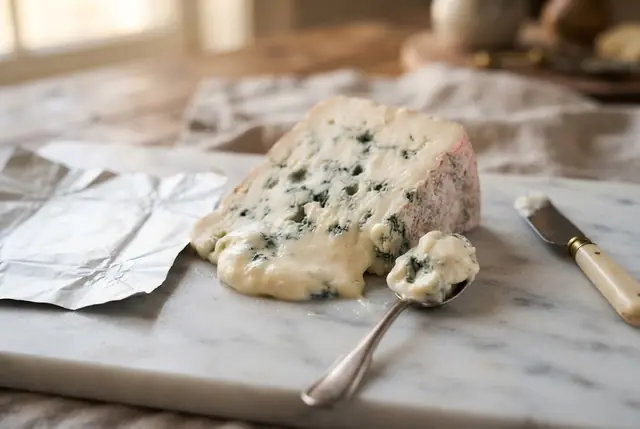
| Blue cheese | Dry and absorbent handles a wet, crumbly blue better than a glassy cracker does. |
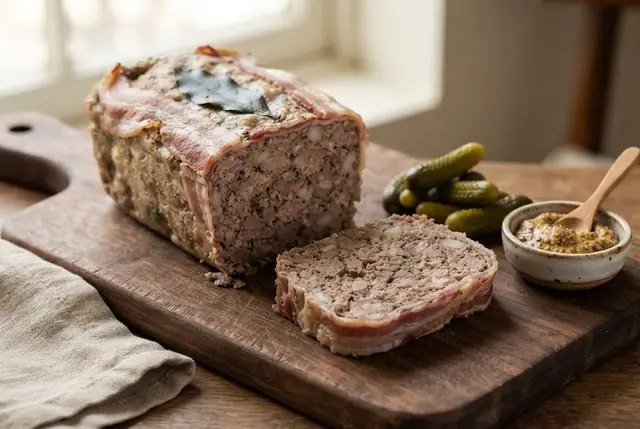
| Pâté and potted meats | The layers grip a soft spread instead of letting it slide. |
| Marmite, if you're brave | Genuinely traditional. Butter first, then a scrape. |
| Tea, ale, cider | The British cheese-course drinks. |
Skip it with: thick dips — they're dry and flaky and they break apart. And don't expect them to shine unbuttered; a plain cream cracker is dusty, and that's the most common American complaint about them.
How to prep it for the board
- Butter them, or put butter on the board. This is not optional in the British tradition and it's why the cracker exists. A dish of cultured butter next to them changes everything.
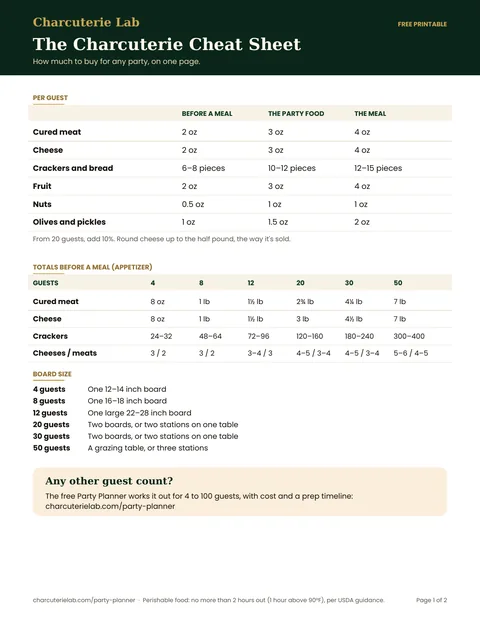
- Serve 3–4 per person.
- Stack them in short leaning piles. They're square and flat and they stack better than they fan.
- Put them next to the cheddar and the chutney, which is the plate they belong to.
- They dry the mouth. Make sure there's something wet nearby — chutney, pickle, a grape.
- Fix: they go soft in humidity and come back at 300°F for 3 minutes.
What to buy
| Product | Where | Notes |
|---|---|---|
| Jacob's Cream Crackers | Grocery international aisle, World Market, Amazon | The original and the standard. What "cream cracker" means. |
| Carr's Table Water Crackers | Grocery, cracker aisle | Not the same thing, but the closest widely-stocked American substitute. |
| Store-brand cream crackers | British import shops, Amazon | The category is consistent. Buy on price. |
| Saltines | Any grocery | The nearest American relative — yeasted, plain, salted. Different texture, same role. |
| A British import shop | Local, or online | Cream crackers are a staple there and cheaper than on Amazon. |
Label check: flour, oil, salt, yeast, malt. If you see sugar high in the list, you have a different biscuit.
Skip: buying these expecting a water cracker. They're flakier, drier and they need butter. Knowing that in advance is the difference between liking them and being confused by them.
Quick FAQ
Is there cream in cream crackers?
No. The name comes from an old dough-beating technique called creaming.
Cream crackers vs. water crackers — what's the difference?
Water crackers are dense, glassy and snap cleanly. Cream crackers are laminated, flaky and absorbent. The cream cracker wants butter; the water cracker doesn't.
How do the British eat them?
Buttered, with a thick slice of mature cheddar, often with chutney or pickle.
How many per person?
3–4.
Where do I buy them in the US?
The international aisle at larger grocery stores, World Market, British import shops, or Amazon.