The short version
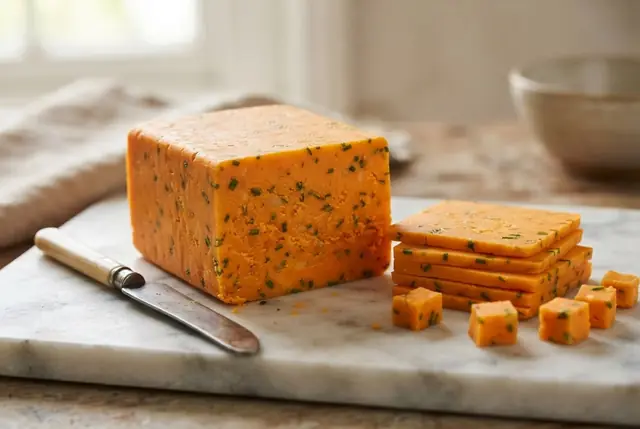
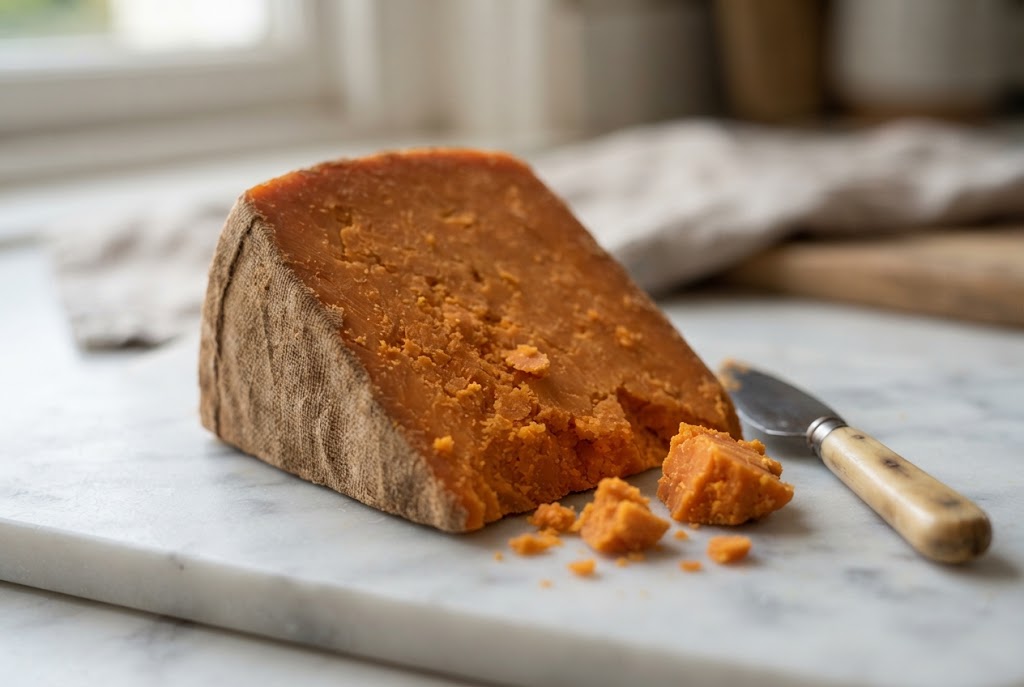
A firm English cheese, deep orange, milder and sweeter than cheddar with a flakier texture and a distinctly nutty finish. It's cheap, widely available and consistently underrated — the English cheese most likely to surprise someone.
What it is
Red Leicester has been made in Leicestershire since the 17th century. The color comes from annatto, added originally because a rich orange paste signaled a cheese made from good summer milk — over time the coloring became the standard regardless. It's made much like cheddar but pressed less firmly and aged shorter, typically three to nine months.
- Taste
- mellow, sweet, nutty, gently savory, faintly caramel
- Texture
- firm but flaky, crumblier and moister than cheddar
- Look
- deep orange-russet paste, dry natural rind on farmhouse versions
Lower pressing is the mechanism. Cheddar is stacked and pressed hard to expel whey, producing a dense paste that ages sharp. Red Leicester keeps more moisture, so it stays mellow and develops nutty and caramel notes rather than acidic ones — a different destination from a similar starting point.
What it pairs with — and why
| Pair it with | Why it works |
|---|---|
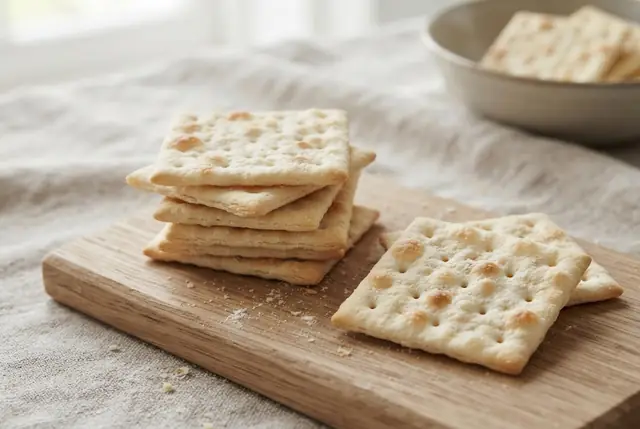
| Cream crackers and oatcakes | Plain English bases. The Ploughman's setup. |
| Chutney and pickle | Sweet and sharp against a mellow nutty cheese. The traditional service. |
| Apple and pear | Fresh acid against sweetness. |
| Walnuts and pecans | Tannin reinforcing the cheese's own nuttiness. |
| Grainy mustard | Sharpness the cheese doesn't supply itself. |
| Cured ham | Salt against mellow sweetness. |
| Ale, bitter, dry cider | English pub drinking. |
Skip it with: delicate fresh cheeses in the same corner. And don't serve it beside aged cheddar unless the comparison is deliberate — Red Leicester reads as the mild one.
How to prep it for the board
- Cut into thick chunks or short batons. It's flaky and a thin slice crumbles.
- Temper 30 minutes.
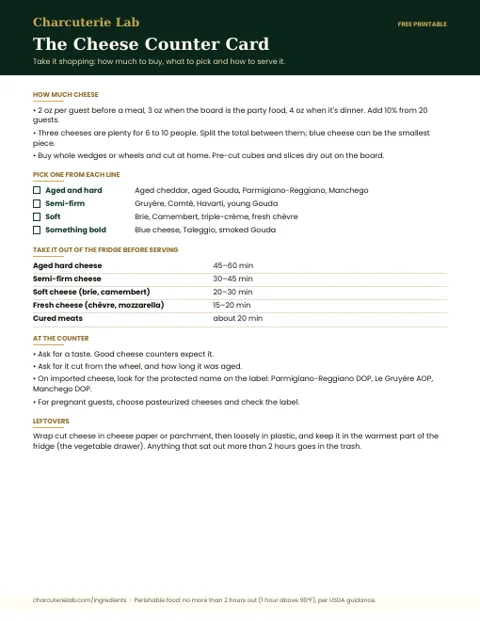
- Serve 1–2 oz per person. It's mild and people take plenty.
- Use it for color alongside pale cheeses — the russet orange is deeper and more natural-looking than Cotswold's.
- Put chutney beside it. This is a cheese that wants a sweet-sharp partner.
- Buy a farmhouse version if you can find one — Sparkenhoe is cloth-bound, raw milk and a different class of cheese.
- Fix: crumbling as you cut is normal. Break it rather than fighting it.
What to buy
| Product | Where | Notes |
|---|---|---|
| Sparkenhoe Red Leicester | Cheese counters, specialty, Murray's | Raw milk, cloth-bound, farmhouse. Genuinely excellent and a different cheese from the block. |
| Supermarket Red Leicester | Grocery cheese case, World Market | Mild, cheap, perfectly decent. |
| Double Gloucester | Cheese counters, Whole Foods | The other mild orange English cheese. Similar role. |
| Cotswold | Grocery cheese case | Double Gloucester with onion and chive — see its own page. |
| Aged cheddar | Any grocery | The sharper English standard — see its own page. |
| Wensleydale | Grocery, Whole Foods | Crumblier and tangier. Another English option. |
Label check: cloth-bound and farmhouse versions are a significant step up. Block Red Leicester is fine but forgettable.
Skip: assuming the color means flavored or aged. It's annatto, and it tells you nothing about the cheese.
Quick FAQ
Why is Red Leicester orange?
Annatto. It was originally added because a rich orange paste signaled cheese made from good summer milk; it became standard regardless of the milk.
Is it just orange cheddar?
No. It's pressed less firmly, keeps more moisture, and ages mellow and nutty rather than sharp and acidic.
What's the best version?
Sparkenhoe — a raw-milk, cloth-bound farmhouse Red Leicester. A different class from the supermarket block.
How much per person?
1–2 oz.
What goes with it?
Chutney, oatcakes and ale. The Ploughman's plate.