The short version
A plain, hard, faintly sweet biscuit created around 1750 by Dr. William Oliver, a physician in Bath, as something bland for his patients to eat. It became a cheese biscuit and stayed one for two centuries. Availability in the US is genuinely poor — this page is as much history as shopping list.
What it is
Dr. Oliver ran a spa practice in Bath and prescribed a plain flour-and-milk biscuit to patients whose diets he'd otherwise restricted. The recipe passed to his coachman, Atkins, along with a hundred pounds and ten sacks of flour, and Atkins made a fortune selling them. That story is on the biscuit itself — the traditional stamp shows Oliver's portrait.
- Taste
- very plain, faintly sweet and milky
- Texture
- hard, dense, snaps cleanly
- Look
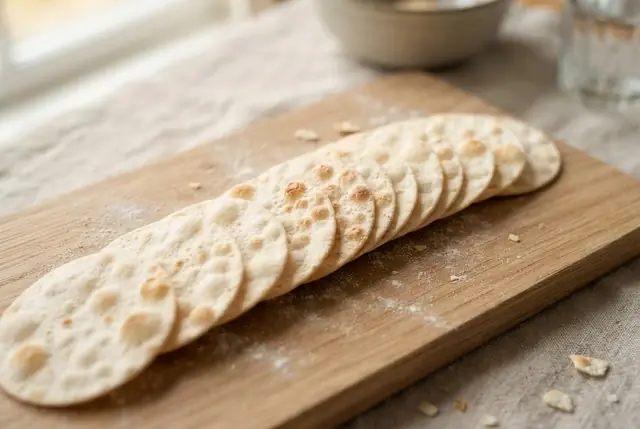
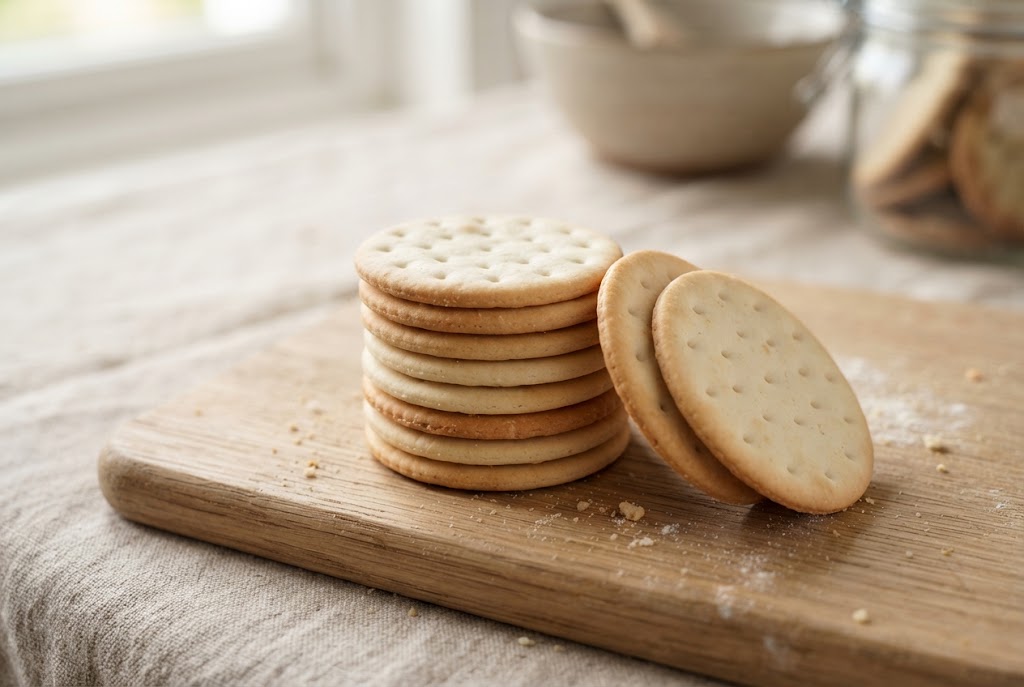
- pale round, docked with holes, traditionally embossed
Restraint is the mechanism, and it's the oldest idea in this whole section. The biscuit was designed to taste of as little as possible. That made it a good invalid food in 1750 and a good cheese biscuit ever since, for exactly the same reason a water cracker is: it doesn't interfere.
Availability warning: Bath Olivers have gone in and out of production and US distribution is unreliable. Check before you plan a board around them, and have the substitutes below in mind.
What it pairs with — and why
| Pair it with | Why it works |
|---|---|
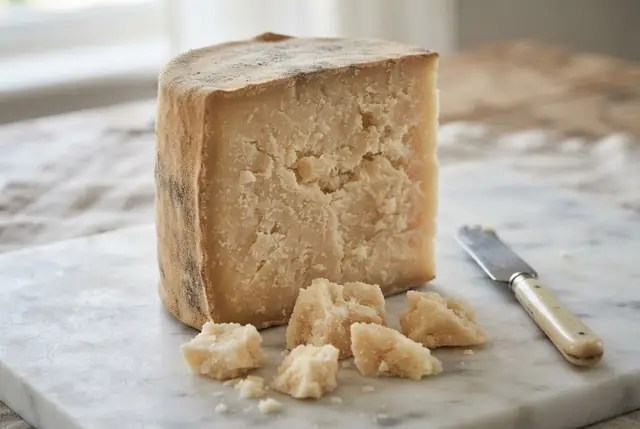
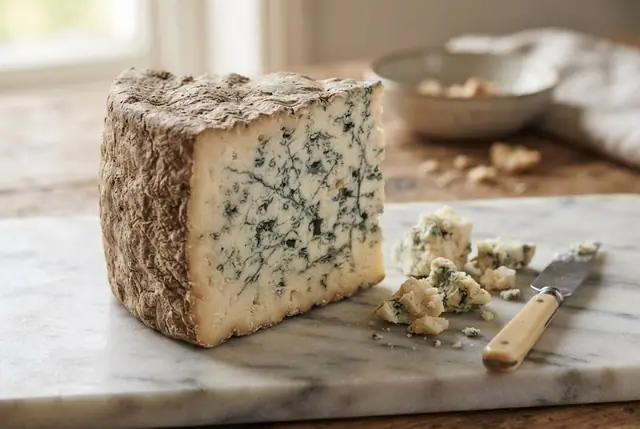
| Stilton | The traditional British pairing, and the reason the biscuit survived. Plain and hard against wet and salty. |
| Mature cheddar | Neutral base, loud cheese — the standard argument, made in 1750. |
| Butter and a hard cheese | The unadorned British cheese course. |
| Wensleydale and Cheshire | Crumbly territorial cheeses that need a firm base. |
| Quince paste or damson cheese | Sweet fruit paste on a plain biscuit. Very old, very good. |
| Port and sherry | The drinks this biscuit was served with for two centuries. |
| Chocolate-coated version, on a dessert board | The other historic use, and still made. |
Skip it with: thick dips — it's hard and it snaps. And anything modern and aggressive; this is a quiet biscuit for a traditional cheese plate.
How to prep it for the board
- Treat it as a water cracker with a story. Same role, same placement, and the story is most of what you're serving.
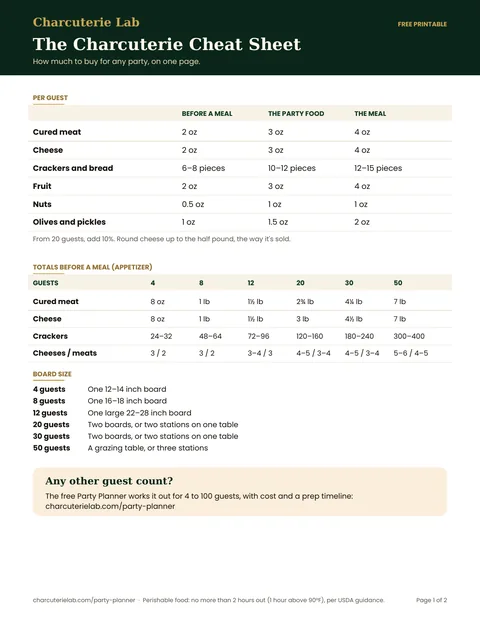
- Serve 2–3 per person.
- Put them next to Stilton if you're doing this properly, with a dish of butter beside them.
- Tell people what they are. The Dr. Oliver history is the reason to put these on a board rather than a Carr's — it makes a cheese course into a conversation.
- Don't build the board around them. Given how patchy supply is, plan a backup base and treat these as a bonus if you find them.
- Fix: they're hard and dry and they keep almost indefinitely. Little to go wrong.
What to buy
| Product | Where | Notes |
|---|---|---|
| Bath Oliver biscuits | British import shops, specialty online, occasionally Amazon | Availability is genuinely unreliable. Check stock before planning around them. |
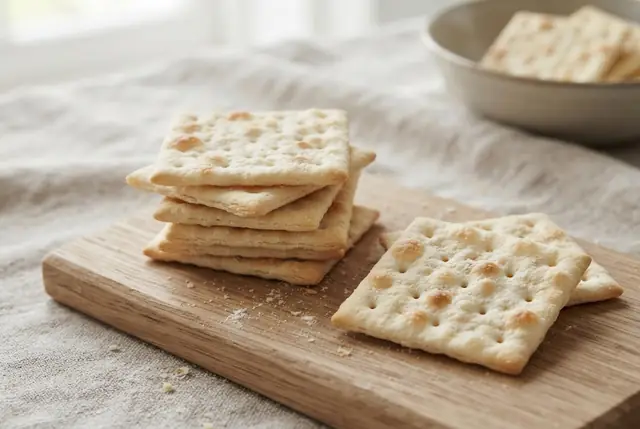
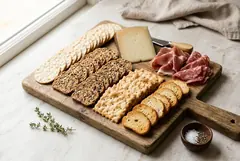
| Carr's Table Water Crackers | Any grocery | The closest widely available substitute. Plain, hard, neutral. |
| Jacob's Cream Crackers | International aisle, World Market | The other British option, flakier and more absorbent. |
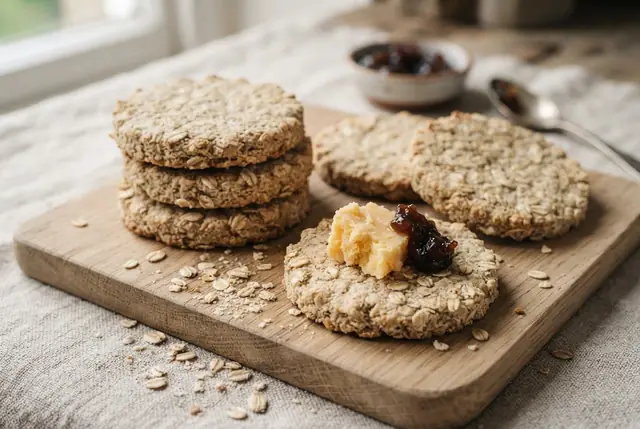
| Nairn's Fine Milled Oatcakes | Whole Foods, Amazon | Different flavor, same traditional-British-cheese-plate role. |
| A British import shop | Local, or online | If anyone has them, it's here. Worth an email before ordering. |
Label check: flour, milk or butter, a little sugar, salt, yeast. It's a short list — that's the biscuit.
Skip: planning a party menu around a product you haven't confirmed is in stock. That's the practical advice on this page.
Quick FAQ
What is a Bath Oliver?
A plain hard biscuit created around 1750 by Dr. William Oliver of Bath, originally as a bland food for his patients. It became a cheese biscuit.
Can I still buy them?
Sometimes. Production and distribution have both been intermittent, and US availability is poor. Check before you commit.
What's the best substitute?
Carr's Table Water Crackers for the neutrality, Jacob's Cream Crackers for the British character.
What cheese goes with them?
Stilton, traditionally. Then mature cheddar and the crumbly British territorials.
Why is there a face on the biscuit?
Dr. Oliver's portrait. It's been part of the traditional stamp for most of the biscuit's history.