The short version
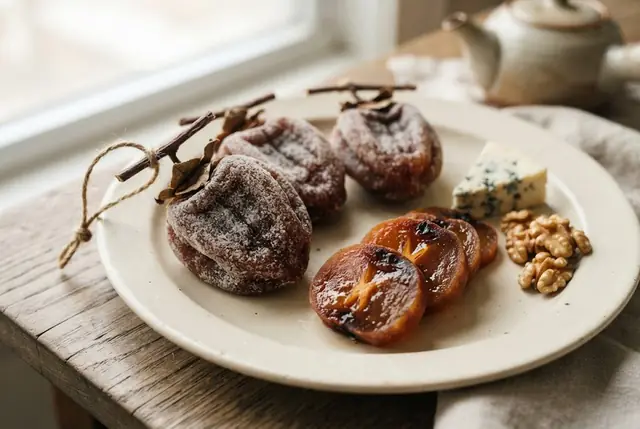
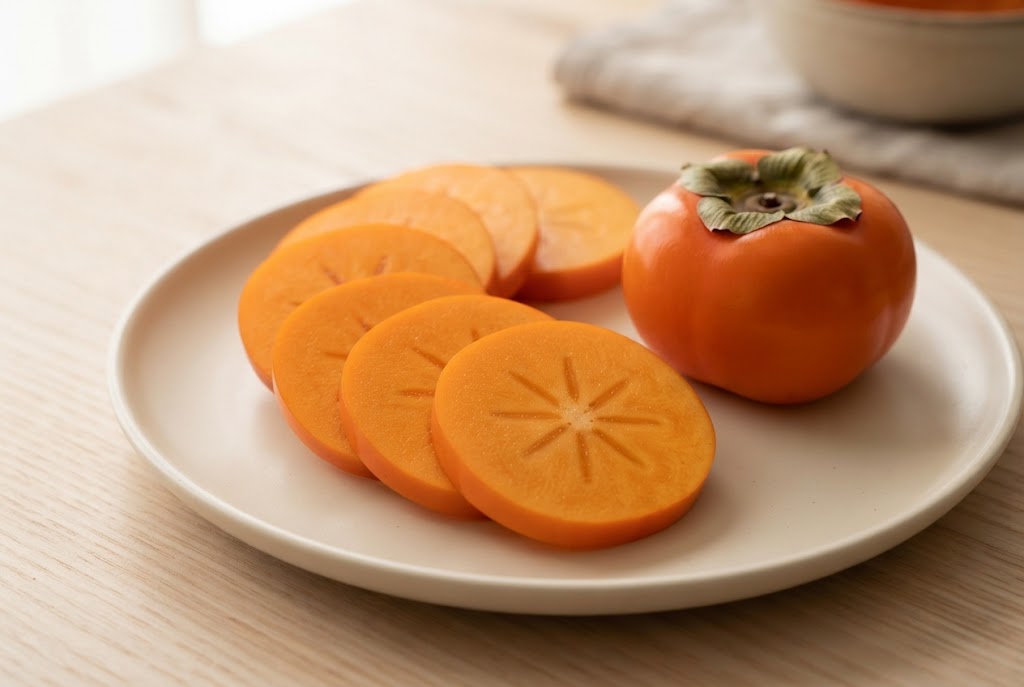
Two kinds exist and only one works on a board. Buy Fuyu — squat, tomato-shaped, eaten firm. Hachiya is acorn-shaped and astringent enough to dry your mouth out unless it's collapsing-ripe. Slice a Fuyu crosswise and you get glowing orange discs with a faint star pattern inside.
What it is
An autumn fruit, in season roughly October through December. Fuyu persimmon tastes like a cross between a mango and a firm apricot, with the texture of a crisp pear. No peeling, no coring, almost no prep.
- Taste
- honeyed, mild, faintly cinnamon
- Texture
- crisp and dense, like an apple that gives slightly
- Look
- deep orange discs, translucent at the edges
The mechanism is sugar without acid. Most board fruit — grapes, apples, citrus — brings acid to cut fat. Persimmon brings almost none, so it behaves like a soft sweetener beside salty things instead of a palate scrubber. That makes it a partner for cured meat rather than a competitor to it.
What it pairs with — and why
| Pair it with | Why it works |
|---|---|
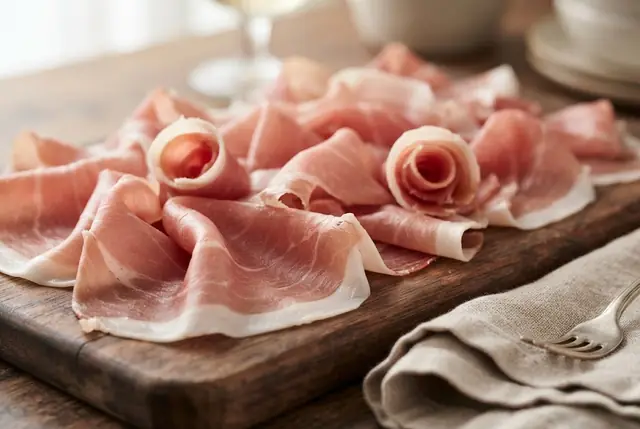
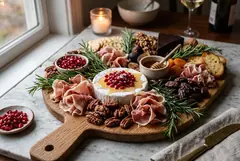
| Prosciutto | Honey sweetness against clean salt, with no acid fighting the meat's delicacy. The autumn version of melon and ham. |
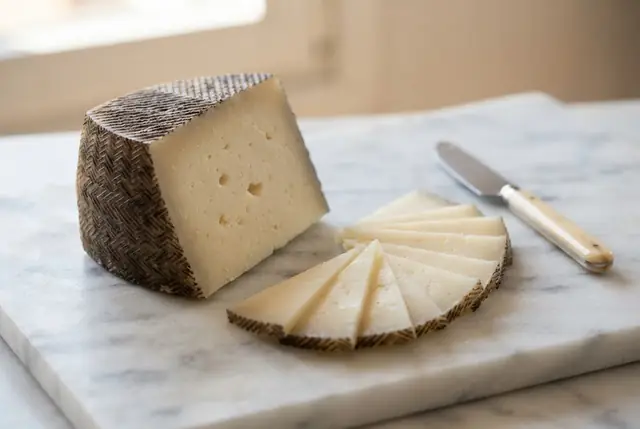
| Manchego | Sheep-milk nuttiness picks up the persimmon's faint spice. |
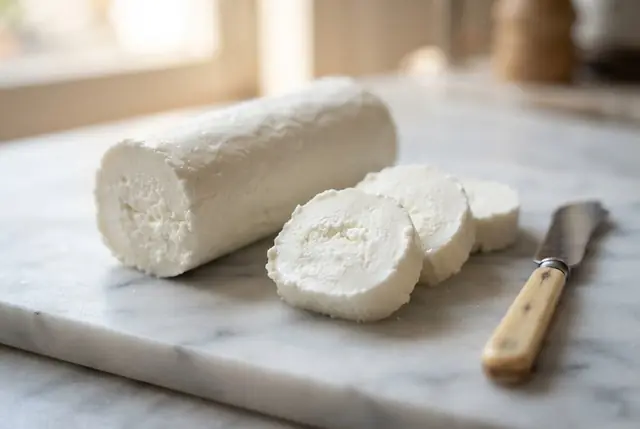
| Fresh goat cheese | Tang supplies the acid the fruit lacks; the fruit supplies the sugar the cheese lacks. |
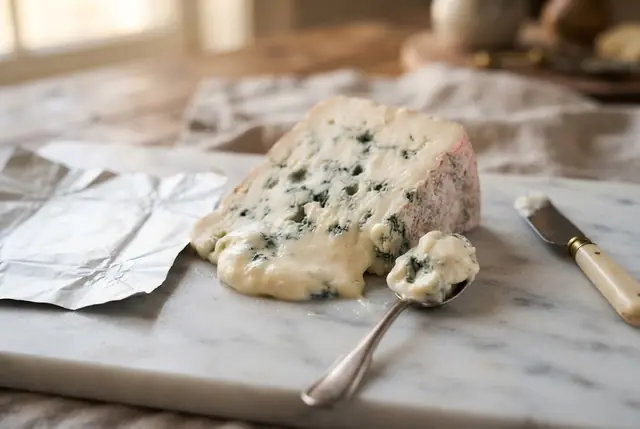
| Blue cheese | Low-acid sweetness blunts salt without the sharp edge an apple would add. |
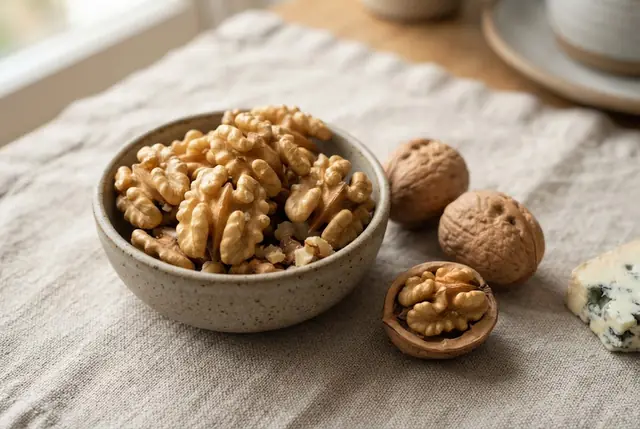
| Walnuts | Tannin and crunch against dense soft flesh. |
| Aged gouda | Both carry caramel notes; they read as one flavour. |
Skip it with: very acidic pickles and cornichons nearby — the contrast makes the persimmon taste flat and soapy.
How to prep it for the board
- Buy Fuyu. Squat and flat-bottomed, like a small orange tomato. If it's acorn-shaped and pointed, that's Hachiya — wrong fruit for this.
- Choose firm with a little give. Rock-hard is bland; soft is Hachiya territory.
- Don't peel. The skin is thin and edible and holds the slice together.
- Slice crosswise, 1/4 inch. Crosswise shows the faint star pattern; lengthwise wedges look like nothing.
- Brush with lemon if the board will sit more than an hour. It browns slowly, but it browns.
- Fan the discs in a short arc rather than stacking them.
- Fix: mouth-drying astringency means you bought Hachiya. Let it ripen to jam-soft on the counter and spoon it instead.
What to buy
| Product | Where | Notes |
|---|---|---|
| Fuyu persimmon | Grocery, Oct–Dec | The board persimmon. Firm, sweet, sliceable. |
| Sharon fruit | UK and specialty grocers | Israeli Fuyu-type, bred non-astringent. Same use. |
| Hachiya persimmon | Farmers markets, autumn | Only when jam-soft. Spoon it onto crostini, don't slice it. |
| Dried persimmon (hoshigaki) | Japanese grocers, specialty | Expensive, spectacular. Slice thin — tastes like caramelised apricot. |
Label check: shape decides everything. Flat bottom = Fuyu = slice it. Pointed bottom = Hachiya = wait.
Skip: persimmons with black spots spreading from the stem — that's the inside going too.
Quick FAQ
Fuyu or Hachiya?
Fuyu. It's squat and tomato-shaped and you eat it firm. Hachiya is pointed and astringent until it's almost liquid.
Do I peel it?
No. The skin is thin, edible, and holds each slice together.
When is persimmon in season?
October through December in the northern hemisphere. Out of season they're expensive and bland.
Why does my persimmon dry my mouth out?
It's an underripe Hachiya. Tannins. Let it get jam-soft and it disappears.
How much per person?
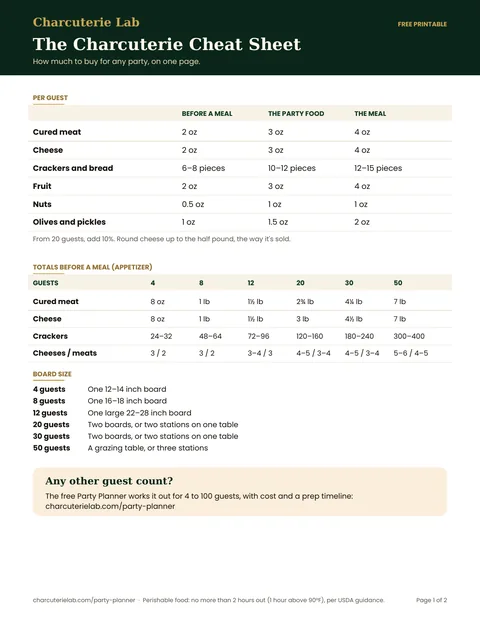
1–2 oz — half a persimmon serves two or three people on a mixed board.