The short version
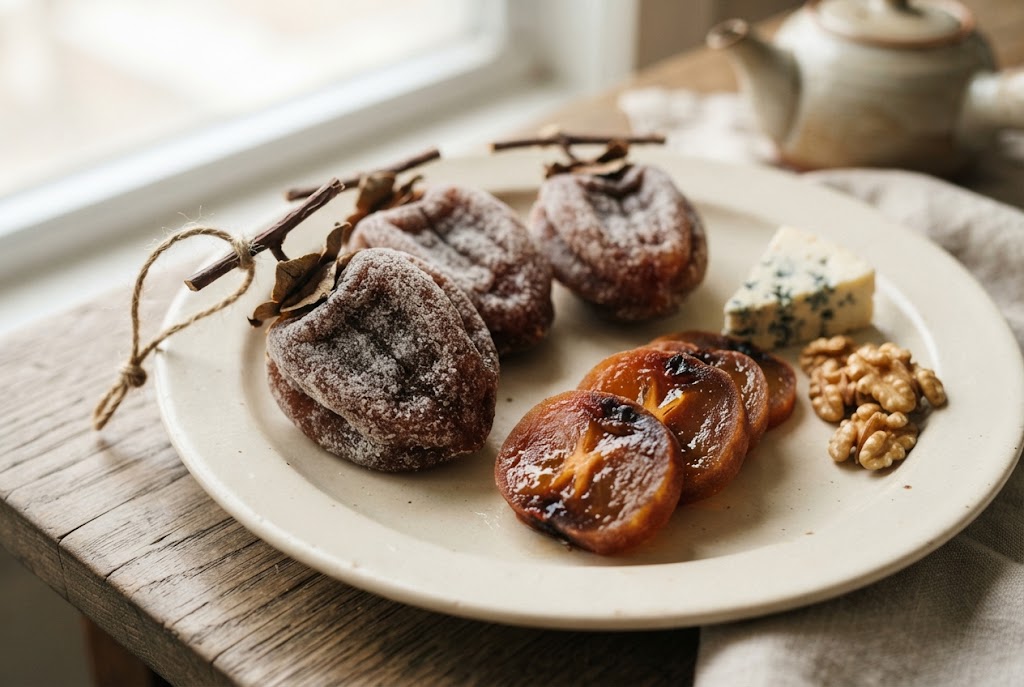
Whole Japanese persimmons, peeled and hung on strings to dry for about a month while someone gently massages each one by hand. They come out tender, jammy inside and frosted with natural sugar, like a cross between a date and a fig. Sliced into rounds beside a blue cheese, it's the most luxurious dried fruit you can serve.
What it is
Hoshigaki is a centuries-old Japanese craft. Astringent Hachiya persimmons are picked firm, peeled and tied by the stem. They hang in a cool, airy place, and every few days the maker kneads each fruit lightly. In the US, a handful of California farms, mostly in Placer County, make it each winter.
- Taste
- deep honeyed sweetness, with notes of date, fig and spice
- Texture
- tender and chewy outside, soft and jammy inside
- Look
- dark amber-brown fruit dusted with a white sugar bloom
Massage is the mechanism. Kneading breaks down the fibers inside the fruit and moves moisture around, so the inside stays soft instead of drying leathery. Drying also turns the persimmon's tannins insoluble, which is why an astringent fruit becomes pure sweetness. The white bloom is sugar crystallizing on the surface as water leaves.
What it pairs with — and why
| Pair it with | Why it works |
|---|---|
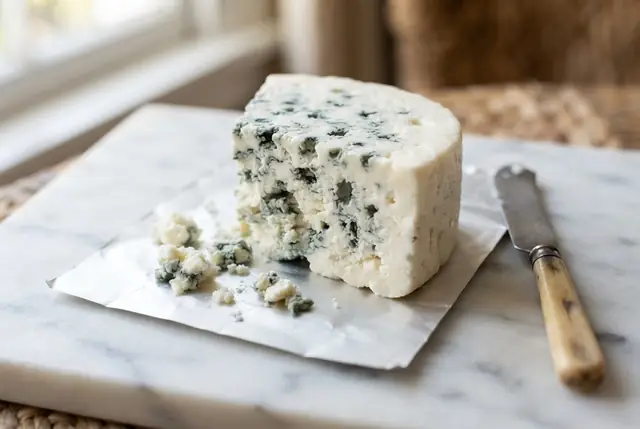
| Roquefort or another strong blue | Deep sugar against salty, sharp cheese. The best match. |
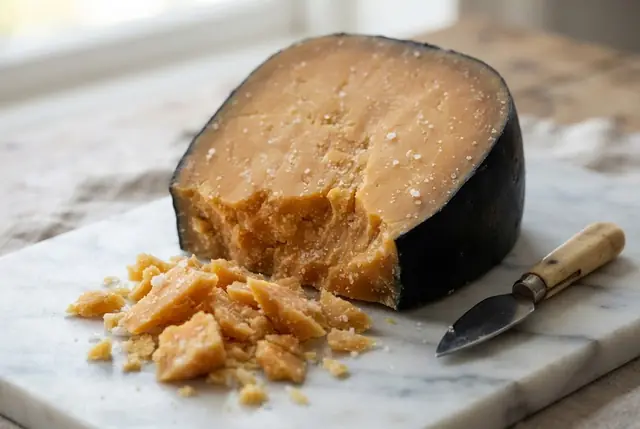
| Aged gouda | Caramel notes on both sides, plus crunchy crystals. |
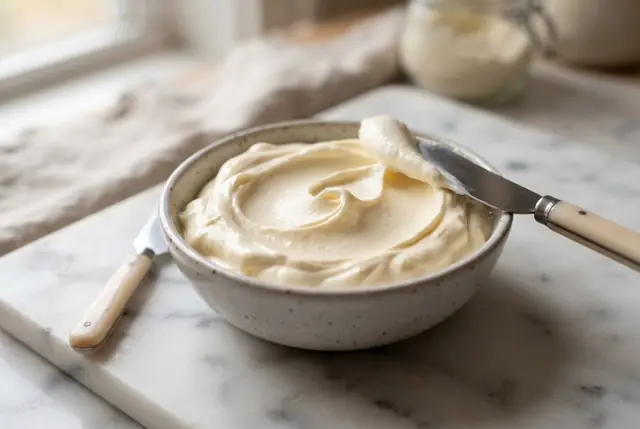
| Mascarpone | Soft and creamy, for a dessert-style bite. |
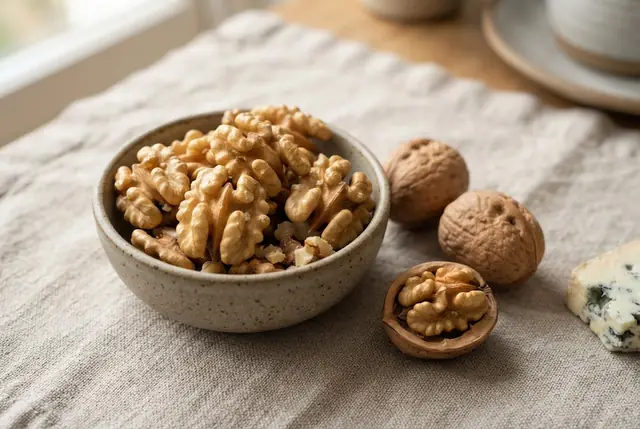
| Walnuts | Gentle bitterness and crunch to balance the sweetness. |
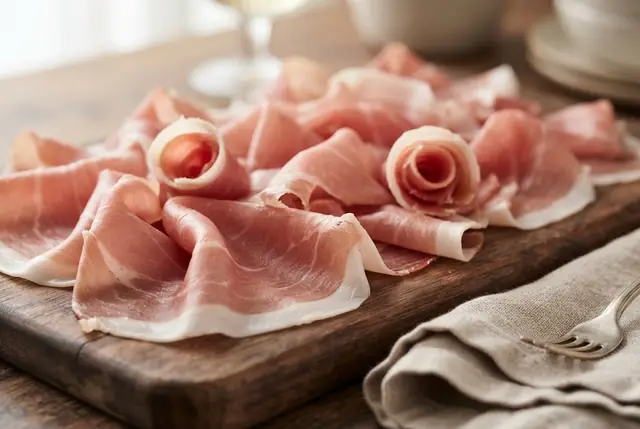
| Prosciutto | Sweet-salty, like a winter version of prosciutto and melon. |
| Green tea, sake, Sauternes or aged rum | Gentle or sweet drinks that match its richness. |
Skip it with: jams and other sweet preserves on the same plate. It's already the sweetest thing there, and more sugar hides its spice notes.
How to prep it for the board
- Snip off the stem with kitchen scissors.
- Slice into thin rounds about a quarter inch thick. A wet knife keeps the jammy center from sticking.
- Serve one or two slices per person. It's rich and expensive.
- Fan the slices in a short row so the amber centers show.
- Place it next to the blue cheese, its best partner.
- Fix: if it has gone too firm in the fridge, let it sit at room temperature for 30 minutes before slicing.
What to buy
| Product | Where | Notes |
|---|---|---|
| California hoshigaki | Farmers markets, farm websites, late fall to winter | Placer County farms such as Penryn Orchard Specialties sell direct. |
| Japanese hoshigaki | Japanese markets like Mitsuwa, online | Imported, often gift-boxed for the New Year. |
| Korean gotgam | Korean markets like H Mart | The Korean version, often a little firmer and cheaper. |
| Dried figs | Any grocery store | The budget swap with a similar jammy texture. See its own page. |
| Fresh persimmons | Grocery, fall | For a fresh version on the same board. See its own page. |
Label check: whole fruit with the stem on and a white sugar bloom. Sliced chips are machine-dried persimmon, not hoshigaki.
Skip: wiping off the white bloom. It's sugar, and it's part of the flavor.
Quick FAQ
What is hoshigaki?
A Japanese dried persimmon. Whole Hachiya persimmons are peeled, hung on strings and gently massaged by hand every few days for about a month as they dry.
What is the white powder on hoshigaki?
Natural fruit sugar that rises to the surface as it dries. It's not mold.
Why is it so expensive?
Each fruit is peeled, hung and massaged by hand for weeks. It's a slow craft product with a short season.
When can you buy hoshigaki?
Fresh batches arrive from late fall into winter, after the persimmon harvest. Supply is limited.
How is it different from regular dried persimmon?
Machine-dried persimmon is sliced and leathery. Hoshigaki is dried whole and massaged, so it's soft and jammy inside.