The short version
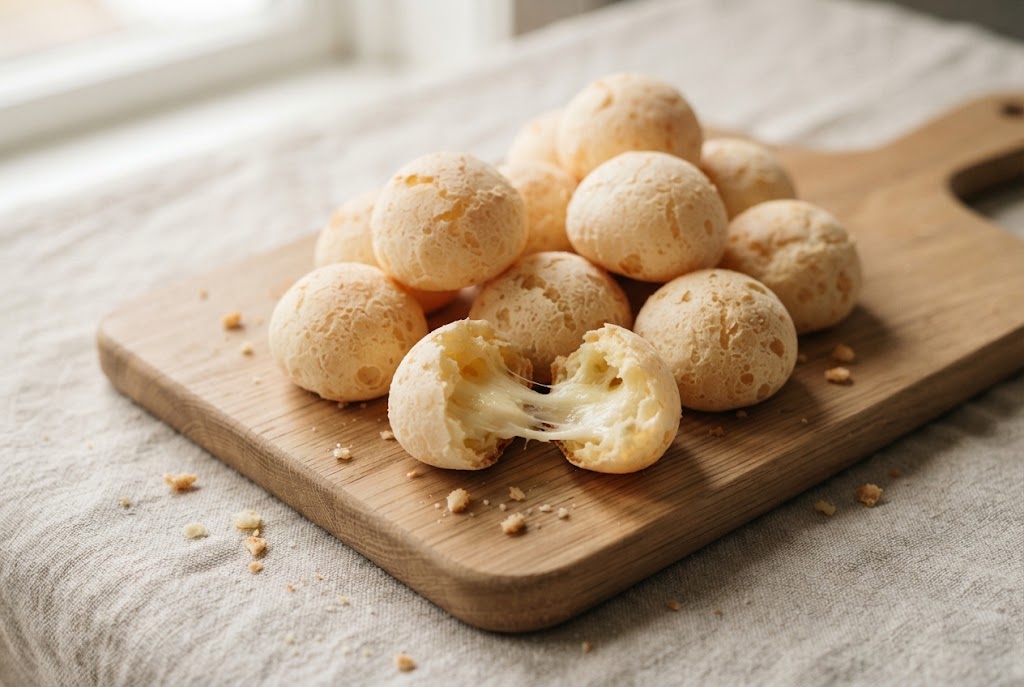
Brazilian cheese bread: small, warm, chewy rolls made from tapioca starch rather than flour. Naturally gluten-free, sold frozen in a lot of American supermarkets, and twenty minutes from freezer to board. It's the easiest way to put something warm and gluten-free on a spread.
What it is
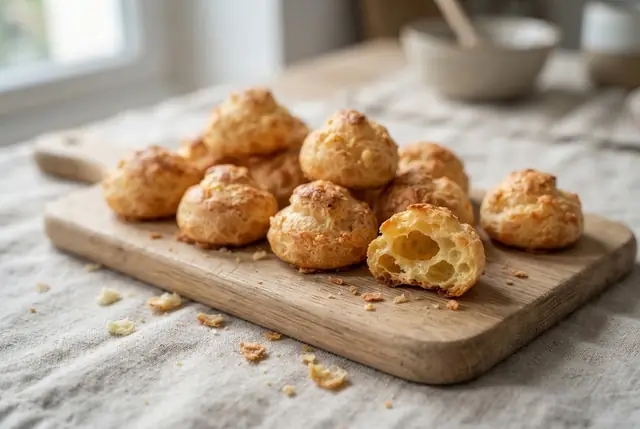
Pão de queijo is built on tapioca starch — extracted from cassava — mixed with milk, oil, eggs and a hard aged cheese, traditionally queijo minas. Tapioca starch behaves nothing like wheat flour: it produces a stretchy, elastic, faintly squeaky chew with no gluten anywhere.
- Taste
- savory, tangy, cheesy, mildly sour
- Texture
- crisp thin shell, dense stretchy chew inside
- Look
- small pale golden balls, cracked on top, about an inch and a half across
Starch gelatinization is the mechanism, and it's the reason the texture is so distinctive. Tapioca starch swells and sets into an elastic network without any protein involvement — which is why pão de queijo is chewy in a way no wheat bread is, and why it's genuinely gluten-free rather than gluten-free-adjacent.
What it pairs with — and why
| Pair it with | Why it works |
|---|---|
| Nothing at all | Like gougères, these are complete. Warm from the oven, they need no help. |
| Guava paste (goiabada) | The Brazilian pairing — sweet dense fruit paste against salty cheese bread. Romeu e Julieta. |
| Fresh soft cheese alongside | A warm cheese bread beside a cool fresh cheese is a good sequence. |
| Cured meats | Warm chewy bread against cold salty meat. Works well beside the board. |
| Chimichurri or herb oil | For dipping. Not traditional, but very good. |
| Coffee | How Brazil actually eats them. Worth knowing for a brunch board. |
| Caipirinha, sparkling wine, dry rosé | Acid and bubbles against a rich chewy bread. |
Skip it with: aged hard cheeses — the cheese is already in the bread, and piling parmesan on top is redundant. And don't try to use them as a base; they're rolls, not crackers.
How to prep it for the board
- Bake from frozen and serve warm. They're good hot, acceptable warm, and unpleasant cold — the chew turns rubbery.
- Bake at 375–400°F for 15–20 minutes straight from the freezer, until puffed and lightly golden. Don't thaw first.
- Serve them in a bowl or basket beside the board, not on it. Warm bread on a cold board goes soft and sweats.
- Serve 2–3 per person.
- Bake in two batches so there's a warm one available later in the party.
- Label them as gluten-free. A guest avoiding gluten will assume a bread roll isn't for them unless you say otherwise.
- Fix: cooled pão de queijo comes back at 350°F for 5 minutes, though not quite to its original texture. Bake fewer, more often.
What to buy
| Product | Where | Notes |
|---|---|---|
| Forno de Minas Pão de Queijo (frozen) | Kroger, Amazon, Latin markets, some Costcos | The most widely distributed brand in the US. Reliable and good. |
| Yoki Pão de Queijo mix | Latin markets, Amazon | The mix version — you add milk, oil and egg. Cheap and works well. |
| Brazilian or Latin markets | Local | Best selection, and often fresh-baked as well as frozen. |
| Trader Joe's Brazilian cheese bread | Trader Joe's (seasonal) | Appears periodically. Very good when stocked. |
| Tapioca starch (polvilho) | Latin markets, Amazon, Bob's Red Mill | The DIY route. Needs sour tapioca starch — polvilho azedo — for the proper tang. |
Label check: tapioca starch should be the first ingredient. It is naturally gluten-free, but check for a certification if a guest has celiac disease, since shared facilities are common.
Skip: letting them cool before serving. More than any other item in this section, temperature is the whole product.
Quick FAQ
Is pão de queijo gluten-free?
Yes — it's made from tapioca starch, not wheat. Look for a certification if celiac disease is a concern.
Where do I buy it?
The freezer section, often near other Latin American products, or a Latin market. Forno de Minas is the most common brand.
Can I serve it cold?
No. It goes rubbery. This is a warm-only item.
How many per person?
2–3, baked in batches so they stay warm.
What's the difference between this and gougères?
Gougères are French choux pastry with Gruyère — light and hollow. Pão de queijo is Brazilian tapioca starch — dense and chewy, and gluten-free.