The short version
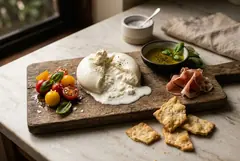
On an Italian board, basil isn't decoration — burrata without it is incomplete. Two rules cover almost everything: tear, don't chop (a knife bruises the leaves and turns the edges black), and never refrigerate it (cold turns basil black within hours).
What it is
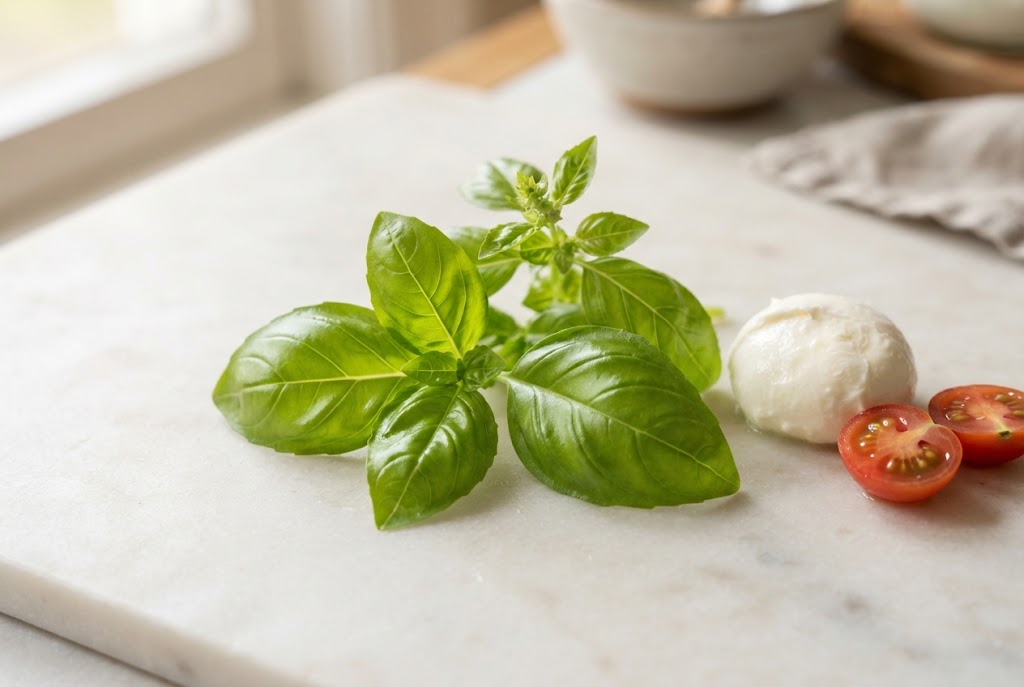
Large soft green leaves, most commonly Genovese sweet basil. Thai basil is anise- heavy and purple-stemmed; opal basil is deep purple and striking on a board. All are fragile, and all are at their best within minutes of being torn.
- Taste
- sweet, peppery, faintly anise and clove
- Texture
- soft and tender, wilts on contact with heat
- Look
- large glossy green leaves
The mechanism is fragility. Basil's aroma compounds sit in surface cells that rupture the moment the leaf is torn — which is why the smell is strongest right then and fades within minutes. Chopping ruptures far more cells at once and also exposes them to enzymes that turn the cut edges black, so the tear is a flavour decision as much as a visual one.
What it pairs with — and why
| Pair it with | Why it works |
|---|---|
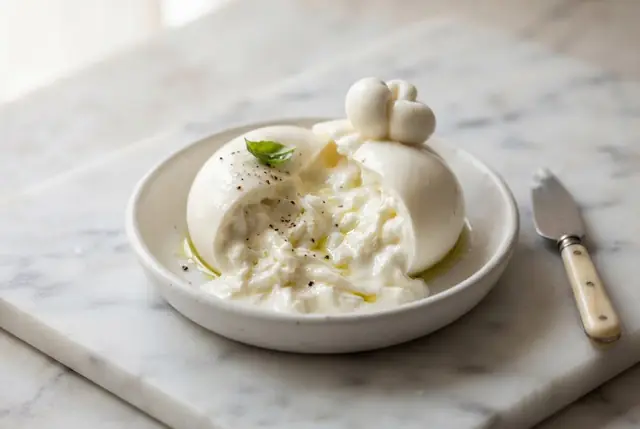
| Burrata | The required finish. Cream, oil, salt and torn basil — the aroma is what makes it a dish rather than a ball of cheese. |
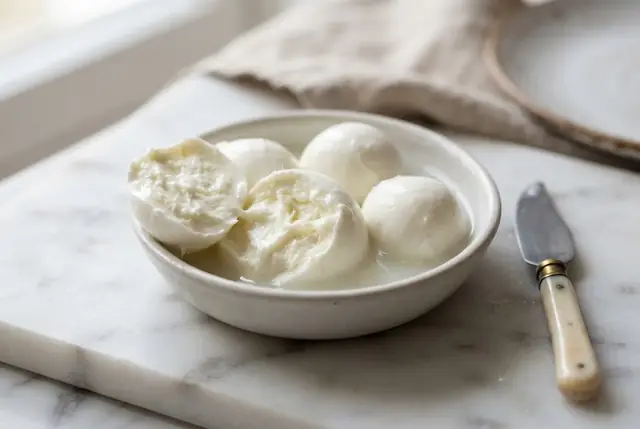
| Fresh mozzarella | Caprese. Basil, tomato and mozzarella exist together for a reason. |
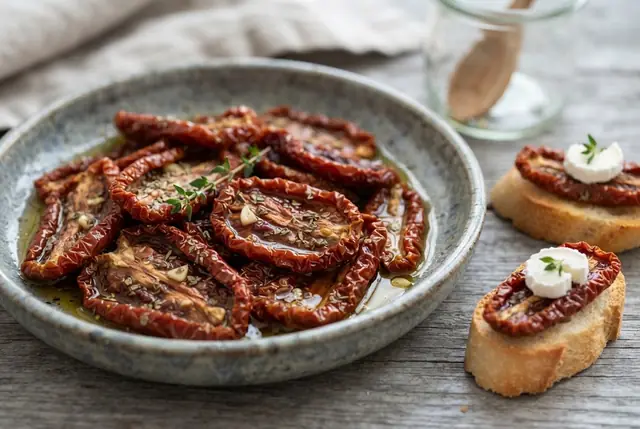
| Sun-dried tomatoes | Concentrated sweet-savoury against fresh green aroma. |
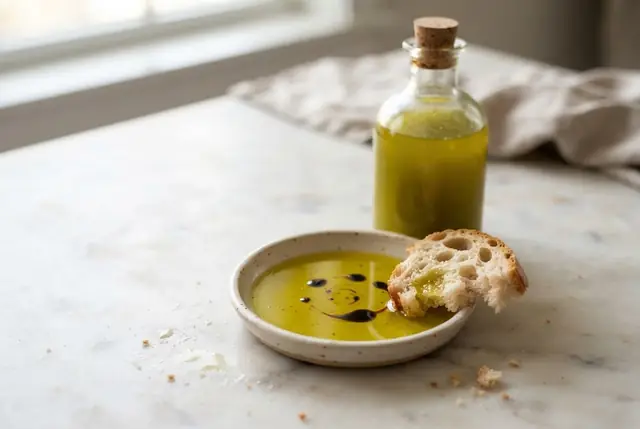
| Olive oil | Basil's oils are fat-soluble; oil carries and spreads them. |
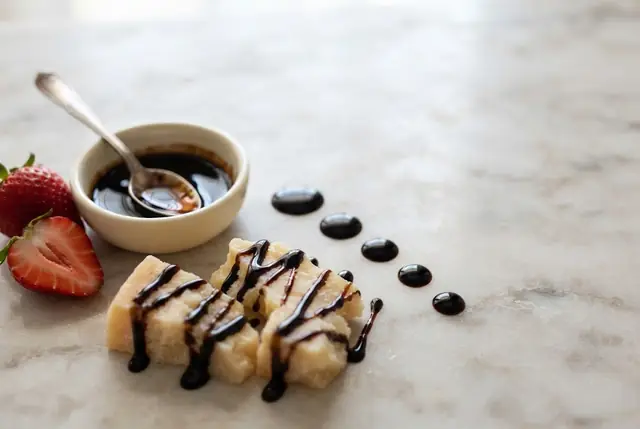
| Balsamic glaze | The third element of every caprese plate. |
| Peaches and berries | Basil with summer fruit is underused and excellent. |
Skip it with: cured meat and aged cheese. Basil is too delicate to survive either.
How to prep it for the board
- Tear the leaves by hand, don't chop. Torn edges stay green; cut edges go black.
- Add it last, right as the board goes out. It wilts and darkens fast.
- Store it stem-down in a glass of water on the counter — never in the fridge. Cold blackens basil within hours.
- Use whole leaves as well as torn ones. Whole leaves look intentional.
- Dress it with oil the moment it's on the cheese. Oil slows browning.
- Rinse and dry gently. Bruised basil is black basil.
- Fix: already blackening? Pick off the worst leaves. There's no reviving it.
What to buy
| Product | Where | Notes |
|---|---|---|
| Fresh Genovese basil | Any grocery, summer | The standard. Buy the bunch, not the clamshell, if you can. |
| Living basil plant | Grocery, garden centre | Stays fresh far longer than cut basil. Best value. |
| Thai basil | Asian markets | Anise-forward, purple stems. Good on a fusion board. |
| Opal / purple basil | Farmers markets | Deep purple leaves. Striking on white cheese. |
| Micro basil | Specialty | Tiny leaves. Expensive and very neat if presentation matters. |
Label check: leaves should be uniformly green with no black spots. Any blackening in the pack will spread fast.
Skip: dried basil entirely, and any bunch stored in a chilled case.
Quick FAQ
Should I tear or chop basil?
Tear it. Chopping bruises the leaves and turns the cut edges black within minutes.
Why does my basil go black?
Cold, mostly. Basil should never go in the fridge — keep it stem-down in a glass of water on the counter.
When do I add basil to a board?
Last, right before serving. It wilts and darkens quickly once it's on cheese.
What goes with fresh basil?
Burrata and fresh mozzarella above all, plus sun-dried tomatoes, olive oil and balsamic glaze.
Is a basil plant better than cut basil?
Yes — it stays fresh for weeks rather than days, and it costs about the same as two bunches.