The short version
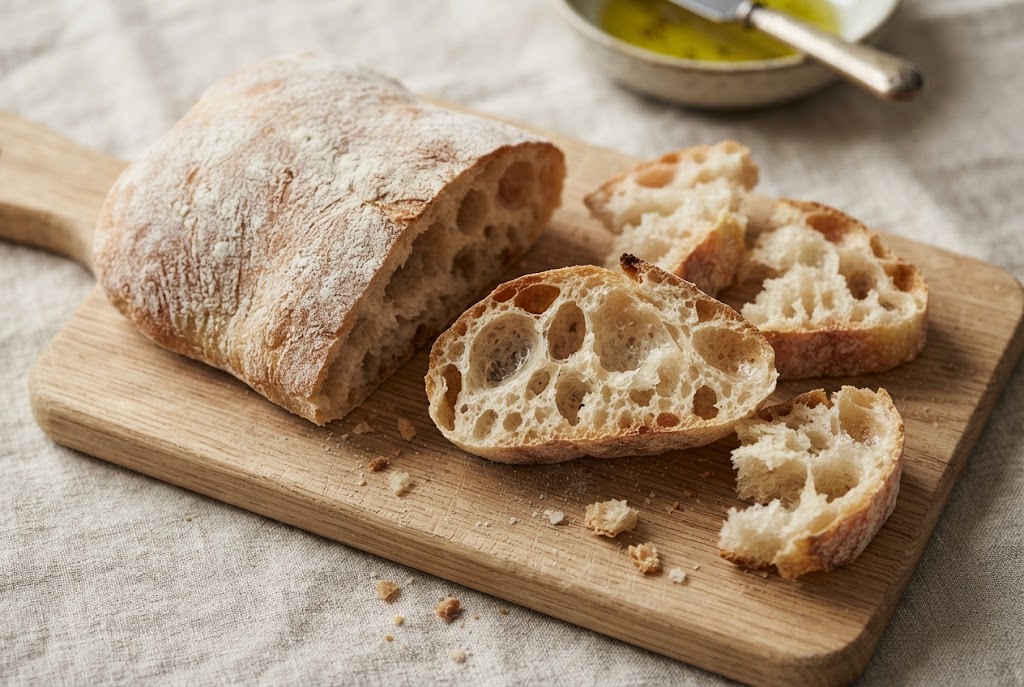
An Italian loaf with a floury crust and enormous irregular holes inside. The holes are the product — they act like a sponge for olive oil, tomato juice and rendered prosciutto fat. Tear it into pieces rather than slicing it.
What it is
Ciabatta is much younger than it looks. It was created in 1982 by an Italian baker responding to the popularity of French baguettes in Italy, and the name means "slipper," which is what the flat, sprawling loaf resembles. The dough is extremely wet — often 80% hydration or more — which is why the crumb ends up so open.
- Taste
- mild, wheaty, faintly sweet
- Texture
- chewy crumb, thin crisp crust, very open holes
- Look
- flat and irregular, dusted with flour, wide holes when torn
Absorption is the mechanism. A dense crumb resists liquid; ciabatta's open structure pulls it in. Drag a torn piece through good olive oil and it takes up far more than a baguette would, which is exactly what you want beside burrata or a bowl of oil and balsamic.
What it pairs with — and why
| Pair it with | Why it works |
|---|---|
| Olive oil and aged balsamic | The reason to buy ciabatta. Nothing soaks up oil this well. |
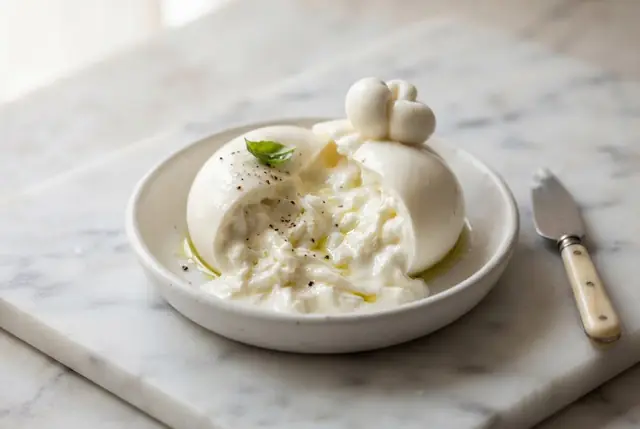
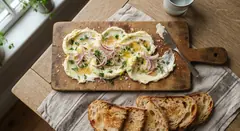
| Burrata | Torn bread, torn cheese, a spoon of the cream. The holes catch everything that escapes. |
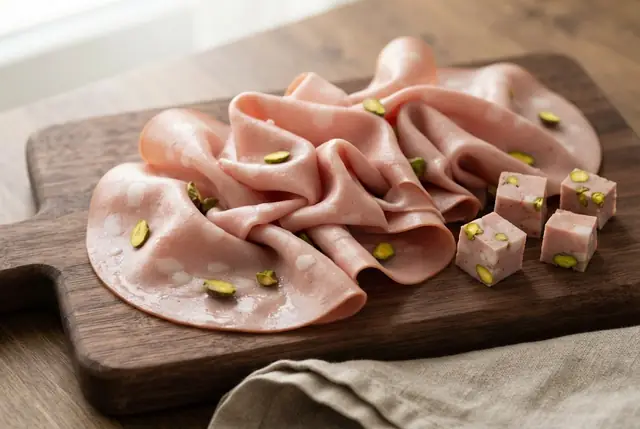
| Prosciutto and mortadella | The crumb absorbs rendered fat instead of letting it slide off. |
| Ripe tomato and basil | Juice goes into the bread rather than onto the board. |
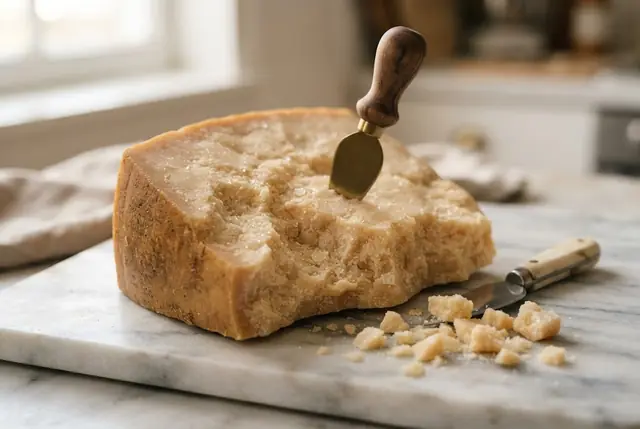
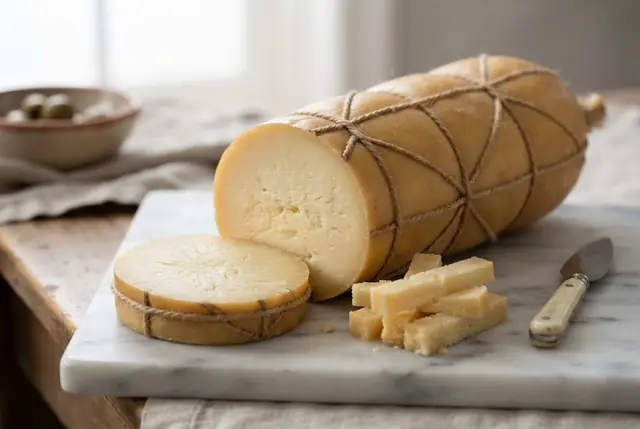
| Aged provolone and parmesan | Mild chewy bread lets a sharp cheese lead. |
| Pesto and tapenade | Loose oily sauces need somewhere to go. |
| Chianti, Sangiovese, Vermentino | Everything here is Italian for a reason. |
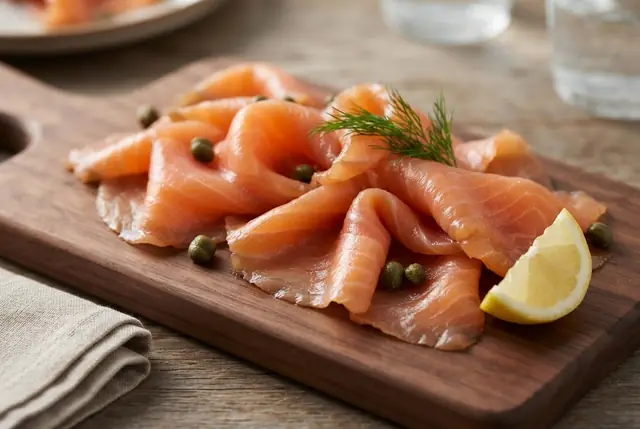
Skip it with: thin, delicate toppings — a slice of smoked salmon or a sliver of soft cheese literally falls through the holes. Use a baguette or a cracker for anything that needs a continuous surface.
How to prep it for the board
- Tear it, don't slice it. Ciabatta tears along its own structure into pieces with craggy, absorbent faces. Slicing gives you flat, sealed surfaces and wastes the whole point.
- Serve 2–3 pieces per person.
- Set a shallow dish of olive oil right beside it. This is the pairing; make it obvious.
- Buy it the same day. The open crumb means a huge amount of surface area exposed to air, so ciabatta stales faster than a denser loaf.
- Grill or toast half of it. Toasted ciabatta and fresh ciabatta eat completely differently, and you get both from one loaf.
- Fix: day-old ciabatta makes the best crostini in this whole category — slice thin, oil, 375°F for 10–12 minutes.
What to buy
| Product | Where | Notes |
|---|---|---|
| Store bakery ciabatta | Whole Foods, Wegmans, Publix, most grocery | Baked in-house. Squeeze it — you want light for its size. |
| La Brea Bakery Ciabatta | Most grocery stores, bread aisle | Widely available and consistent. |
| Ciabatta rolls | Grocery bakery, Costco | Easier to portion, and each roll has its own crust. Good for a big board. |
| Local Italian bakery ciabatta | Neighborhood bakery | Best crust and biggest holes. |
| Par-baked ciabatta | Grocery freezer or bread aisle | Finish at home for genuinely fresh bread at serving time. |
Label check: hold the loaf. Good ciabatta feels surprisingly light for its size — that's the air. A heavy, dense one was made with a stiffer dough and won't do the sponge job.
Skip: soft, uniformly-crumbed "ciabatta" sandwich rolls from the packaged bread aisle. They're a different bread wearing the name.
Quick FAQ
Should I slice or tear ciabatta?
Tear it. Torn edges are rough and absorbent; cut edges are flat and sealed.
Why does it have such big holes?
Very high hydration. More water in the dough means more steam, and more steam means bigger holes.
How much per person?
2–3 torn pieces alongside other bases.
Ciabatta or baguette?
Baguette for anything delicate that needs a solid surface. Ciabatta for oil, tomato and anything you want soaked up.
Can I use day-old ciabatta?
Yes — it makes excellent crostini and even better panzanella. Just don't serve it plain.