Quick Answer: Aged cheddar is one of the best bold cheeses for a charcuterie board. Buy extra sharp or vintage cheddar, aged about 12 to 24 months, and break it into rough chunks to show off its crunchy crystals. Plan about 1 ounce per guest, let it sit out 30 to 45 minutes, and put fig jam and crisp apple slices right next to it.
What Is Aged Cheddar?
Cheddar is a firm cow's milk cheese from Somerset, England. Its name also describes a step in making it: "cheddaring," where slabs of fresh curd are stacked and turned to press out whey and build acidity. Today it's made all over the world, and British clothbound cheddars and American farmhouse cheddars are some of the best for a board.
What makes aged cheddar different is time. As it ages, it loses moisture, and its proteins and fats slowly break down. Protein breakdown is called proteolysis; fat breakdown is lipolysis. Together they give aged cheddar three signature traits.
Crunchy crystals. Those small white specks that crunch between your teeth aren't salt or mold. Inside the cheese they're mostly tyrosine, an amino acid freed as proteins break down. White patches on the surface are often calcium lactate. Either way, they're harmless and a good sign the cheese has had time to develop. See the white crystals in aged cheese for more.
Sharpness and savory depth. Protein breakdown also releases glutamate, the compound behind umami. The Umami Information Center lists about 173 mg of free glutamate per 100 g in 1-year cheddar and about 718 mg in 10-year cheddar. That's why older cheddar tastes so much more savory. Some of the breakdown products also taste a little bitter, which is part of the cheese's character, not a flaw.
Nutty, caramel-like notes. Long-aged cheddars often taste of toasted nuts, brown butter or butterscotch alongside the sharpness. That mix of sharp and sweet-tasting is what makes a good vintage cheddar worth seeking out.
What to Buy
| Label | Typical age | On a board |
|---|---|---|
| Mild or medium | A few months | Too mild; save it for sandwiches |
| Sharp | Several months | Fine for kids or a budget board |
| Extra sharp | Often a year or more | The board minimum |
| Vintage or aged 2+ years | 18 to 24 months and up | Worth the extra cost |
| Clothbound | Varies | Earthy and crumbly; a special-occasion pick |
Labels vary by brand, so check the age on the package when it's listed. Good grocery-store options include aged white cheddars from Vermont, Wisconsin and New York, and English farmhouse cheddars at the cheese counter. Orange or white doesn't matter; the color comes from annatto, a natural plant dye, not from age.
Best Use on a Charcuterie Board
Aged cheddar is the bold anchor of a cheese selection. It holds its own next to salami, mustard and strong condiments.
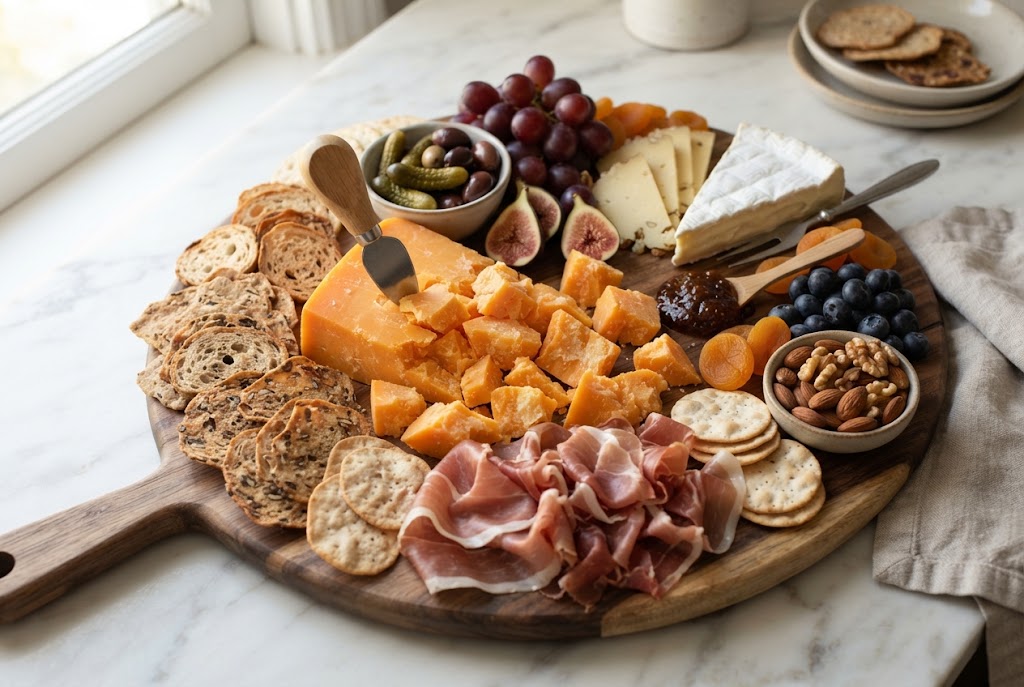
Break, don't slice. This is the most important serving choice. Push the tip of a short cheese knife into the block and twist to crack off rough, bite-size chunks. The jagged faces show off the crystals and look far more inviting than neat cubes, which hide them.
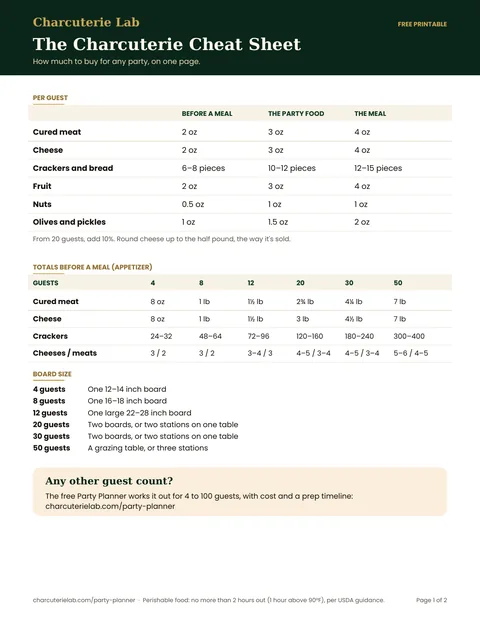
Quantity: Plan about 1 ounce per guest when it's one of two or three cheeses. That fits the usual board standard of about 2 ounces of cheese per guest in total. A 6- to 8-ounce block broken into chunks serves 6 to 8 people.
Placement: Put it at one end of the board, with milder cheeses at the other, so guests naturally move from mild to bold. Set fig jam right beside it so the pairing is obvious.
Temperature: Take it out of the fridge 30 to 45 minutes before serving. Cold dulls taste and aroma, so the nutty, caramel notes open up as it warms. Break it into chunks while it's still cold, since it cracks more cleanly. Keep the board within the USDA 2-hour rule for perishable food.
What to Pair It With
Fig jam: The classic partner. Its sweetness softens the cheese's sharp, slightly bitter edge, and its deep, jammy fruit flavor suits the cheddar's caramel notes. See aged cheddar and fig jam.
Crisp apple slices: Tart, juicy apple cuts the richness and refreshes your palate between bites. Granny Smith gives the sharpest contrast; Honeycrisp adds more sweetness. Slice them close to serving and toss with a little lemon juice so they don't brown. See aged cheddar and apple.
Marcona almonds: Soft, buttery and salty, with a crunch that contrasts with the crumbly cheese.
Prosciutto or bresaola: Aged cheese is rich in glutamate and meat contains inosinate, and eaten together they taste more savory than either alone. The Umami Information Center reports that a 1:1 mix of the two tastes about 7 to 8 times as intense as glutamate alone.
Honeycomb or honey: Sweetness tempers bitterness and balances salt. Honeycomb adds a chewy texture as well.
Chutney or onion jam: The British ploughman's classic. Sweet, tangy onion jam or mango chutney is great with sharp cheddar.
Crackers: Plain water crackers or oatcakes. Neutral crackers let the cheese's flavor come through.
Drinks: Dry cider, a malty brown ale or an IPA, or a medium-bodied red such as Merlot or Malbec.
What to avoid: Very delicate spreads, like a mild apricot jam, get lost next to sharp cheddar. And don't put fresh, mild cheeses right beside it; they'll taste flat by comparison.
For a full list of partners, see what goes with aged cheddar.
The Lab Section: Why These Pairings Work
Sweet with sharp. Aged cheddar is salty, savory and a little bitter. Sweetness tempers both saltiness and bitterness, which is why fig jam, honey and chutney make the cheese taste rounder rather than harsh. The sweet partner doesn't hide the cheese; it smooths its edges.
Acid with rich. Cheddar is dense and fatty. The sharp acidity of a tart apple cuts that richness and makes your mouth water, so your palate feels refreshed before the next bite.
Savory with savory. Cheddar's glutamate plus the inosinate in cured meat is a classic umami pairing. That's why a chunk of cheddar folded into a slice of prosciutto tastes more satisfying than either on its own.
Crunch with crumble. Almonds and crisp apple add texture contrast against a crumbly, crystalline cheese.
Common Mistakes
Using mild or medium cheddar. The crystals, sharpness and caramel notes only develop with age. Buy extra sharp or older.
Cutting it into neat cubes. Cubes hide the crystals and look like a party tray. Break it into rough chunks instead.
Leaving out a sweet partner. Aged cheddar needs something sweet or tart nearby. Fig jam or apple slices should sit right next to it.
Leaving it out too long. Aged cheddar needs only 30 to 45 minutes to warm up. After a few hours out, the broken faces dry out and turn oily.
Crowding bold cheeses together. Aged cheddar next to an aged Gouda or a blue cheese means two strong flavors competing. Put jam, fruit or crackers between them.
Swaps: If you can't find a good aged cheddar, an aged Gouda or a firm, nutty Comté fills the same bold slot.
The Charcuterie Lab Takeaway
Aged cheddar is the most reliable bold cheese for a board. It's familiar, widely loved, and its crunchy crystals tell guests it's the good stuff.
Buy extra sharp or vintage, about 1 ounce per guest. Break it into rough chunks, give it 30 to 45 minutes out of the fridge, and put fig jam right next to it. Add apple slices and prosciutto and you have four simple items that cover sharp, sweet, tart and savory.
Building more boards? The Charcuterie Lab ebook covers 50 complete boards — each with exact quantities, placement logic, and the food science behind every pairing.
FAQ
What age of cheddar is best for a charcuterie board?
Extra sharp or vintage cheddar, aged about 12 to 24 months, is the board standard. By then it has crunchy crystals, a sharp, savory flavor and nutty, caramel-like notes. Mild and medium cheddar are fine for snacking but too mild to hold their own next to cured meats and strong condiments.
Should you slice or break aged cheddar for a charcuterie board?
Break it. Push the tip of a short cheese knife into the block and twist to crack off rough, bite-size chunks. The jagged faces show off the crunchy crystals and look more inviting than neat cubes. Aged cheddar is crumbly, so it breaks cleanly and is easy for guests to pick up.
What pairs best with aged cheddar on a charcuterie board?
Fig jam is the classic partner: its sweetness softens the cheese's sharp, slightly bitter edge. Crisp, tart apple slices cut the richness and refresh your palate. Marcona almonds add buttery crunch, and prosciutto or bresaola add a savory, salty contrast that makes the cheese taste even deeper.
How much aged cheddar per person on a charcuterie board?
Plan about 1 oz per guest when aged cheddar is one of two or three cheeses. It's bold, so a little goes a long way. A 6 to 8 oz block broken into chunks is right for 6 to 8 people, and it keeps well wrapped in the fridge if you have leftovers.
Can you put aged cheddar next to blue cheese on a charcuterie board?
Yes, but give them a little space. Both are bold, and side by side the flavors compete. Put a small dish of fig jam, a pile of crackers or some apple slices between them. That gives guests something sweet or neutral to reset their palate and makes both cheeses easier to enjoy.