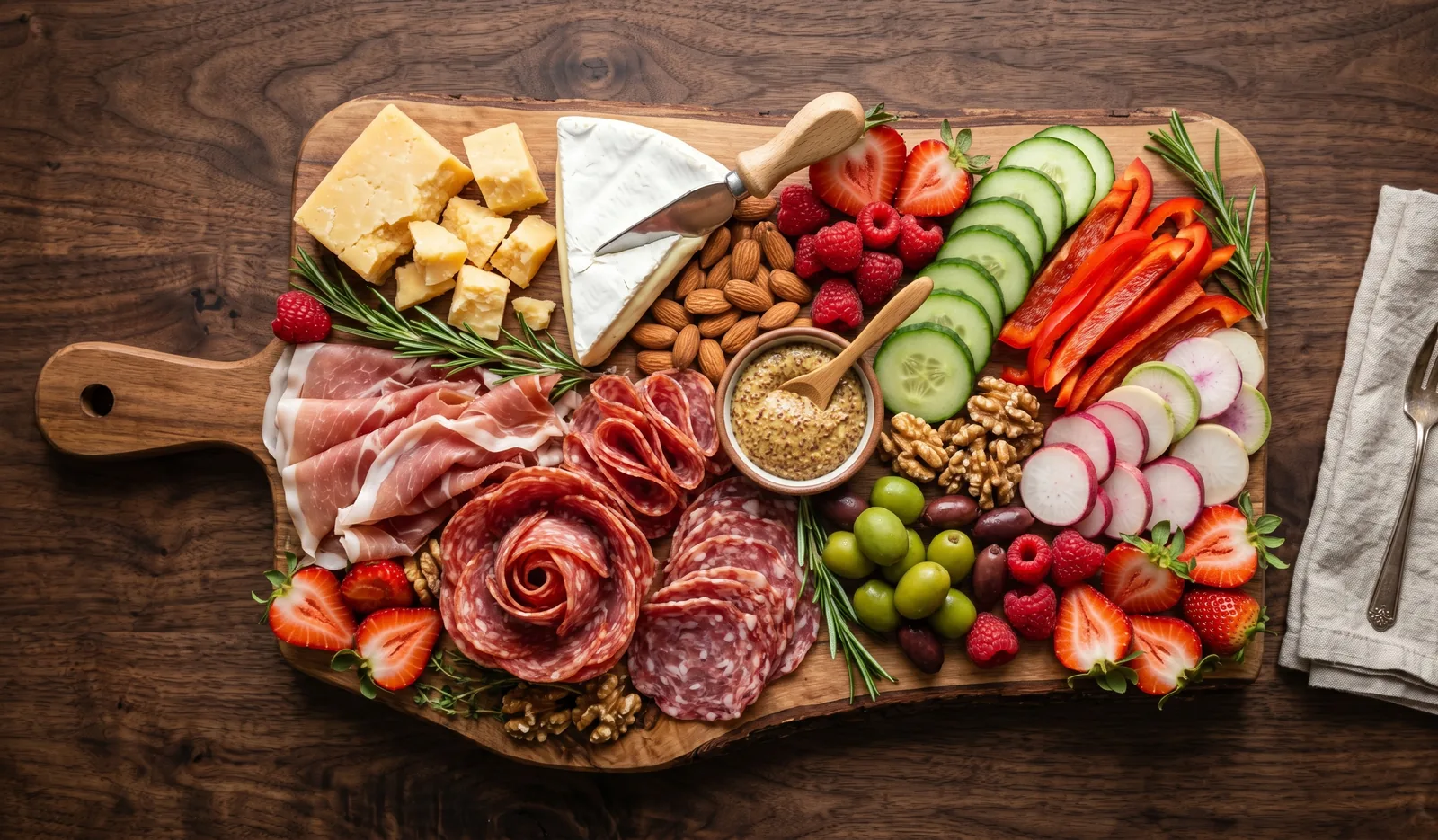
Quick Answer: A keto charcuterie board uses all standard cheeses and cured meats (both are keto-compatible), replaces crackers with cucumber rounds, bell pepper strips, or pork rinds, swaps honey and jam for mustard and olive oil, and limits fruit to low-sugar berries (strawberries, raspberries). Most of a charcuterie board is already keto — the adjustment is in the vehicle and the condiments.
The keto charcuterie board requires fewer modifications than most people expect. Cheese is zero-carb. Cured meats are zero-carb or near-zero. Olives, most vegetables, and most nuts are keto-compatible. The two categories requiring substitution are crackers and bread (the biggest carb sources) and condiments like honey and jam.
Why Most of a Charcuterie Board Is Already Keto
Before making any changes, recognize what requires no substitution at all.
Zero or near-zero carb elements: All natural cheeses (aged cheddar, brie, Gruyère, manchego, parmesan, chèvre) — 0–1g net carbs per serving. All whole-muscle cured meats (prosciutto, bresaola, coppa, jamón) — 0g carbs. Most dry-cured salami and pepperoni — 0–1g carbs. Olives, cornichons — low carb. Most nuts (almonds, walnuts, pecans, macadamia) — 2–4g net carbs per small handful.
What you are replacing is primarily the carb-dense vehicle (crackers and bread) and the sweet condiments (honey, jams).
Keto-Friendly Cracker Alternatives
This is the most important category to address. Standard crackers range from 12–25g net carbs per serving — a significant portion of a daily keto budget.
Cucumber rounds (the best replacement): Slice a cucumber into 1/4-inch rounds. Nearly zero carbs. Neutral flavor that doesn't compete with cheese or meat. Holds toppings without collapsing. Visual on the board: clean, bright green, contrasts the cured meat and cheese colors well.
Bell pepper strips (excellent for scooping): Red, orange, or yellow pepper strips. 4–6g net carbs per pepper. Firm, slightly sweet, works well with soft cheeses and dips.
Celery sticks: Zero-carb vehicle. Not as visually appealing as cucumber but useful for dips and soft cheeses.
Radish rounds: Peppery, crunchy, attractive red color. 1–2g net carbs. Pairs well with butter, chèvre, and prosciutto.
Pork rinds: Zero carbs. Substantial crunch. An unexpected but fully valid replacement — their salt and fat flavor pairs genuinely well with cheese and cured meat. A small bowl placed on the board.
Almond flour crackers: The closest structural analog to a real cracker. 4–6g net carbs per serving (check brands). Low enough to use in moderation.
Keto-Compatible Cheese Selection
All natural cheese is keto-friendly. The selection logic for a keto board is the same as any board: soft, semi-firm, and aged hard for range and textural contrast.
Soft (brie, triple cream, chèvre): High fat content makes these particularly appropriate for keto. Brie and triple cream are the fat-forward choices that work well in a keto context. Fresh chèvre on a cucumber round with a radish slice is a complete keto bite.
Semi-firm (manchego, Gruyère, aged gouda): All keto-compatible. Pre-slice and fan on cucumber rounds.
Aged hard (aged cheddar, parmesan): Lowest carb content of any cheese. Use generously.
The one cheese to avoid: any processed cheese product with added starches or thickeners. Natural cheese, whether domestic or imported, is always safe.
Keto Meat Selection and Label Reading
Most cured meats are keto-compatible. However, some products contain added sugar in the cure — a detail worth checking.
Always keto (typically zero carbs): Prosciutto di Parma, prosciutto San Daniele, bresaola, coppa, most dry salami, soppressata, pepperoni, speck.
Check the label: Some sweet-cured hams, honey-glazed products, some commercial salami varieties, and teriyaki or glazed cured meats contain added sugar. Read the nutrition facts — more than 1g sugar per serving warrants a second look.
Safe rule: Any prosciutto, bresaola, or dry Italian-style salami from a quality producer is keto-safe. Skip anything with "honey," "sweet," or "glazed" in the name.
Keto-Friendly Fruit Options
High-sugar fruits (grapes, apple, pear, dried fruit) are not compatible with strict keto. Low-sugar berries are.
Best choices: Strawberries: 6g net carbs per 100g — a small portion (4–6 berries) is keto-compatible Raspberries: 5g net carbs per 100g — excellent color, mild flavor Blackberries: 5g net carbs per 100g — pairs with aged cheddar effectively
Avoid: Grapes (17g net per 100g), all dried fruit (concentrated sugar), apple and pear (10–12g net per 100g), melon, stone fruit.
A small cluster of strawberries and raspberries adds visual color and sweet contrast without meaningfully affecting daily carb intake.
Keto Condiments
Use: Whole grain Dijon mustard (1–2g carbs per tablespoon, worth it), olive oil (zero carbs — drizzle on a small board section with rosemary), cream cheese (zero carbs — use as a spreadable anchor), guacamole (3–4g net per serving), horseradish (2g per tablespoon).
Avoid: Honey, fig jam, quince paste, fruit preserves — these are pure sugar.
The best keto condiment: Grainy Dijon mustard. The acid contrast it provides replaces much of what honey does for the board's flavor range, without the sugar cost.
Visual Strategy: Keeping the Board Full Without Bread
Bread and crackers are visually bulky — removing them can make a board look sparse. Compensate:
Use more vegetable rounds: Cucumber and radish rounds placed in clusters create visual density similar to cracker arrays.
Double the produce: More olives, more celery, more radishes, more nuts.
Use small bowls: A ramekin of guacamole, a bowl of marinated olives, a bowl of Dijon — these fill surface area and create visual anchors.
Larger meat folds: More substantial rosettes and drapes take up more board real estate.
Common Mistakes
Buying "keto crackers" without reading the label. Many products marketed as keto still contain 8–10g net carbs. Check the actual nutrition facts.
Skipping vegetables entirely. Cucumber, bell pepper, and radish are the structural replacements for crackers. Without them, the board lacks a vehicle for building bites.
Using honey "in a small amount." Even a light drizzle of honey adds 5–6g carbs quickly. Swap to Dijon mustard for the contrasting condiment role.
The Charcuterie Lab Takeaway
A keto charcuterie board is primarily a standard board with the vehicle category swapped. All cheese is keto-compatible. All whole-muscle meats and most salami are keto-compatible. Replace crackers with cucumber rounds, bell pepper strips, radish rounds, and pork rinds. Swap honey and jam for Dijon mustard and olive oil. Use low-sugar berries for fruit color. The board stays visually abundant and flavorfully complete.
Building more boards? The Charcuterie Lab ebook covers 50 boards with exact quantities, shopping lists, and dietary adaptation guides.
FAQ
Is a charcuterie board keto-friendly?
Most of a standard charcuterie board is already keto-compatible. Cured meats, hard and soft cheeses, olives, nuts, and most fresh vegetables are low-carb or zero-carb. The primary adjustments are replacing crackers and bread with low-carb alternatives (cucumber rounds, bell pepper strips, pork rinds), limiting high-sugar fruit, and swapping honey and jam for mustard or olive oil as condiments.
What crackers are keto-friendly for a charcuterie board?
Standard crackers are not keto-friendly — most contain 12–20g carbs per serving. Keto-compatible alternatives: cucumber rounds (nearly zero carbs), bell pepper strips, celery, radish rounds, pork rinds (zero carbs, excellent texture), almond flour crackers (4–6g net carbs per serving), and flaxseed crackers. Cucumber is the most versatile replacement — neutral flavor, sturdy enough to hold toppings, and visually clear on the board.
What fruit can you put on a keto charcuterie board?
Low-sugar berries are the best fruit option: strawberries (6g net carbs per 100g), raspberries (5g net), and blackberries (5g net) are the most keto-compatible. Avoid grapes (17g net carbs per 100g), dried fruit, and most stone fruit, which are high in natural sugar. A small portion of strawberries or raspberries adds color and sweetness contrast without a significant carb hit.
What cheese is best for a keto charcuterie board?
All natural cheeses are keto-friendly — cheese contains almost no carbohydrates. Hard aged cheeses (aged cheddar, parmesan, aged gouda) have the lowest carb content. Soft cheeses (brie, camembert, chèvre) are also keto-compatible. The only cheese to avoid is any processed cheese product with added starches or stabilizers. Triple cream brie is excellent on a keto board — high fat content, zero carbs.
What should you avoid on a keto charcuterie board?
Avoid: all standard crackers and bread (high carb), honey and fruit jams (pure sugar), dried fruit (concentrated sugar), grapes, stone fruit, and apple/pear in large quantities. Also check: some cured meats have added sugar in the cure — read labels on sweet-cured items, honey-glazed meats, and some commercial salamis. Most prosciutto, dry salami, and coppa are sugar-free, but verify.