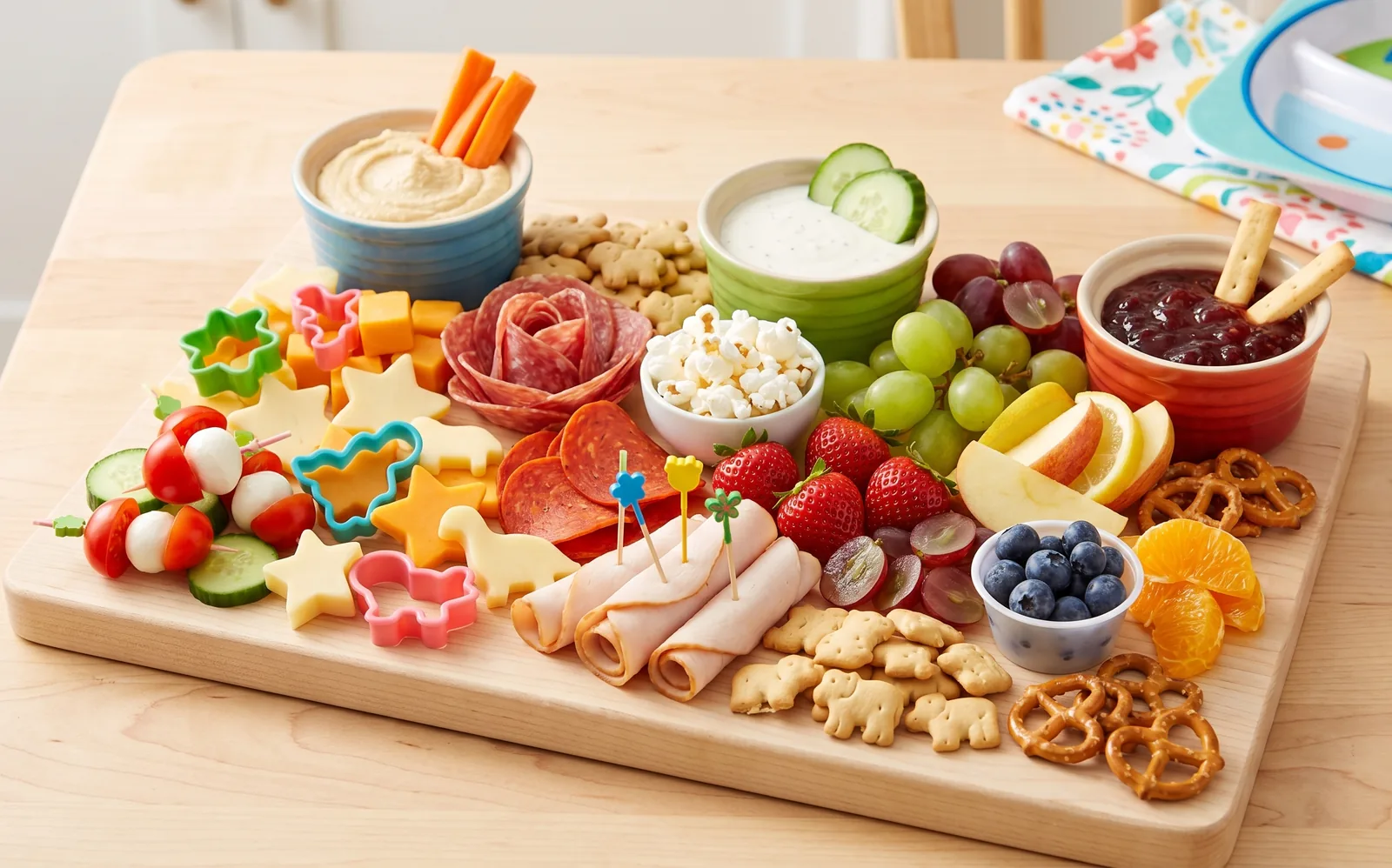
Quick Answer: A kids charcuterie board uses mild cheeses (mild cheddar, string cheese, mozzarella), familiar meats (pepperoni, salami, turkey), fresh fruit (grapes halved for young children, strawberries, apple), crackers or pretzels, and dips (hummus, ranch). The format — everything arranged on a board for picking and mixing — creates the engagement. Cut cheese into fun shapes with cookie cutters and let kids build their own combinations.
A charcuterie board for kids works on the same principle as an adult board: variety, visual abundance, and interactive format. The adjustment is in the selection — familiar flavors, mild profiles, kid-approved textures, and elements that are fun to pick up.
What Goes on a Kids Board
Cheeses
Mild cheddar: Pre-cubed into 1/2-inch pieces, or sliced and cut into shapes with a small cookie cutter (stars, hearts, animals). Mild cheddar is the most universally accepted kids' cheese.
String cheese: Individual sticks placed whole on the board. Kids can pull them apart — the tactile element is part of the appeal.
Mozzarella pearls: Small, pre-portioned, mild, slightly bouncy texture that kids enjoy. Thread a few onto toothpicks with grapes and strawberries as a mini skewer.
Babybel rounds: Each sealed in red wax with a pull tab. The peeling action is inherently engaging for kids. Mild, creamy, approachable.
Mild gouda: Slightly creamier than cheddar, still mild. Cube or cut into rectangles.
Avoid: Blue cheese, Époisses, aged parmesan, sharp aged cheddar, any funky or pungent variety. The goal is familiar flavors in a fun context.
Meats
Pepperoni: The most recognizable and well-liked cured meat for kids. Fold into cups or rosettes.
Genoa salami: Mild, familiar. Fold or stack.
Deli turkey (thinly sliced, rolled): Not technically charcuterie but universally accepted. Roll into tubes and stand upright.
Deli ham: Same approach — rolled tubes or fan-folded into triangles.
Mild dry salami: A step up from pepperoni for slightly older kids. Fold or cup.
Avoid: Intensely spiced meats (Calabrese, heavily peppered coppa), anything with visible chili heat.
Fresh Fruit
Fruit is often the most popular element on a kids board. Include plenty.
Strawberries: Whole or halved. Bright red, sweet, easy to pick up.
Grapes: Small clusters. Important safety note: For children under 5, cut grapes in half lengthwise to reduce choking risk.
Apple slices: Cut thin, tossed in a little lemon juice to prevent browning.
Blueberries: Easy to pick up, popping texture kids enjoy.
Raspberries or blackberries: Use with older kids — they're fragile and can stain.
Melon cubes or balls: Honeydew and cantaloupe cut into small cubes or melon-balled.
Fruit skewers: Thread strawberries, grapes, and melon alternating on toothpicks for a ready-to-eat element that feels special.
Crunchy Elements
Crackers (2 types): Water crackers and a shaped cracker or fun shape. Goldfish crackers are acceptable on a kids board — they're familiar and keep the engagement level high.
Pretzels: Small twists or sticks. Salty, crunchy, fun to dip.
Popcorn: A small bowl of lightly salted popcorn fills visual space and is a crowd-pleaser.
Mini breadsticks (grissini): Fun to hold and dip. Pairs well with hummus.
Dips
Dips are the interactive element that make a kids board particularly engaging.
Hummus: Classic, familiar, available in plain and mild flavors. Place in a small bowl with cucumber rounds for dipping.
Ranch dressing: The universal kids condiment. A small ramekin for dipping crackers, vegetables, and meat.
Peanut butter (if no allergies): In a small bowl for dipping apple slices. Always check for nut allergies before serving.
Mild honey: A small drizzle area or dipping bowl for fruit and mild cheese. Note: Honey is not safe for children under 1 year old.
Avoid: Dijon mustard (too sharp), horseradish, hot sauce, anything spicy or acidic.
Produce Extras
Cucumber rounds: Easy to pick up, mild flavor, excellent for dipping in hummus.
Baby carrots: Classic finger food that fits the board format naturally.
Cherry tomatoes (halved): Bright color, mild flavor. Halve for younger children.
Bell pepper strips: Sweet, colorful, crunchy. Red and yellow peppers are sweeter and more kid-friendly than green.
Presentation Tips That Increase Engagement
Use cookie cutters on cheese. A small star-shaped or heart-shaped cheese piece is more exciting to a child than a cube. It takes two minutes and transforms the visual for kids.
Make rainbow fruit arrangements. Arrange strawberries → orange/yellow peppers → pineapple → green grapes → blueberries in a rainbow arc. Kids respond to the color organization.
Add small cups and ramekins. Each dip in its own small container feels like its own discovery. More containers = more visual activity.
Include a small "build your own" area. A section of the board with crackers, cheese slices, and meat nearby lets older kids assemble their own combinations.
Toothpick skewers. Thread 3–4 elements onto a toothpick (mozzarella pearl + grape + strawberry) and place 5–6 ready-to-eat skewers on the board. Kids pick them up immediately.
Safety Considerations
Choking hazards for under-5: Whole grapes (cut in half lengthwise), whole cherry tomatoes (halve), large chunks of hard cheese (cut small), whole nuts (avoid). Round foods that can completely block an airway are the primary concern.
Allergy awareness: Check for nut allergies before including peanut butter or any nut products. Sesame allergies are increasingly common — check before adding seeded crackers.
Honey: Not safe for children under 1 year old due to the risk of infant botulism.
The Charcuterie Lab Takeaway
A kids charcuterie board works because the format itself — everything laid out for picking, mixing, and experimenting — is inherently engaging to children. Use familiar flavors (mild cheddar, pepperoni, strawberries, grapes, hummus), add interactive elements (cookie cutter cheese shapes, toothpick skewers, individual dip cups), and let the presentation do the work. The selection is secondary to the format.
Building more boards? The Charcuterie Lab ebook covers 50 boards for every occasion — including family-friendly formats.
FAQ
What goes on a charcuterie board for kids?
Mild cheeses (mild cheddar, mild gouda, string cheese, fresh mozzarella), familiar meats (pepperoni, salami, turkey slices, deli ham), fresh fruit (grapes, strawberries, apple slices, berries), crunchy elements (crackers, pretzels, popcorn), and dips (hummus, ranch, peanut butter). Focus on foods kids already like, presented in a format that feels like play rather than a meal. Avoid strong-flavored cheeses, intensely spiced meats, and unfamiliar textures.
What cheese should you use on a kids charcuterie board?
Mild cheddar (cubed or sliced), string cheese (individual sticks kids can pull apart), mild gouda, fresh mozzarella pearls, and babybel rounds are all kid-approved. Avoid aged, strong, or funky cheeses — blue cheese, washed-rind, and aged parmesan are acquired tastes that most kids won't enjoy. The goal is familiar flavors in a fun format, not an introduction to complex cheese.
What makes a charcuterie board more appealing to kids?
Finger-food format and interactive presentation. Kids engage more with food they can touch, stack, and arrange themselves. Use cookie cutters to cut cheese and fruit into shapes. Include skewers or toothpicks so they can spear their own combinations. Use small cups or ramekins for dips. Make the presentation colorful — rainbow fruit arrangements, multiple bright colors, visually interesting shapes. The novelty of the format does most of the work.
What should you avoid on a kids charcuterie board?
Avoid: strong-flavored aged cheeses (blue, washed-rind, aged parmesan), intensely spiced meats (hot Calabrese, heavily peppered coppa), whole grapes for very young children (cut them in halves or quarters for under-5), nuts for children with potential allergies (check before serving), and condiments with strong flavor (Dijon mustard, sharp horseradish). Honey is generally avoided for children under 1 year old due to botulism risk.
How much food do you need for a kids charcuterie board?
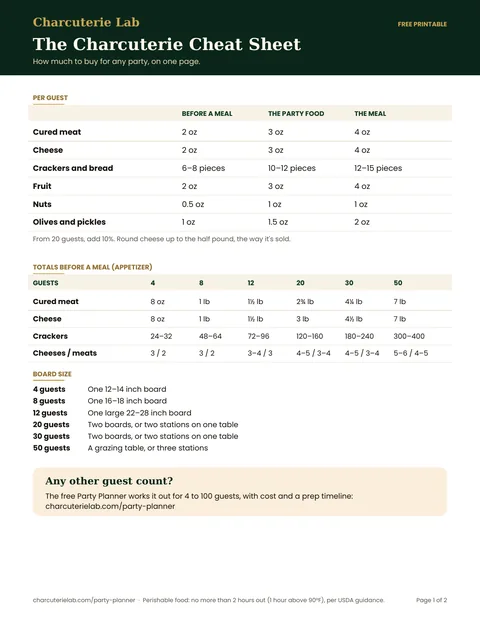
For a kids snack board (not a meal replacement): 1–1.5oz cheese per child, 1oz meat per child, a small handful of crackers, a handful of fruit, and a small dip. For a board that replaces a meal: increase to 2oz cheese, 1.5oz meat, more crackers and fruit. Children eat less volume than adults — a kids board for 6 children uses roughly the same total food as an adult board for 3–4.