Quick Answer: A charcuterie board for one uses the same structure as any board — soft cheese, semi-firm cheese, one bold selection, cured meat, crackers, fruit, and one or two condiments. Plan 4 oz of meat and 4 oz of cheese when it's dinner, 2 oz of each as a snack. Buy from the deli counter by weight to avoid waste. The board takes under 15 minutes and works as a full light meal.
Why a Solo Board Makes Sense
A charcuterie board for one is not a diminished version of a party board. It's a specific, practical format for one of the most satisfying solo meals available: no cooking, no cleanup beyond the board itself, and complete flavor range in under 15 minutes.
The appeal is the same at any scale — contrast, variety, and the pleasure of assembling something that looks and tastes considered. The format works for a solo dinner, a work-from-home lunch, a late-evening snack with wine, or a movie night that deserves something better than chips.
The main adjustment is shopping strategy. Buying a full block of three cheeses and a full package of three cured meats generates waste for one person. The solution is buying small quantities by weight.
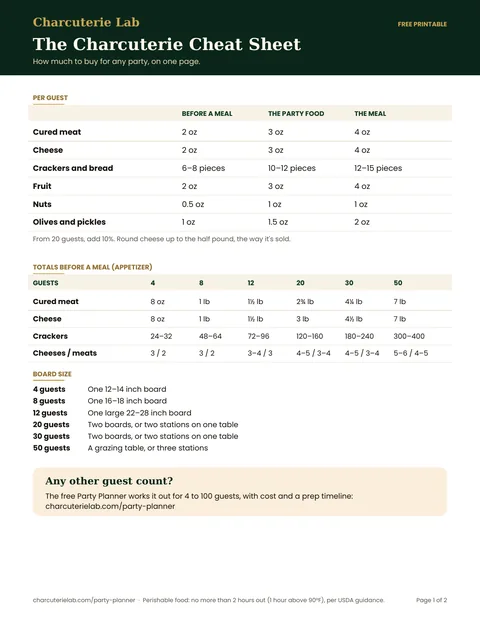
Quantities for One
Meat: 4 oz total when the board is dinner (2 oz if a meal follows), because you're not following it with a main course. Two varieties at 2 oz each is better than one variety at 4 oz — the contrast is part of the point.
Cheese: 4 oz total across three types when it's dinner. This sounds like a lot of types for a small quantity, but about 115g can cover three cheeses easily when you buy them as small wedges or deli-cut portions.
Crackers: 6–10 crackers. Two small boxes from a mixed cracker variety pack, or a handful pulled from a full box stored in an airtight container.
Fruit: A small cluster of grapes (8–10 grapes). Three or four apple slices. A fig if you have them. You don't need much fruit — a small handful of two varieties provides the palate-reset function without generating waste.
Condiments: One tablespoon each of two condiments. Honey and one of: grainy mustard, fig jam, quince paste. Single-serve honey packets work perfectly for a solo board and eliminate the waste of opening a full jar.
Buying Smart for a Solo Board
The primary waste concern when building for one is buying large packages of perishable ingredients you won't finish.
Cheese: Shop the deli cheese counter rather than the pre-packaged section. Most good grocery stores will cut you a 50–75g piece of any cheese from the counter. Three small cuts (brie, manchego, aged cheddar or blue) at 50–75g each gives you the full range without forcing you to buy a 200g block of each.
Meats: Pre-sliced packages (usually 3–4 oz) are already solo-board sized. Prosciutto and salami commonly come in 3oz packages. Buy one package of each variety you want. If you have access to a deli counter, ask for a few thin slices of each type — even cheaper per ounce than packaged.
Crackers: Any crackers you don't use on the board go back in the box. Store opened cracker boxes in a zip-lock bag to maintain crispness. Crackers keep for 1–2 weeks this way.
Fruit: Grapes come in bunches — pull a small cluster off. One apple provides more than enough for multiple solo boards. Dried fruit keeps indefinitely.
Building the Solo Board
The assembly logic is identical to any board, just smaller:
- Start with your cheese anchors — even if it's on a dinner plate, place the three cheese elements first in a triangle formation.
- Add meat near each cheese. One to two slices folded or fanned near each cheese section.
- Add condiments in small pools or use a ramekin for honey.
- Fill gaps with fruit clusters.
- Add crackers last, fanning them against the cheese sections.
Surface options for one: A small wooden board (8–10"), a large dinner plate, a slate tile, a round wooden cutting board. The surface sets the visual frame — even a plate looks intentional when the food is thoughtfully arranged on it.
Presentation still matters. Fan the cheese wedge rather than laying it flat. Fold the prosciutto loosely rather than laying slices flat. Leave a gap between elements. A small board assembled with these principles looks elegant rather than depressing.
The Solo Board as a Meal
Three to four ounces of cured meat and three to four ounces of cheese, with crackers and fruit, constitutes a complete light meal nutritionally — adequate protein (25–35g), fat, and enough variety to satisfy without being heavy.
This makes the charcuterie board for one a genuinely practical weeknight option: faster than cooking, no stovetop or oven, complete cleanup in under 2 minutes, and more interesting than most things you'd otherwise default to.
With wine: A single-serve wine bottle (187ml, about one glass) pairs without the waste of opening a full bottle. Alternatively, pour from whatever you have open. The wine-first principle applies at any scale: know what you're drinking and build the cheese and meat selection toward it.
Building more boards? The Charcuterie Lab ebook includes board formats for every occasion and guest count — including an entire section on scaled boards.
The Charcuterie Lab Takeaway
A charcuterie board for one works exactly like a board for twelve, scaled down. Buy from the deli counter by weight. Three to four ounces each of meat and cheese. Three cheese varieties, two meats, two condiments, small fruit clusters. Crackers last. Assembly under 15 minutes. Better than most meals that take four times as long.
FAQ
How much food do you need for a charcuterie board for one?
Plan 4 oz of meat and 4 oz of cheese when the board is your dinner, or 2 oz of each as a snack before a meal. Six to eight crackers and a handful of fruit complete it.
What cheese should you buy for a solo charcuterie board?
Pre-cut specialty cheese sections (100–150g pieces from the deli counter) are the most practical for a solo board — you get one piece of each variety without committing to a full block. Choose one soft (brie wedge), one semi-firm (manchego or aged gouda), and one with character (blue or sharp aged cheddar). Three types, small quantities.
How do you avoid waste when making a charcuterie board for one?
Buy from the deli counter or specialty cheese section where you can purchase small quantities by weight. Use pre-portioned single-serve packages where available. Store leftover cheese wrapped tightly in parchment (not plastic) in the fridge. Cured meats keep well refrigerated for 5–7 days once opened if tightly sealed.
Can you make a charcuterie board for one look impressive?
Yes — presentation doesn't scale down with portion size. Use a small wooden board, a slate tile, or a large dinner plate. Apply the same presentation principles: fan the cheese, fold the meat, leave intentional gaps. A small well-assembled board photographs and presents just as well as a large one.
What is a good single-serve charcuterie board for a solo dinner?
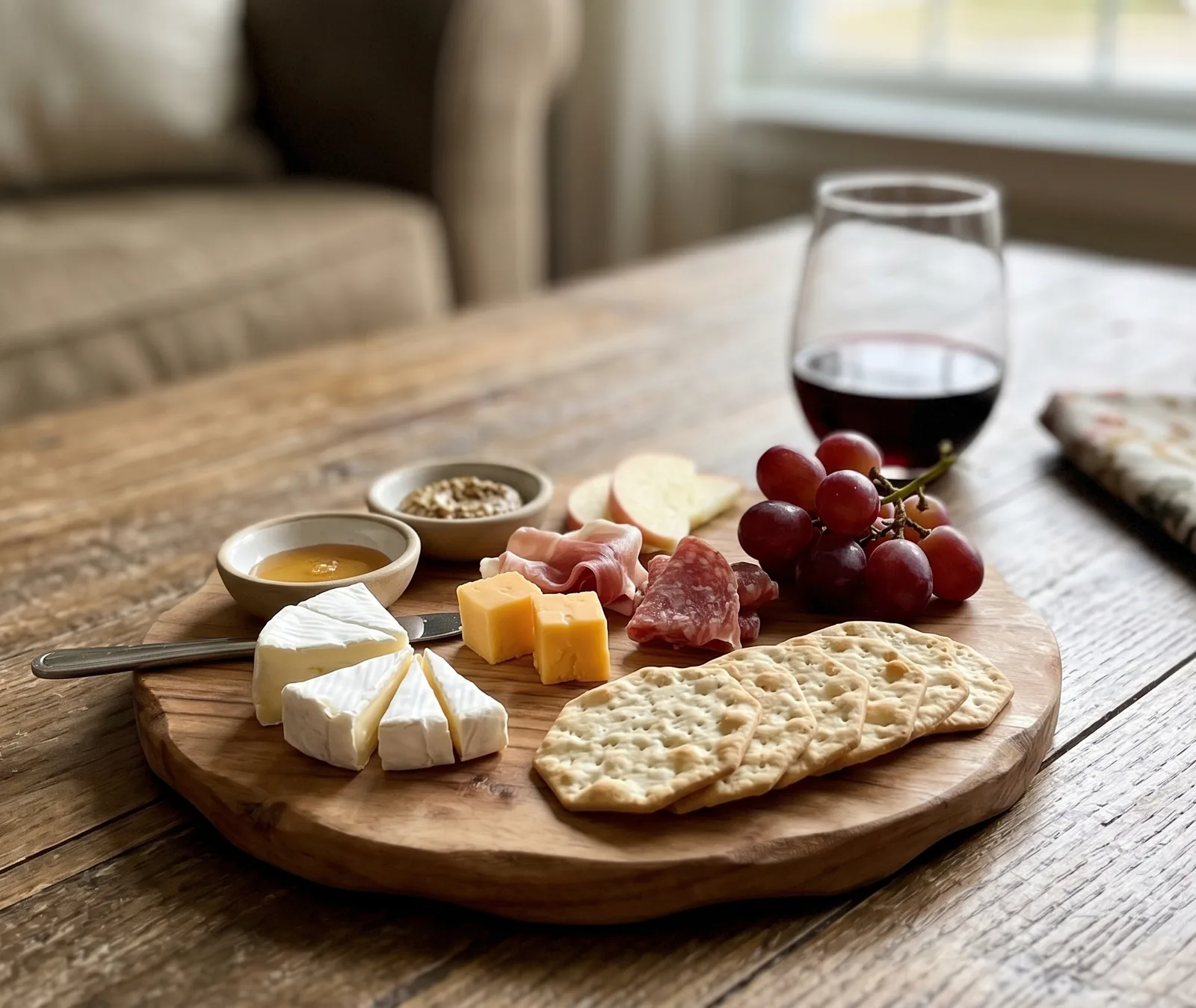
3 oz prosciutto or salami, 2 oz brie wedge, 2 oz aged cheddar or manchego, 6–8 crackers, a small cluster of grapes, and a tablespoon each of honey and grainy mustard. This builds a complete board with full flavor range in under 15 minutes, no cooking required, and works as a full light dinner.