The short version
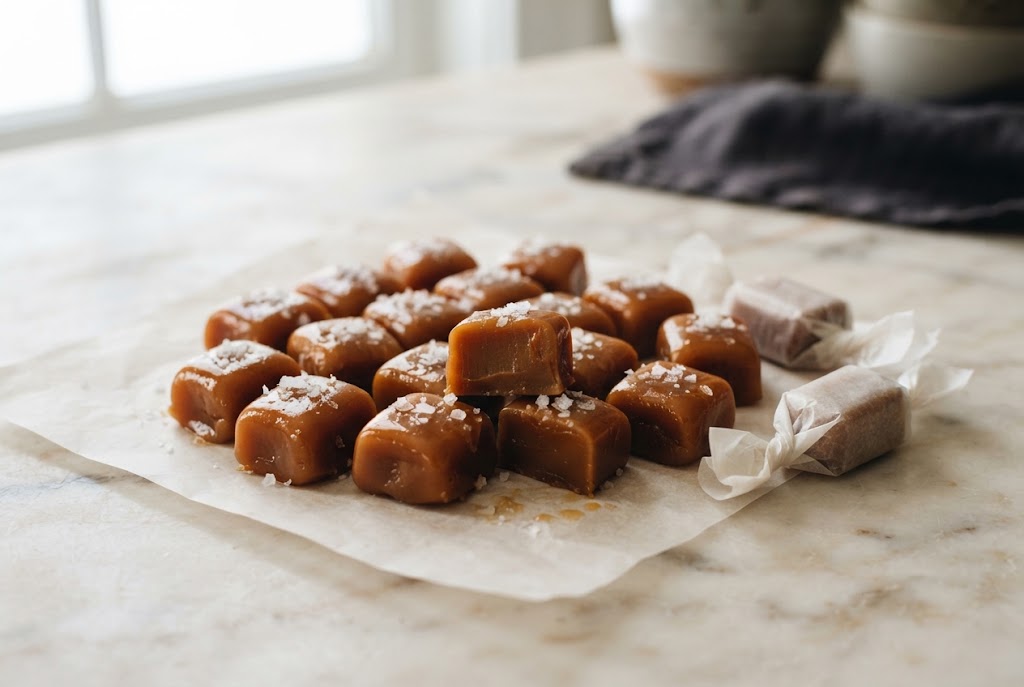
Soft caramel with flaky salt on top. It's the least surprising thing in this category and the most reliably eaten — everybody likes salted caramel, and on a board it bridges the savoury half and the sweet half better than plain chocolate does. Unwrap them; a bowl of wrappers looks like a checkout counter.
What it is
Sugar cooked to caramel with cream and butter, set soft, and finished with flaky sea salt. The French caramel au beurre salé from Brittany is the origin — made with salted butter rather than salted on top. Soft caramels are the board version; hard toffee is a different product.
- Taste
- deep caramelised sugar, butter, cream, salt
- Texture
- soft, chewy, yielding
- Look
- amber-brown squares topped with visible salt flakes
The mechanism is salt on sugar. Sodium suppresses bitterness and amplifies sweetness perception, so a salted caramel tastes both sweeter and less cloying than an unsalted one — and the flake on top gives a distinct crunch and salt burst separate from the caramel itself. It's the same trick as flaky salt on chocolate, built into the confection.
What it pairs with — and why
| Pair it with | Why it works |
|---|---|
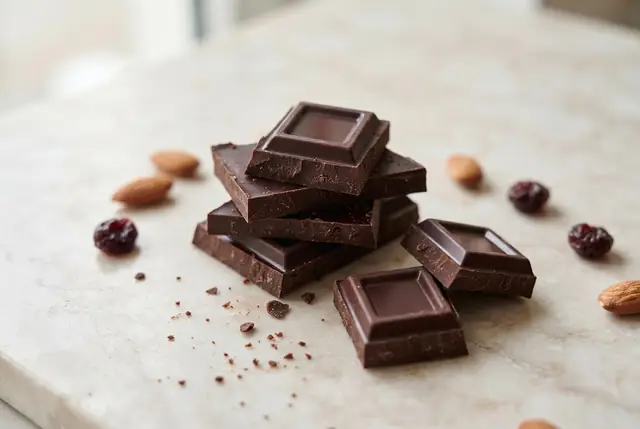
| Dark chocolate | Bitter against sweet, hard against soft. The two halves of the dessert corner. |
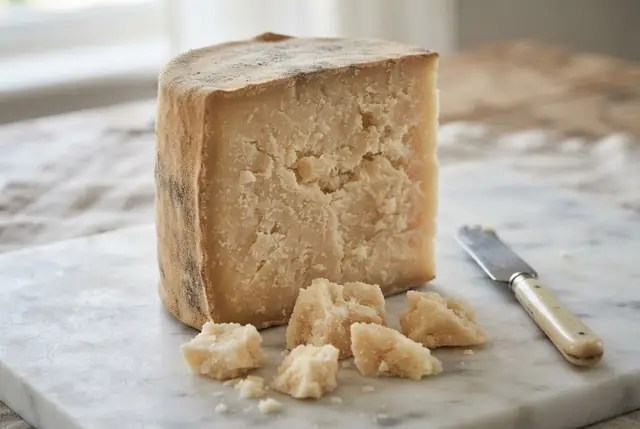
| Aged cheddar | Genuinely good and rarely tried — sharp crystalline cheese against soft salted sugar. |
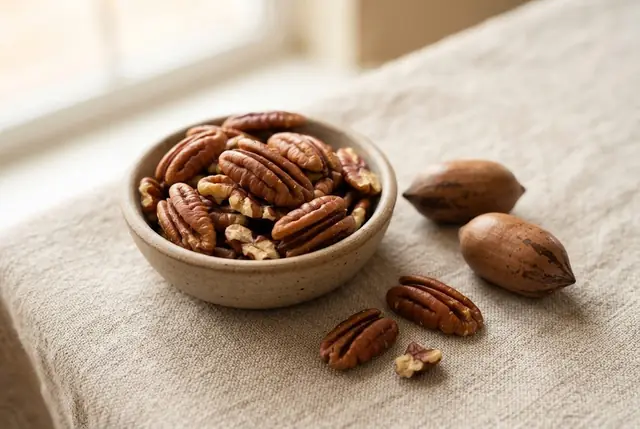
| Pecans and toasted nuts | Caramel and pecan is a fixed pairing. The nut supplies the crunch. |
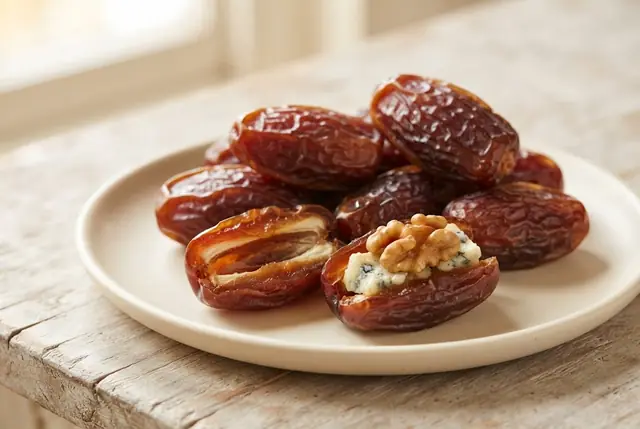
| Medjool dates | Both caramel-flavoured and both soft. Doubling down works. |
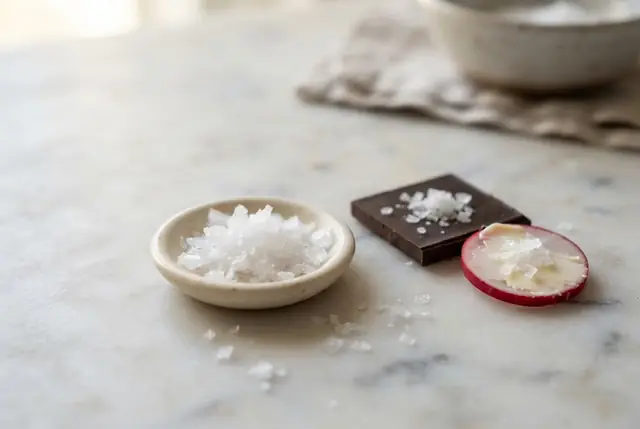
| Flaky sea salt | Add more if the caramels are under-salted. Most are. |
| Coffee and dessert wine | Coffee's bitterness cuts the butterfat; a sweet wine matches the caramel rather than fighting it. |
Skip it with: cured meat and savoury cheese, other than the cheddar exception above.
How to prep it for the board
- Unwrap them. A bowl of twisted wrappers undoes the whole board.
- Cut large ones in half — a full square is a lot of caramel.
- Add extra flaky salt on the cut face if they taste flat.
- Serve in a small bowl or on a small plate — they stick to wood.
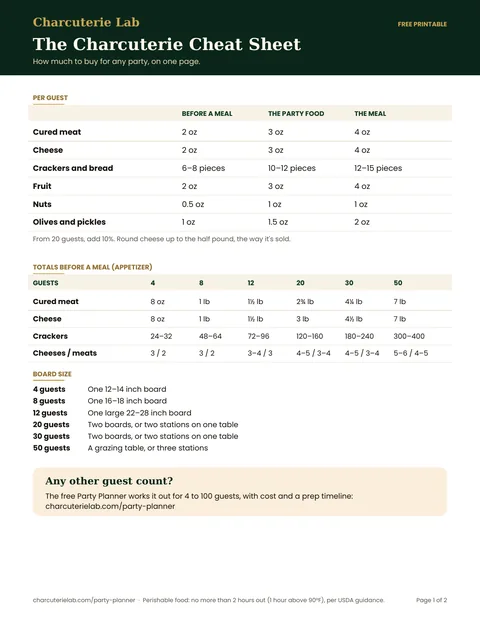
- Serve 0.5 oz per person — one or two.
- Keep them cool but not cold. Fridge-cold caramel is hard and unpleasant.
- Fix: sticking together in a heap? Chill them for ten minutes, then separate and serve at room temperature.
What to buy
| Product | Where | Notes |
|---|---|---|
| French caramels au beurre salé | French delis, specialty | Made with salted Breton butter. The best version. |
| Trader Joe's fleur de sel caramels | Trader Joe's | Excellent value and genuinely good. |
| Local chocolatier caramels | Chocolatiers, farmers markets | Usually soft, fresh, and well-salted. |
| Chocolate-covered salted caramels | Chocolatiers, grocery | Two things at once. Neater to serve, no wrapper. |
| Homemade | Make it | Sugar, cream, butter, salt. Straightforward but needs a thermometer. |
Label check: cream and butter should be in the ingredients. Cheap caramels use corn syrup and vegetable fat and taste waxy.
Skip: hard toffee and anything individually wrapped that you don't intend to unwrap.
Quick FAQ
Do salted caramels go with cheese?
With aged cheddar, surprisingly well — sharp crystalline cheese against soft salted sugar. Otherwise keep them in the dessert corner.
Should I unwrap them?
Yes. Wrappers on a board look like a checkout counter, and guests are less likely to take one.
What's caramel au beurre salé?
The Breton original, made with salted butter rather than salted on top. Deeper and less sweet.
Why does salt make caramel taste better?
Salt suppresses bitterness and heightens sweetness perception, so the caramel tastes richer and less cloying.
How many per person?
One or two, about half an ounce. They're very rich.