The short version
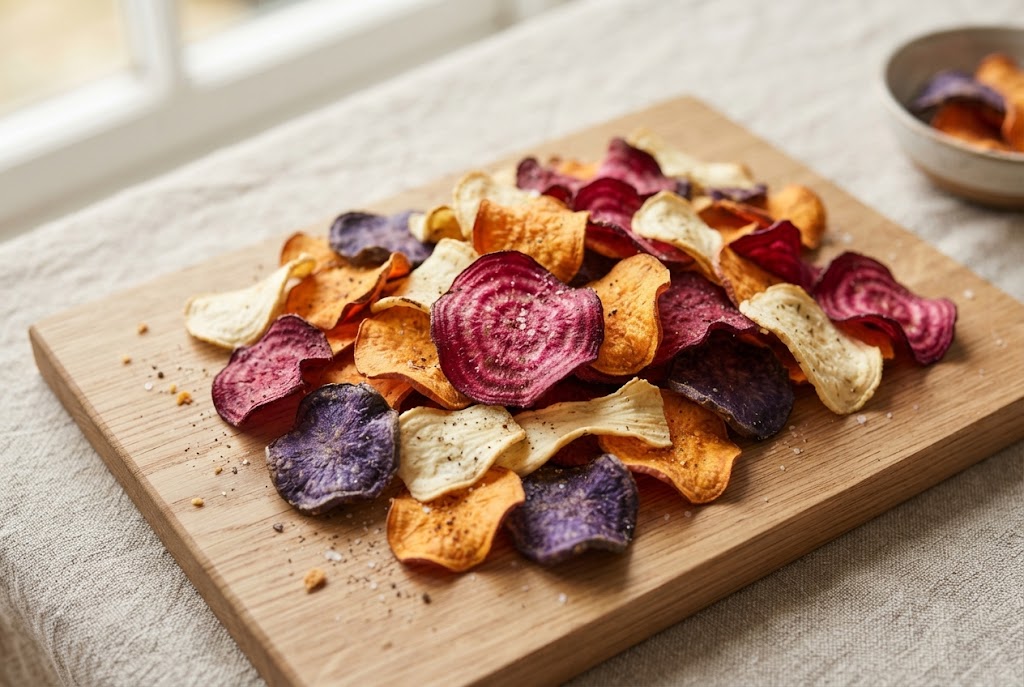
A mix of taro, beet, parsnip, sweet potato and batata, sliced thin and fried. Gluten-free, grain-free and nut-free — and the only base in this whole section that brings real color. On a board that's mostly beige and cream, that matters more than you'd think.
What it is
Each root behaves differently in the fryer, which is why a bag of these is never uniform. Taro fries pale with purple threads, beet goes deep magenta and slightly sweet, parsnip turns ivory and nutty, sweet potato comes out orange and sugary. The mix is the product.
- Taste
- earthy and sweet, varying chip to chip
- Texture
- thin, curled, brittle
- Look
- purple, magenta, orange, ivory — the most colorful thing on the board
Color is the mechanism, and it's a legitimate one. Almost every ingredient on a charcuterie board sits in a narrow range of cream, tan and dark red. A handful of magenta beet chips is the cheapest way to break that up, and unlike a garnish, people actually eat them.
What it pairs with — and why
| Pair it with | Why it works |
|---|---|
| French onion or caramelized onion dip | Sweet earthy root against savory allium. The reason these bags get finished. |
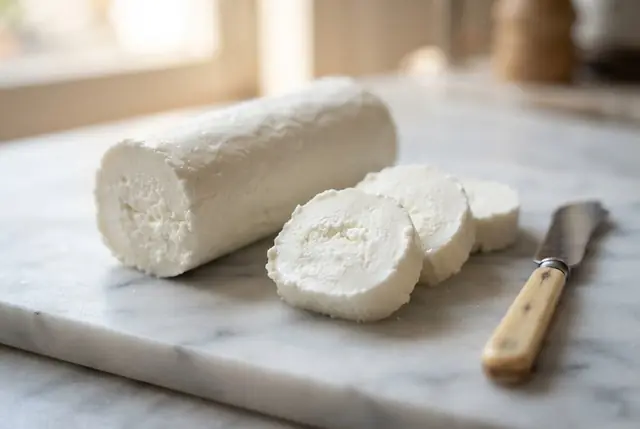
| Fresh goat cheese | Tangy and white against sweet and colorful. Also the best-looking bite on the board. |
| Blue cheese dip | Salt and funk cut the sugar in beet and sweet potato chips. |
| Crème fraîche with chives | Cool, sour, plain — everything the chips aren't. |
| Hummus and white bean dip | Sturdy enough to scoop, earthy enough to match. |
| Sharp cheddar | Acid against sweetness, the same logic as apple with cheddar. |
| Cider, sparkling wine, saison | Acidity and bubbles against fried starch. |
Skip it with: delicate cheeses and anything expensive — these are sweet, earthy and fried, and they overwhelm subtlety. Skip caviar and smoked fish outright; the flavors clash badly.
How to prep it for the board
- Use them as the color block. Put them where the board looks flattest — usually a corner where everything nearby is cream or tan.
- Pick out the beet chips and cluster a few. Sorting takes thirty seconds and the magenta reads much stronger grouped than scattered.
- Serve 6–8 per person.
- Set them beside a pale dip — onion, goat cheese, crème fraîche — for maximum contrast.
- Keep them dry. They're thin and they go limp faster than plantain chips.
- Fix: 3 minutes at 300°F restores the crunch and deepens the color.
What to buy
| Product | Where | Notes |
|---|---|---|
| Terra Original Vegetable Chips | Nearly every grocery store | The classic mix — taro, batata, parsnip, yuca, sweet potato. The default. |
| Terra Sweets & Beets | Same aisle | Heavier on the magenta. Best if you're buying these for color. |
| Terra Mediterranean | Same aisle | Herbed. Good with goat cheese, busier on the board. |
| Trader Joe's Root Vegetable Chips | Trader Joe's | Very close to Terra Original at a lower price. |
| Store brand vegetable chips | Target, Kroger, Whole Foods | Variable slice thickness, but fine and cheap. |
| A mandoline and a few roots | Produce aisle | Slice paper-thin, fry at 325°F, salt hot. A project, but spectacular. |
Label check: you want actual root vegetables listed, not "potato flour and vegetable powder." Several cheap bags are reconstituted potato chips with beet coloring.
Skip: the reconstituted kind above. They're uniform, perfectly shaped, and taste like a potato chip wearing a costume — a real bag has irregular slices.
Quick FAQ
Are root vegetable chips gluten-free?
Yes — vegetables, oil and salt. Also grain-free and nut-free.
Which brand is best for a board?
Terra Sweets & Beets if you want color, Terra Original if you want balance.
How many per person?
6–8. People graze on them.
Are they healthier than potato chips?
Marginally — more fiber and micronutrients, but they're still fried. Buy them for the color and the allergen profile, not the nutrition.
Why do some bags look uniform?
Because they're reconstituted potato with coloring. Real root chips are irregular in shape and shade.