The short version
Soaked cashews blended smooth, often cultured with the same bacteria used in dairy cheese. It's the plant-based category that actually works — rich, tangy and spreadable — and it belongs on a board on its own terms rather than as a substitute.
What it is
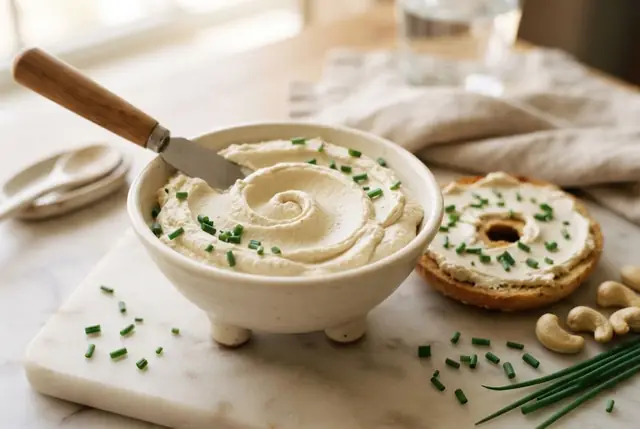
Raw cashews are soaked, blended with water, salt and usually lemon or nutritional yeast, then either served fresh or cultured with live cultures and aged. The cultured versions develop genuine tang and, in some cases, rinds. Cashews are used because they're low in fiber and high in fat, so they blend to a genuinely smooth paste where almonds stay grainy.
- Taste
- rich, nutty, tangy when cultured, faintly sweet
- Texture
- smooth and spreadable, firmer when aged
- Look
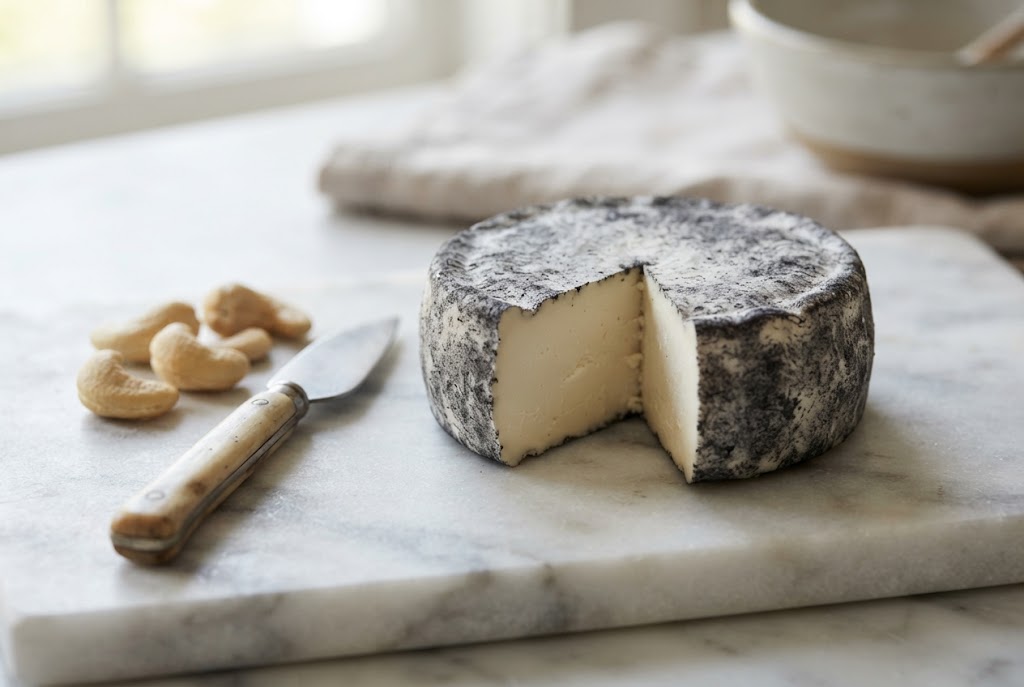
- pale ivory, matte, sometimes with a bloomy or ash rind
Fermentation is the mechanism, and it's what separates the good products from the bad. Uncultured cashew cheese is a nut purée with salt — pleasant, not cheese-like. Cultured versions use the same lactic acid bacteria as dairy cheesemaking, which produce the same acids and aromatic compounds, and they taste genuinely tangy as a result. Read the label for "cultured" or "live cultures."
What it pairs with — and why
| Pair it with | Why it works |
|---|---|
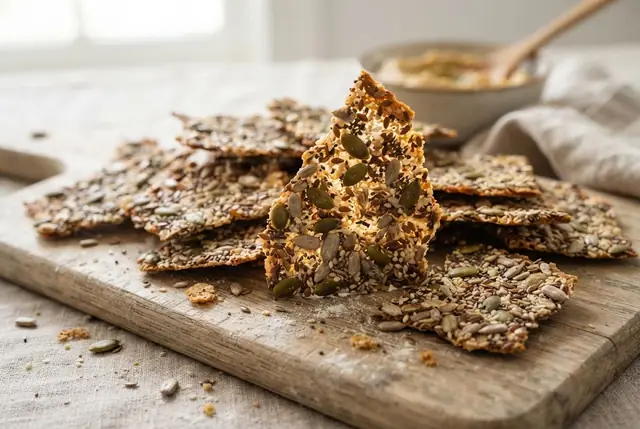
| Seeded crackers | Crunch and bitterness against a smooth rich paste. |
| Fig jam and hot honey | Sweetness against tang. Note: honey isn't vegan — use agave or fruit preserve if that matters. |
| Cornichons and pickled onion | Acid cutting nut fat. |
| Fresh herbs — chives, dill, thyme | Cashew cheese takes herbs extremely well. |
| Roasted red peppers and olives | Oily, briny neighbors on a Mediterranean board. |
| Cracked pepper and olive oil | Simple seasoning; the paste is rich enough to need little else. |
| Crisp white wine, dry rosé, sparkling | Acid against fat, same as with dairy. |
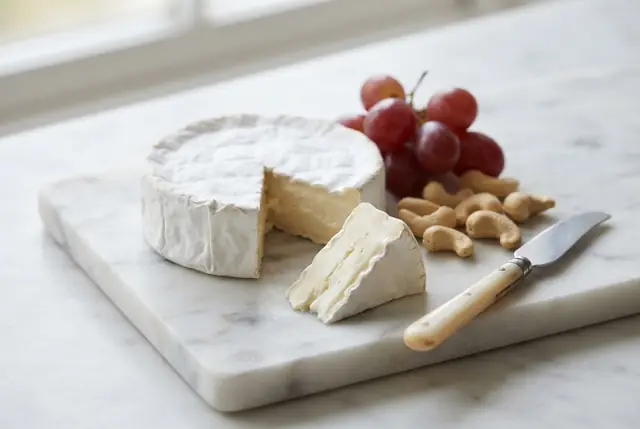
Skip it with: direct comparison to dairy cheese on the same board. It's a good thing on its own and a poor imitation of something else — serving it beside a brie invites the wrong judgement.
How to prep it for the board
- Treat it as a spread, not a wedge. Even the firm ones are softer than they look.
- Temper 20 minutes and spread it in a shallow bowl or on a small plate.
- Season the surface — olive oil, cracked pepper, chopped herbs, flaky salt. Almost every plant-based cheese benefits.
- Serve 1–1.5 oz per person.
- Label it clearly, both so vegan guests find it and so nobody puts a dairy knife in it.
- Give it its own knife and its own crackers, for the same reason.
- Fix: if it tastes flat, it's uncultured. Add lemon juice, salt and nutritional yeast and stir — it improves considerably.
What to buy
| Product | Where | Notes |
|---|---|---|
| Miyoko's Creamery cultured cashew cheeses | Whole Foods, most grocery, Target | The category leader. Cultured, genuinely tangy, several styles. |
| Treeline cashew cheese | Whole Foods, natural grocers | Cultured, herb versions especially good. |
| Nuts For Cheese | Whole Foods, natural grocers | Cultured and aged. Firmer, more cheese-like. |
| Rebel Cheese, Blode Kuh and other artisan makers | Specialty shops, online | Small-batch cultured vegan cheese. Expensive and impressive. |
| Homemade | Any grocery | Soak raw cashews four hours, blend with lemon, salt and nutritional yeast. Cheap and easily good. |
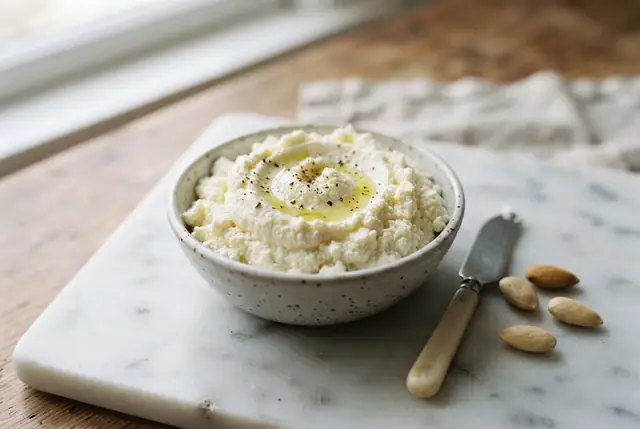
| Almond ricotta | Whole Foods, natural grocers | The lighter plant-based option — see its own page. |
Label check: "cultured" or "live cultures" in the ingredients. Products without them are nut purée and taste like it.
Skip: anything built on coconut oil and starch. Those melt convincingly and taste of very little — a cooking product rather than a board one.
Ranked picks: our top-rated vegan cheese for a board is Boursin Dairy-Free Garlic & Herbs (4.4 out of 5), and the best cashew cheese brand is Treeline. See the full ranking of the best vegan cheese.
Quick FAQ
Is cashew cheese actually cheese?
Not by any dairy definition, but the cultured versions use the same bacteria and develop real tang. It's a fermented food in its own right.
Which brand should I buy first?
Miyoko's. It's cultured, widely available and the most consistently good.
Does it contain nuts?
Yes — cashews, a tree nut. It's dairy-free, not allergen-free.
How do I make it?
Soak raw cashews four hours, blend with lemon juice, salt, nutritional yeast and a little water. Culture it with a probiotic capsule if you want tang.
How much per person?
1–1.5 oz. It's rich.