The short version
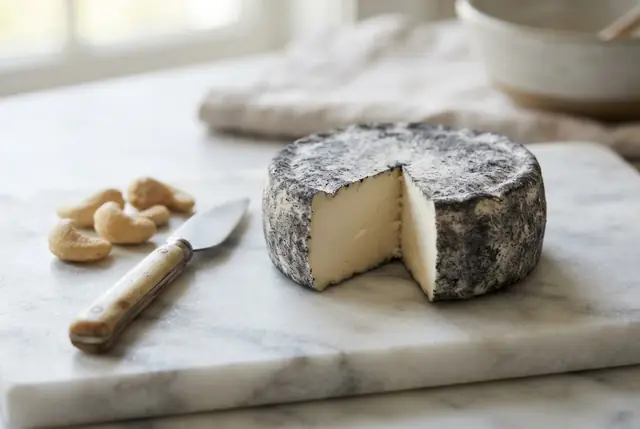
A cultured cashew base with a genuine Penicillium candidum bloomy rind — the same mold used on dairy brie. It's the most technically ambitious plant-based cheese being made, it's expensive, and on a board it's the one that reads as a real cheese from across the room.
What it is
The base is cashews, soaked and blended, cultured with lactic acid bacteria, formed into a wheel, then sprayed with the same white surface mold used on brie and Camembert. The mold grows a real rind and ripens the cheese from the outside in, exactly as it does on dairy. Making it work took the category years.
- Taste
- rich, tangy, faintly mushroomy, nutty underneath
- Texture
- dense and creamy, softening under the rind with age
- Look
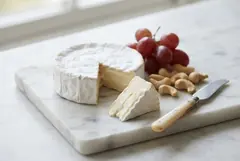
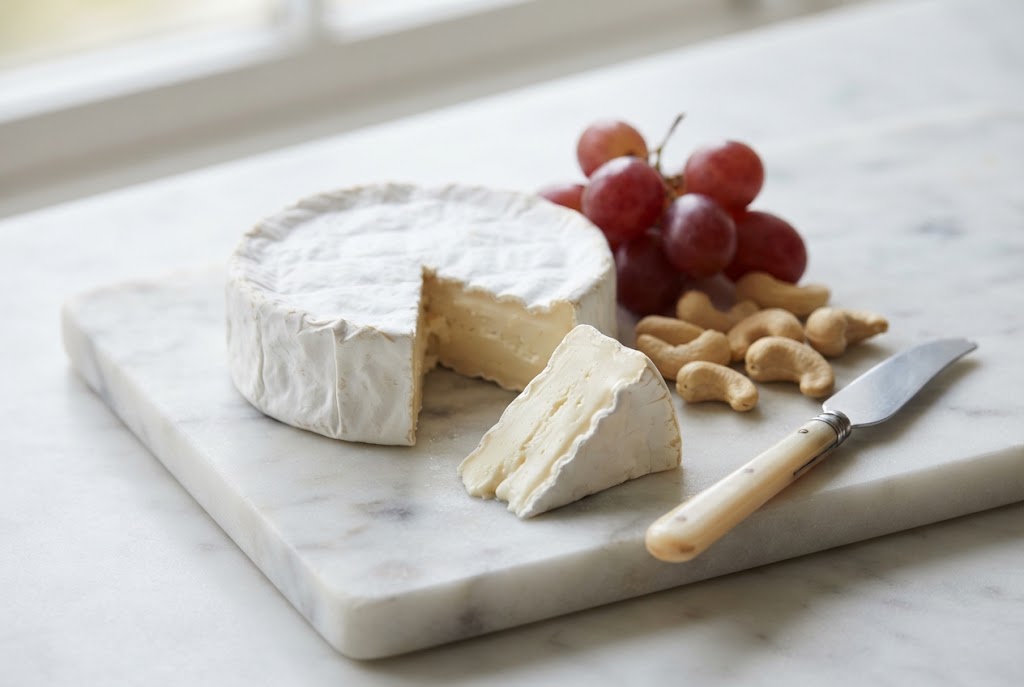
- small white wheel with a genuine bloomy rind
Real rind ripening is the mechanism, and it's why this works where flavored nut paste doesn't. P. candidum produces the same enzymes on a nut substrate as on milk, breaking proteins and fats down into the same mushroomy, savory compounds that make brie taste like brie. The base is different; the process is identical.
What it pairs with — and why
| Pair it with | Why it works |
|---|---|
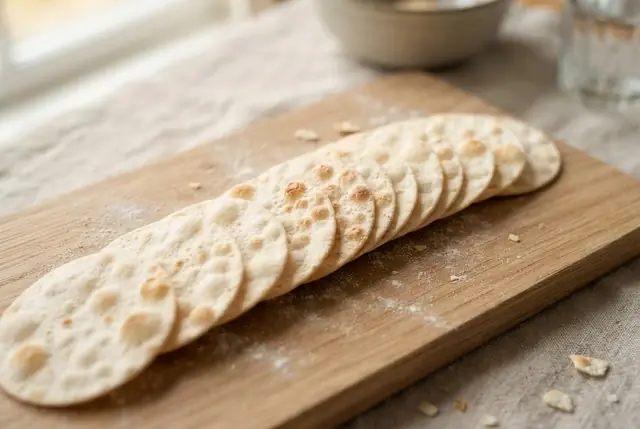
| Water crackers | Lean and dry under a rich cheese. Nothing should compete. |
| Fig jam and fruit preserve | Sweet against tangy and rich. The brie playbook, unchanged. |
| Baguette | Plain bread, as with dairy brie. |
| Grapes and pear | Fresh acid cutting a dense, fatty paste. |
| Walnuts and Marcona almonds | Tannin and salt against a rich cultured cashew paste. |
| Agave or maple instead of honey | Same job, and vegan if that matters at your table. |
| Sparkling wine, dry rosé | Acid and bubbles against fat. |
Skip it with: a dairy brie on the same board, which invites a comparison it will lose. Serve it as the cheese it is.
How to prep it for the board
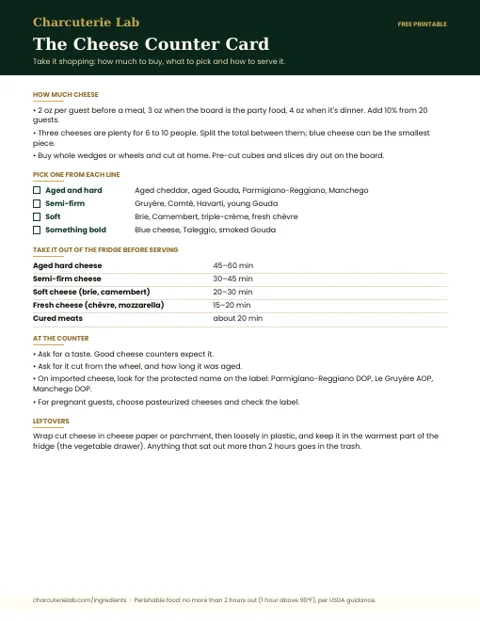
- Temper 45 minutes. These wheels are dense cold and much better warm — more so than dairy brie.
- Cut wedges from the center out, keeping rind on each piece.
- Serve 1–1.5 oz per person. It's expensive and rich.
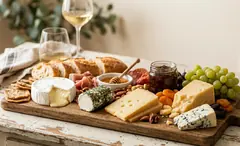
- Make it the plant-based centerpiece. On a mixed board, give it its own corner with its own crackers and knife.
- Say what it is. People assume plant-based cheese is bad; naming it after they've tried it is the more persuasive order.
- The rind is edible, as with dairy brie.
- Fix: if it's firm and chalky throughout, it's young. A few days in the fridge widens the softened layer under the rind.
What to buy
| Product | Where | Notes |
|---|---|---|
| Miyoko's Creamery Double Cream Chive / Classic | Whole Foods, most grocery, Target | The widely available cultured wheel. The best starting point. |
| Nuts For Cheese | Whole Foods, natural grocers | Cultured and aged, several styles. |
| Rebel Cheese | Specialty shops, online | Small-batch bloomy-rind vegan wheels. Expensive and genuinely impressive. |
| Climax Foods, Blode Kuh and other artisan makers | Online, specialty | The frontier of the category. Availability varies. |
| Treeline | Whole Foods, natural grocers | Firmer cultured nut cheeses rather than bloomy-rind. |
| Cashew cheese | Whole Foods, grocery | The simpler, cheaper plant-based option — see its own page. |
Label check: a real bloomy rind and "cultured" in the ingredients. Products with a white coating but no live culture are a different thing.
Skip: coconut-oil-and-starch "brie." It melts convincingly and tastes of almost nothing.
Ranked picks: our top-rated vegan cheese for a board is Boursin Dairy-Free Garlic & Herbs (4.4 out of 5), and the best vegan brie is Rebel Cheese Brie. See the full ranking of the best vegan cheese.
Quick FAQ
Is vegan brie actually made with the same mold?
Yes — the better ones use Penicillium candidum, the same surface mold as dairy brie, and it forms a real rind.
Does it taste like brie?
Close in character — rich, tangy, faintly mushroomy — but nuttier underneath. It's good on its own terms rather than indistinguishable.
Can you eat the rind?
Yes, exactly as with dairy brie.
Why is it so expensive?
Cashews are costly, the cultures and aging take weeks, and production is small.
How much per person?
1–1.5 oz.