The short version
A cultured nut or oat base with the texture of cream cheese. It's the most practical plant-based item for a board — not because it's the best imitation, but because seasoning it heavily is what you'd do to dairy cream cheese anyway.
What it is
Most versions are built on cashews, almonds or oats, cultured with lactic acid bacteria for tang and thickened to a spreadable consistency. Cultured products develop genuine acidity; the cheaper coconut-oil-and-starch versions rely on added acid and taste flatter.
- Taste
- tangy, mildly nutty, clean, lightly salted
- Texture
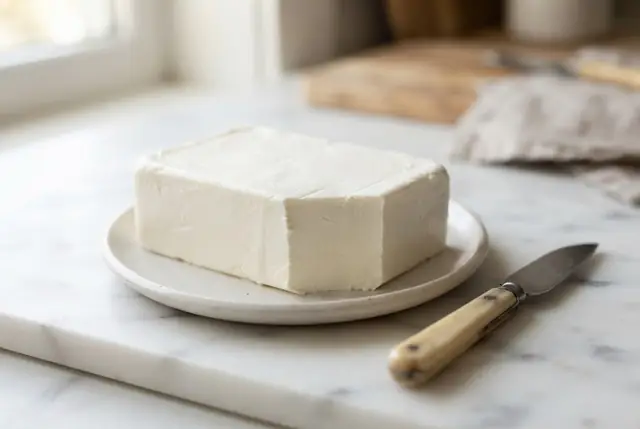
- dense, smooth, spreadable at room temperature
- Look
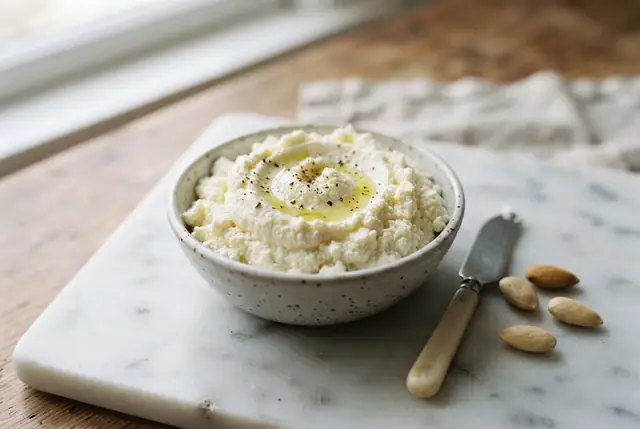
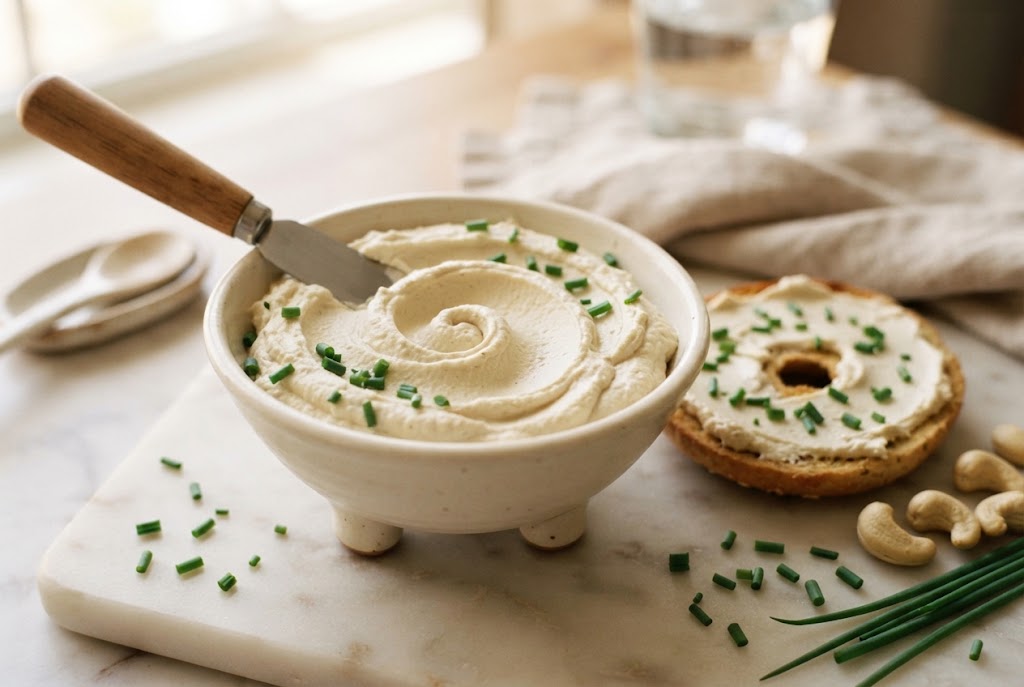
- white to ivory, matte, holds a swirl
Seasoning tolerance is the mechanism, and it's why this works where a vegan cheddar doesn't. Nobody eats plain cream cheese and judges it — they mix it with chives, or top it with pepper jelly, or put smoked salmon on it. A plant-based version that's slightly less tangy disappears entirely under the same treatment.
What it pairs with — and why
| Pair it with | Why it works |
|---|---|
| Everything crackers or bagel chips | Loud garlicky base, cool blank spread. Each fixes the other. |
| Hot pepper jelly | Sweet heat over cool tang. Two ingredients, always finished first. |
| Fresh chives, dill, cracked pepper | The cheapest way to make it look and taste intentional. |
| Cucumber and radish | Cool and crisp against a dense spread, with pepper from the radish. |
| Smoked carrot or beet "lox" | The plant-based version of the classic. Genuinely good. |
| Capers and red onion | The bagel plate, minus the fish. |
| Crisp white wine, dry sparkling, cold beer | Nothing precious needed. |
Skip it with: dairy cream cheese on the same board, and direct comparison generally. Also skip serving it plain — that's true of dairy cream cheese too.
How to prep it for the board
- Never serve it plain. The same rule as dairy cream cheese, and it matters more here.
- Whip it with a splash of plant milk to lighten it, then season.
- Two-minute upgrades: everything seasoning; chives and lemon zest; dill and cracked pepper; hot pepper jelly poured over the top.
- Spread it in a shallow bowl, swirl the surface, pool something in the dent.
- Serve 1–2 oz per person.
- Label it and give it its own knife, so vegan guests can use it safely.
- Fix: flat or waxy? That's a coconut-oil base. Add lemon juice, salt and nutritional yeast — it helps, though a cultured product is better.
What to buy
| Product | Where | Notes |
|---|---|---|
| Miyoko's Creamery cream cheese | Whole Foods, most grocery, Target | Cultured cashew base. The best widely available option. |
| Kite Hill cream cheese style spread | Whole Foods, most grocery | Almond base, widely stocked, several flavors. |
| Treeline cream cheese | Whole Foods, natural grocers | Cultured, firmer, herb versions especially good. |
| Oat-based cream cheeses | Whole Foods, natural grocers | Nut-free option, useful for a mixed-allergy table. |
| Homemade cashew spread | Any grocery | Soak cashews, blend with lemon, salt and nutritional yeast. Cheap and adjustable. |
| Labneh | Middle Eastern markets | Not vegan, but the tangiest dairy alternative if the issue is richness rather than dairy. |
Label check: "cultured" in the ingredients. Coconut oil and starch high in the list means a flatter, waxier product.
Skip: the flavored fruit versions on a savory board. Season it yourself.
Quick FAQ
Which vegan cream cheese is best?
Miyoko's for cultured cashew richness, Kite Hill for wide availability and a lighter almond base.
Is it nut-free?
Usually not — most are cashew or almond based. Oat-based versions exist and are the nut-free option.
Does it taste like dairy cream cheese?
The cultured ones come close, especially once seasoned. Uncultured ones don't.
How do I make it better?
Whip it, then season — chives, lemon zest, pepper, or hot pepper jelly poured over. The same treatment you'd give dairy.
How much per person?
1–2 oz.