The short version
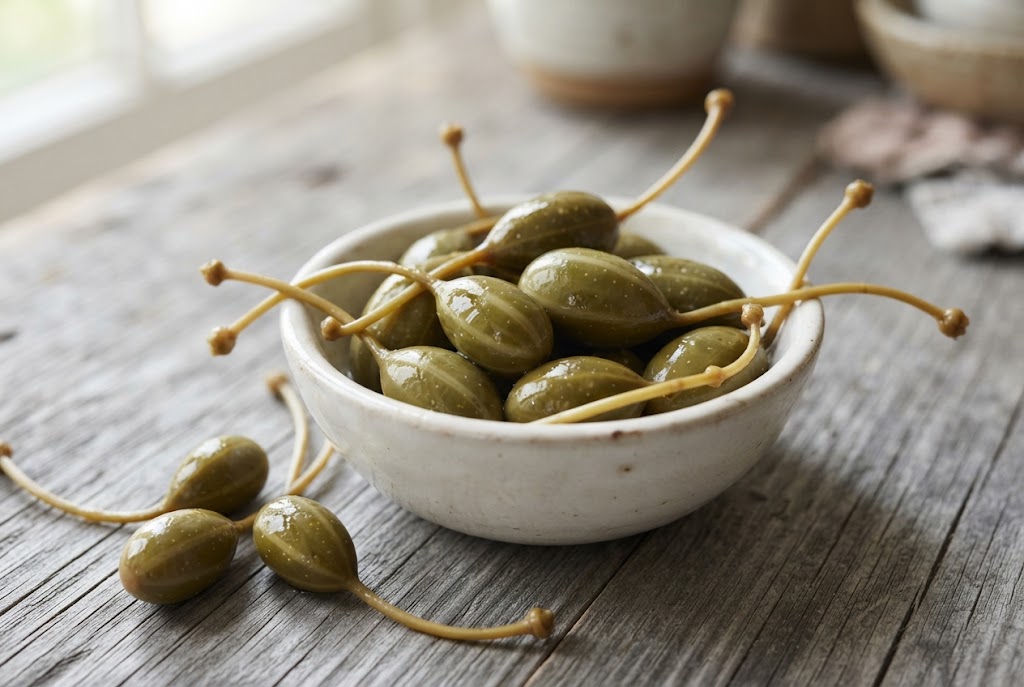
If a caper is the flower bud, a caperberry is what happens if you let it bloom and fruit. They're grape-sized, stemmed, mild and seedy, and you eat them whole by the stem. On a board they do what a caper can't — they're a thing you pick up rather than a thing you scatter.
What it is
The mature fruit of the caper bush, pickled whole in vinegar brine with the stem attached. Larger and much milder than the buds, with small edible seeds inside that give a faint crunch.
- Taste
- briny, tangy, mildly floral, much less intense than a caper
- Texture
- firm skin, soft seedy interior
- Look
- olive-green, grape-sized, with a long stem
The mechanism is the stem. Almost nothing on a board comes with a handle, and a handle changes how people eat — they take one deliberately rather than grabbing a few. Combined with the mildness, that makes caperberries a grazing ingredient where capers are a seasoning.
What it pairs with — and why
| Pair it with | Why it works |
|---|---|
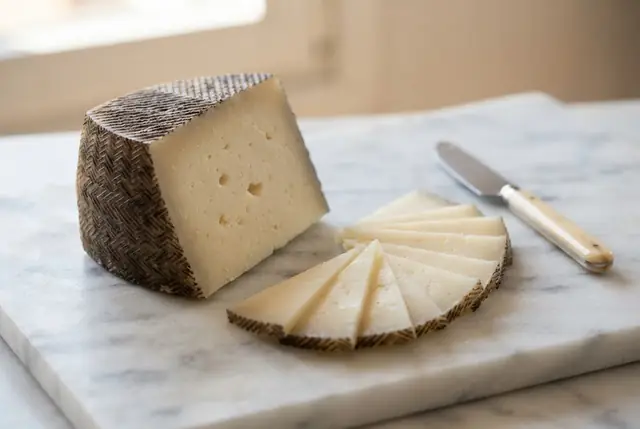
| Manchego | Salt and sheep-milk fat against mild brine. The Spanish tapas pairing. |
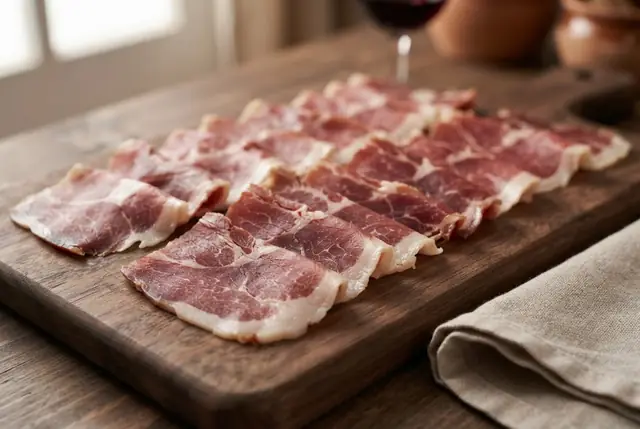
| Jamón serrano | Dry-cured salt cut by vinegar, with the stem making it easy to eat alongside. |
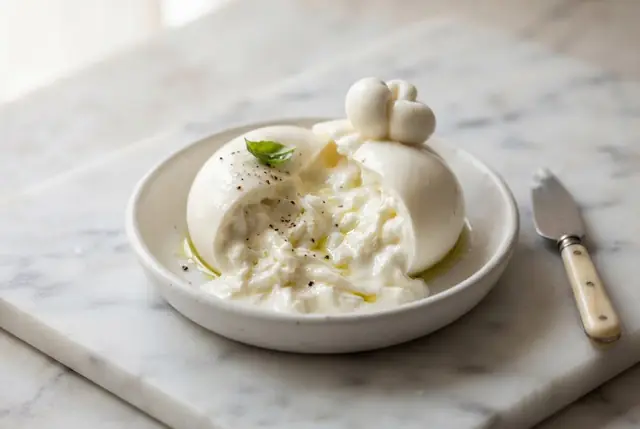
| Burrata | Cream with a briny, seedy counterpoint that's gentler than a caper. |
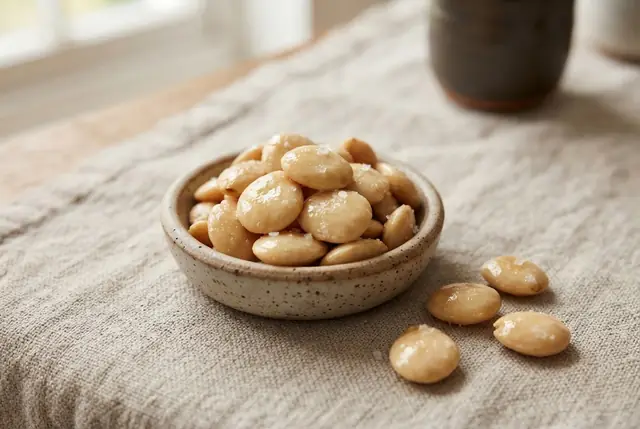
| Marcona almonds | Two Spanish bar snacks; one salty and crisp, one briny and soft. |
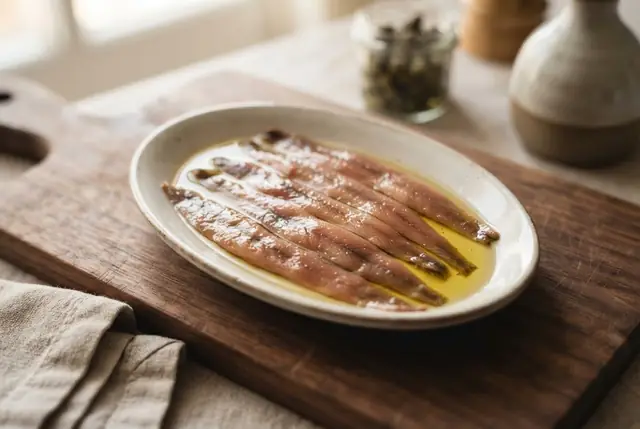
| Anchovies | The Spanish gilda — anchovy, olive and caperberry on a pick. One of the best bites in this whole section. |
| Martinis and vermouth | Their most common use, and a good clue to how they taste. |
Skip it with: delicate bloomy cheeses. Even mild, the brine is assertive.
How to prep it for the board
- Drain and serve in a small bowl with the stems pointing up or out.
- Leave the stems on. They're the handle and the look.
- Serve 0.5 oz per person — three or four berries.
- Make gildas: thread an anchovy, a Manzanilla olive and a caperberry onto a cocktail pick. It's the single best thing you can make from this page.
- Serve cold or at room temperature.
- Rinse briefly if the brine is very sharp.
- Fix: too vinegary? Drain, then dress with olive oil and lemon zest.
What to buy
| Product | Where | Notes |
|---|---|---|
| Caperberries in brine | Grocery, olive bars, Spanish delis | The standard. Sold in jars with stems on. |
| Spanish caperberries (alcaparrones) | Spanish delis | Usually the best. Firmer and better-flavoured. |
| Mezzetta or Divina caperberries | Grocery | Widely available brands. Reliable. |
| Caperberries in olive oil | Specialty | Milder and richer. Good with cheese. |
| Capers | Any grocery | The buds. A different ingredient — see the capers page. |
Label check: stems should be intact and the berries firm. Anything mushy in the jar has been sitting.
Skip: caperberries sold without stems. Half the point is gone.
Quick FAQ
What's the difference between capers and caperberries?
Capers are the unopened flower buds — small and intensely salty. Caperberries are the mature fruit — grape-sized, stemmed, and much milder.
Do you eat the whole caperberry?
Yes, including the small seeds inside. Hold it by the stem and eat the rest.
What is a gilda?
A Basque pintxo: an anchovy, a Manzanilla olive and a caperberry on a cocktail pick. Excellent, and takes ten seconds.
What cheese goes with caperberries?
Manchego and Spanish sheep cheeses, plus burrata.
How much per person?
Three or four berries, about half an ounce.