Quick Answer: Gouda and Edam are both semi-hard Dutch cheeses made from cow's milk, and they're made in a similar way. The big difference is the milk: Gouda uses whole milk, while Edam uses partly skimmed milk. That makes Edam lower in fat, firmer and milder, and makes Gouda richer, sweeter and much better with age. For a charcuterie board, aged Gouda is the stronger pick. Young Edam is a mild, budget-friendly cheese for kids and picky eaters.
Gouda vs. Edam at a glance
| Gouda | Edam | |
|---|---|---|
| Origin | Named for Gouda, South Holland | Named for Edam, North Holland |
| Milk | Whole cow's milk | Partly skimmed cow's milk |
| Fat | Higher (about 48% fat in the dry matter) | Lower (about 40% fat in the dry matter) |
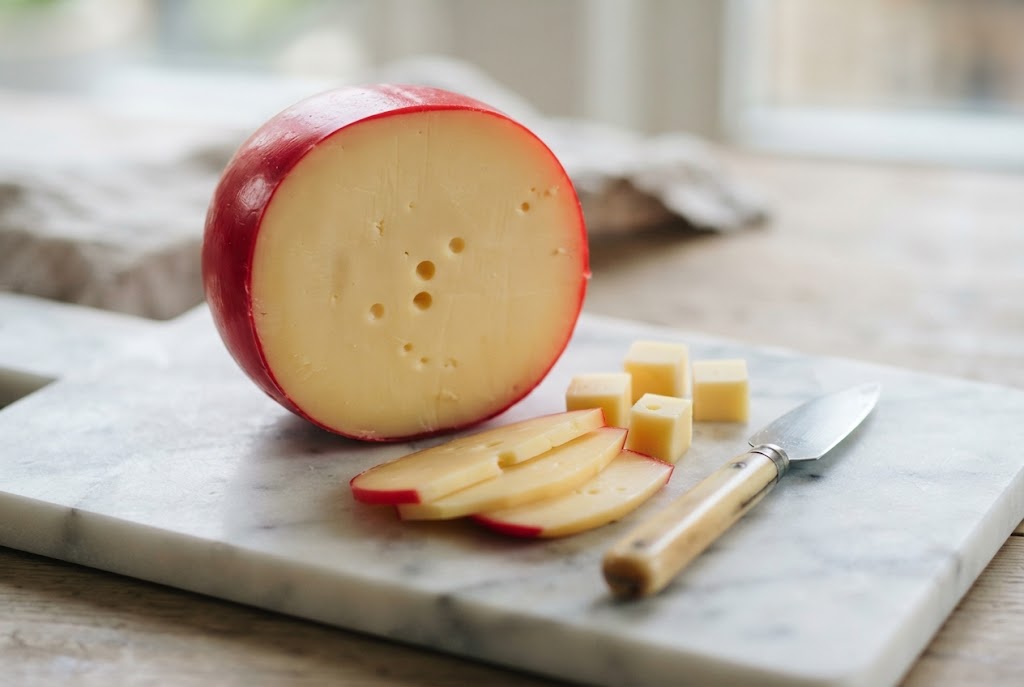
| Shape | Large flat wheel | Small ball |
| Coating | Yellow, red or black wax, or a dry rind | Red or yellow wax |
| Young taste | Mild, buttery, sweet | Mild, milky, faintly salty |
| Aged taste | Butterscotch, caramel, crunchy crystals | Firm, salty, sharper |
| Texture | Smooth and supple when young | Springy and firmer |
| Best board use | Aged Gouda as the star | Young Edam for kids and mild boards |
Why the milk makes all the difference
Both cheeses start the same way. The curd is washed with warm water during cheesemaking, which rinses out some of the lactose. With less sugar left for bacteria to turn into acid, the cheese stays sweet instead of tangy. That's the Dutch signature.
The fat is where they split. Fat carries flavor and keeps cheese soft. Gouda has more of it, so it stays supple and turns rich and caramel-like as it ages. Edam has less, so it's springier when young and drier and saltier when aged.
That's also why aged Gouda became famous and aged Edam mostly didn't. Over 18 months or more, Gouda develops tyrosine crystals (the crunchy bits) and a butterscotch flavor. Aged Edam is good, but it's firmer and sharper rather than sweet.
How they taste
Young Gouda is soft, mild and buttery. It's the cheese most kids already like.
Aged Gouda (often 18 months to 4 years) tastes like a completely different food: deep amber, nutty, with butterscotch notes and crunchy crystals. See our aged Gouda guide for why it gets sweet.
Young Edam is mild, milky and slightly salty, with a springy bite. It's pleasant but plain.
Aged Edam gets firm, salty and sharp. It's hard to find in the US, which is a shame, because it's much more interesting than the red-wax ball.
Which is better on a charcuterie board?
Aged Gouda, nearly every time. It's the cheese guests ask about. It pairs with:
- Fruit: apples, pears, dried apricots.
- Sweet: apricot jam, bacon jam or a square of dark chocolate.
- Nuts: walnuts, pecans or smoked almonds.
- Drinks: a brown ale, a malty amber beer, tawny port or a bold red.
Young Edam earns its spot on kids' boards, game-day boards and budget boards. Cut it in cubes, add grapes and crackers, and it's gone. It also melts well on a grilled cheese if there's any left.
Take both out of the fridge before serving: young cheeses about 30 minutes ahead, aged Gouda 45 to 60 minutes.
How to read the labels
- "Gouda" with no age is young: mild and soft.
- Look for a number of months on aged Gouda. Eighteen months is where the butterscotch starts; two years and up is where it shines.
- Gouda Holland PGI and Edam Holland PGI mean the cheese was made in the Netherlands from Dutch milk. Plenty of good Gouda-style cheese is made elsewhere, including in the US.
- Smoked Gouda is usually young Gouda (or processed cheese) that's been smoked. It's a different experience; check the ingredients for "pasteurized process cheese" if you want the real thing.
How much to buy
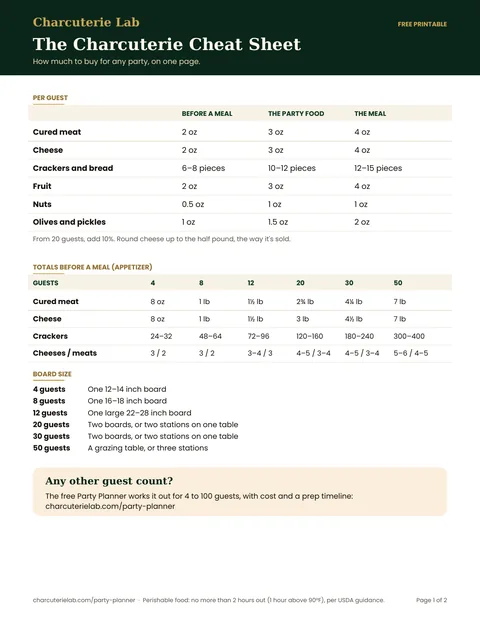
Plan on 2 oz of cheese per guest before a meal, 3 oz when the board is the party food and 4 oz when it's dinner. Gouda or Edam is usually one of three cheeses in that total.
Which should you buy?
- For a cheese lover's board: aged Gouda, 18 months or older.
- For kids or a mild crowd: young Gouda or Edam.
- For a budget board: young Edam or a young supermarket Gouda.
- For melting: young Gouda.
Our ranking of the best Gouda brands names the ones worth buying, from supermarket wedges to the 2-year wheels.