Quick Answer: Brie belongs on almost any charcuterie board. It's mild, creamy and crowd-pleasing, and its white rind adds an earthy, mushroomy note. Take it out of the fridge 45 to 60 minutes before serving, leave the rind on, cut the first wedge yourself, and pair it with honey, sliced pear, prosciutto and sparkling wine. Plan about 1 oz per guest.
What Is Brie?
Brie is a soft, bloomy-rind cow's milk cheese from the Brie region east of Paris. The best-known traditional versions, Brie de Meaux and Brie de Melun, are protected names made from raw milk.
Here's a catch for US shoppers: US rules require raw-milk cheeses to be aged longer than a traditional Brie de Meaux, so the true raw-milk version isn't sold in American stores. What you'll find is brie made from pasteurized milk. Some of it is excellent; some of it is mild and rubbery.
Supermarket brie is often "stabilized," made to stay firm and uniform for a long shelf life. It's mild and consistent but won't soften much at room temperature. A good cheese counter will carry pasteurized French brie or American bloomy-rind cheeses that ripen more like the traditional kind: soft, rich and gently oozy when ripe.
The rind is what makes brie brie. The white, velvety surface comes from a mold called Penicillium camemberti. As the cheese ages, the mold slowly breaks down proteins from the outside in (proteolysis), which softens the paste and builds flavor. The rind tastes earthy and mushroomy, and it can be a little bitter right at the edge.
Aging also builds savory depth. The Umami Information Center lists about 292 mg of free glutamate per 100 g in Brie de Meaux (Umami Information Center), which is why a ripe brie tastes rich and savory, not just creamy.
Best Use on a Charcuterie Board
Brie is the easiest soft cheese to put on a board. It's mild enough for picky eaters and kids, but the rind gives it enough character for cheese lovers.
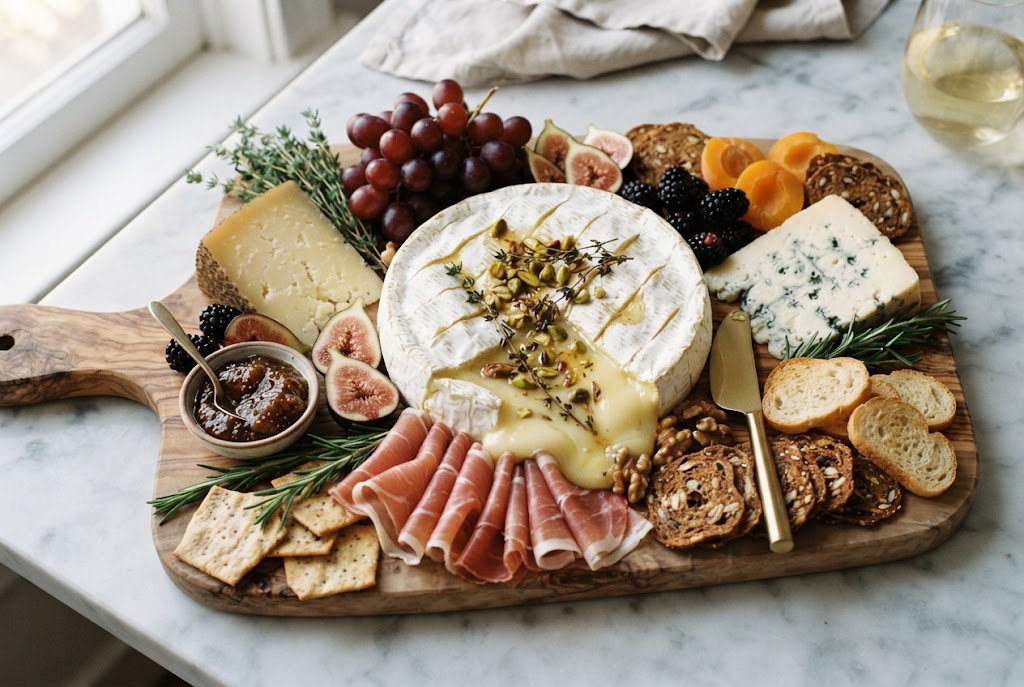
Placement: Give brie a central or front-and-center spot. The white rind stands out against dark meats, wood and slate. If you're using a whole small wheel, set it down intact; if you're using a wedge, face the cut side outward so guests can see the creamy inside.
The pre-cut move: Cut the first wedge before guests arrive. An untouched wheel looks great but makes people hesitate; one wedge already cut signals that the board is ready to eat. Don't slice the whole wheel ahead of time, or the cut faces dry out. For clean cuts, see How to Fan-Slice Soft Cheese.
Temperature: Take brie out of the fridge 45 to 60 minutes before serving. Cold dulls taste and aroma, so fridge-cold brie is firm, waxy and bland. At room temperature it turns rich, soft and fragrant. A stabilized supermarket brie changes less, so 30 minutes is enough. Once it's on the table, follow the USDA 2-hour rule for perishable food.
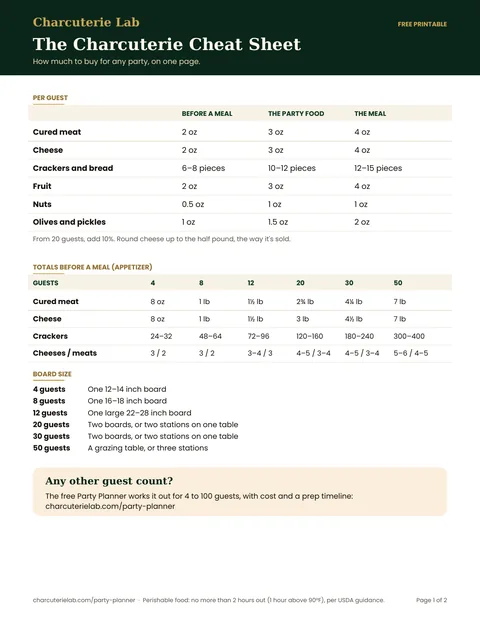
Quantity: A standard board uses about 2 oz of cheese and 2 oz of meat per guest. If brie is one of three cheeses, plan about 1 oz per person, so an 8 oz wheel covers about 8 guests.
Is it ripe? Press the center gently. It should give like a ripe peach. A strong ammonia smell means it's past its best; let it air for 15 minutes and taste before serving.
What to Pair It With
Honey: The classic brie pairing. Sweetness softens the rind's slight bitterness and brings out the buttery center. A drizzle right on the wedge looks great and shows guests how to eat it. Wildflower or truffle honey are both good picks. See Brie and Honey.
Sliced pear: Pear's gentle sweetness and juicy acidity refresh your palate between rich bites without overpowering brie's mild flavor. Firm-ripe Bosc or Anjou pears hold their shape best; toss slices in lemon juice to slow browning. For the full combination, see Brie, Pear, Honey, and Walnut.
Prosciutto: Salty, silky ham against creamy, mild cheese is a natural salty-rich balance, and the ham's savory flavor deepens the cheese's.
Walnuts or Marcona almonds: Walnut skins have a slightly bitter, drying tannin that contrasts with brie's fat and echoes the rind's earthiness. Marcona almonds are softer and buttery, and they're a great crunchy contrast.
Fig jam: A spoonful of fig jam gives you sweetness and a jammy texture in one. See Brie, Fig Jam, and Walnut.
Champagne or sparkling wine: The signature brie drink. More on why below.
What to avoid right next to it: Strong whole-grain mustard, spicy pepper jelly and a pungent blue cheese. They overpower brie's mild flavor. Place those on the other side of the board.
For more ideas, see everything that goes with brie.
The Lab Section: Why These Pairings Work
Acid and bubbles cut richness. Brie is rich and coats your mouth. Sparkling wine's acidity and bubbles scrub that richness away, so each bite tastes fresh. Pear works the same way with its juicy, mild acidity. See the Champagne and Prosecco pairing guide.
Echo: bready and toasty notes. Traditional-method sparkling wines spend time aging on their spent yeast, which gives them bready, brioche-like notes. Those echo the mushroomy, fresh-dough aroma of brie's rind, so the pairing tastes connected rather than random.
Sweet softens bitter. Bloomy rinds can taste a little bitter near the surface. Honey's sweetness tempers that bitterness, and the buttery, creamy flavor comes forward.
Salt and fat. Prosciutto's salt plays against brie's mild, creamy fat. Salty and rich is one of the oldest contrasts in cooking.
Texture contrast. Brie is soft and yielding. Walnuts, almonds, crisp pear and crackers give it the crunch it's missing.
Common Mistakes
Serving brie cold. This is the most common mistake and the easiest to fix. Always allow 45 to 60 minutes out of the fridge.
Expecting supermarket brie to ooze. Stabilized brie is made to stay firm. If you want a soft, runny center, buy from a cheese counter and ask for a wheel that's ripe for today.
Cutting the whole wheel ahead. Pre-cut one wedge only. Fully sliced brie dries out at the edges.
Crowding it with strong flavors. Keep brie's neighbors mild: honey, fresh fruit, nuts, plain crackers.
Cutting off the rind. The rind carries much of the flavor. Leave it on and let guests decide.
Swap tip: If brie is sold out, Camembert or a triple-crème cheese fills the same spot. Craving it warm? Make a baked brie as a separate dish.
The Charcuterie Lab Takeaway
Brie is the most approachable soft cheese you can put on a board, and a little attention makes it great. Take it out 45 to 60 minutes ahead, leave the rind on, cut the first wedge, and plan about 1 oz per guest.
Pair it with honey, pear, prosciutto and nuts, and pour something sparkling. If you're building one board that needs to please every guest, brie is the most reliable soft cheese to anchor it.
Building more boards? The Charcuterie Lab ebook covers 50 complete boards — each with exact quantities, placement logic, and the science behind what makes every pairing work.
FAQ
How long should brie sit out before serving on a charcuterie board?
Take brie out of the fridge 45 to 60 minutes before serving. Cold brie is firm and waxy and tastes of very little, because cold dulls taste and aroma. At room temperature the center softens and the buttery, mushroomy flavor comes through. Once the board is out, stay within the USDA 2-hour rule for perishable food.
Do you eat the rind of brie on a charcuterie board?
Yes, the rind is edible and part of the experience. The white, velvety bloomy rind adds earthy, mushroomy flavor that balances the rich, buttery center. Guests who don't like it can trim it off, but leave it on the cheese when you serve it.
What pairs best with brie on a charcuterie board?
Honey is the classic partner, since its sweetness softens the rind's slight bitterness. Sliced pear, walnuts or Marcona almonds, and prosciutto are the next best picks. Keep very strong condiments like whole-grain mustard or spicy pepper jelly away from brie; they overpower its mild flavor.
Should brie be served baked or at room temperature on a board?
Serve it at room temperature on a standard board. Properly tempered brie is already soft and slightly oozy, and it's easy to cut and eat on a cracker. Baked brie is delicious but turns into a warm dip, so serve it as its own dish with bread or crackers alongside.
How much brie per person on a charcuterie board?
When brie is one of three cheeses, plan about 1 oz per person. A standard board uses about 2 oz of cheese per guest in total, so an 8 oz wheel covers about 8 guests. Cut the first wedge before guests arrive so no one hesitates to dig in.