Quick Answer: Let brie come to room temperature before serving; cold brie tastes chalky and muted. Pair it with something sweet (honey, fig jam, Honeycrisp apple) and something salty (prosciutto): salt and sweet make each other taste better. Place it near the center of the board as the visual anchor.
Brie looks delicate, but the science behind it is surprisingly aggressive. That bloomy white rind isn't decorative — it's a living layer of mold engineered to break down fat and protein from the outside in, transforming a dense young cheese into something runny, rich, and impossibly complex. Understanding that process is the key to pairing brie in a way that makes every bite land exactly right.
What Is Brie?
Brie is a soft-ripened cow's milk cheese originating from the Brie region of the Île-de-France, east of Paris. It comes in two protected designation of origin (DOP) forms: Brie de Meaux, the larger, more assertively flavored wheel, and Brie de Melun, smaller, saltier, and more pungent. Most brie sold outside France — and virtually everything you'll find in American grocery stores — is an industrial approximation of these originals, milder and more consistent in flavor but considerably less complex.
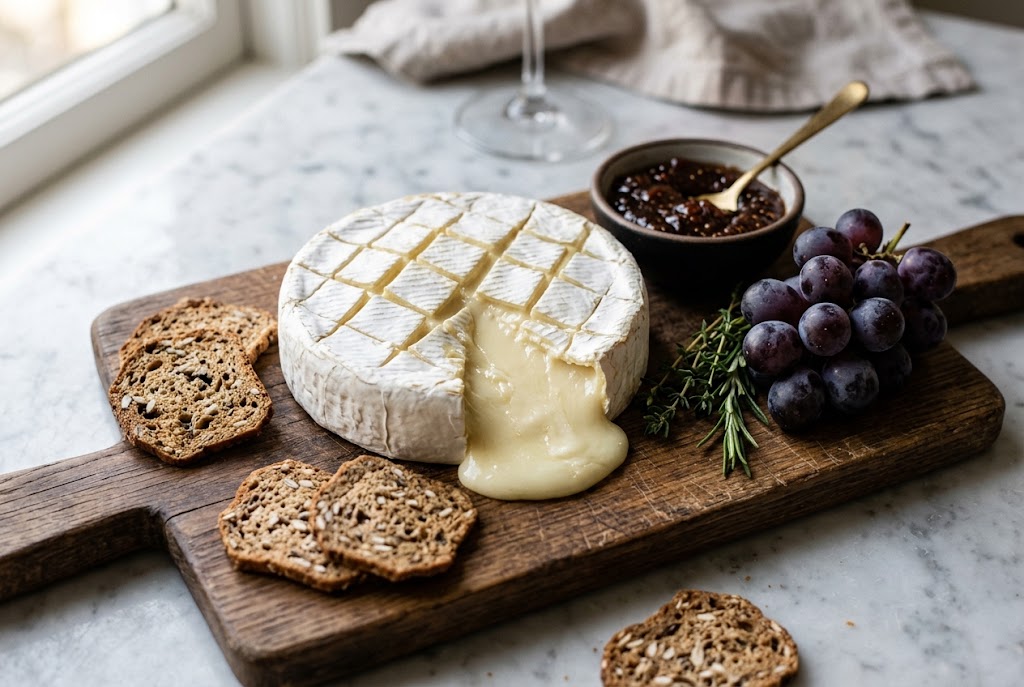
On a board, brie is typically served as a wedge or half wheel, its pale ivory interior contrasting with the soft white rind. The texture ranges from firm and chalky near the rind on a young wheel to fully liquid at room temperature on a perfectly ripened one.
Flavor Profile:
- Buttery, with a clean, mild dairy backbone when young
- Earthy and mushroomy as it ripens, from the rind working inward
- Slightly ammoniated if over-ripened — a signal to use it quickly
- Rich and almost savory at peak ripeness, with a lingering finish
Texture:
- Young: firm with a chalky core, rind slightly resistant
- Ripe: soft and yielding throughout, near-liquid at room temperature
- Over-ripe: very runny, increasingly strong in aroma
How Brie Is Made
Brie production begins with whole cow's milk, gently warmed and inoculated with starter cultures and rennet to form curds. The curds are ladled — not cut — into molds, preserving their delicate structure. The wheels are then salted and sprayed with Penicillium camemberti, the white mold responsible for brie's characteristic bloomy rind.
From there, the science takes over. As the mold colonizes the surface, it secretes proteolytic and lipolytic enzymes — protein-breaking and fat-breaking compounds, respectively — that migrate inward through the paste. This process, called affinage, is what ripens brie from the outside in. A perfectly ripened brie has a buttery, fully yielded interior that shows a uniform texture from rind to center.
The one science fact that surprises most people: the rind is meant to be eaten. It's not a casing to discard — it's an integral part of the flavor profile. The slight earthiness and firm texture of the rind provide exactly the contrast the soft interior needs. Cutting it off is the most common brie mistake on a board.
Flavor Profile & What Makes It Unique
The Mushroomy Earthiness The Penicillium mold on brie's rind produces geosmin and 1-octen-3-ol during ripening — the same aromatic compounds responsible for the smell of forest soil and fresh mushrooms. This is why a properly ripened brie smells earthy and complex rather than directly milky. On a board, this earthiness makes brie an excellent anchor for both sweet and herbaceous accompaniments.
The Fat Richness Brie is a rich, high-fat cheese, which gives it its characteristic luxurious mouthfeel. Fat carries and extends fat-soluble flavor compounds, meaning brie lingers on the palate longer than almost any other board cheese. This is both its strength and its pairing challenge — anything that pairs with it needs to cut through that richness or complement it directly.
The Mild Baseline Unlike sharp cheddar or aged parmesan, brie's flavor baseline is gentle. It doesn't compete — it accommodates. This makes it one of the most versatile cheeses on a board, but also the easiest to overwhelm with pairings that are too aggressive.
Best Pairings for Brie
Fruits
- Sliced apple (Honeycrisp or Granny Smith) — Malic acid in apple cuts brie's fat content cleanly, resetting the palate. The sweetness of Honeycrisp plays against the earthiness of the rind; the tartness of Granny Smith sharpens and brightens the richness.
- Grapes (red or green) — The tartaric acid in grapes works similarly to apple, while the burst of juice provides textural contrast against the dense, creamy interior.
- Fresh figs — The honeyed sweetness and seedy texture of ripe figs pair with brie's mushroomy depth to create one of the most elegant combinations on any board. The fig's natural tannins also provide subtle structure.
- Pear slices — Softer in acidity than apple, pear amplifies brie's butteriness rather than cutting it. Best with a younger, firmer brie.
Nuts
- Walnuts — The tannins in walnuts create a dry, cleansing contrast to brie's fat. The slight bitterness sharpens the palate before the next bite of cheese.
- Marcona almonds — Softer, sweeter, and more buttery than regular almonds, marcona almonds amplify brie's richness in a luxurious way — best for a more indulgent pairing.
- Pecans — Toasted pecans add a warm, caramelized note that echoes brie's earthiness without competing with it.
Meats
- Prosciutto di Parma — The salt and delicate sweetness of dry-cured prosciutto plays beautifully against brie's richness. Fat against fat works here because the meat's salt pulls out brie's more subtle flavors.
- Soppressata — The mild spice and pepper in soppressata adds a warming note that cuts through brie's fat in a way that pure salt alone cannot.
- Bresaola — The lean, bright mineral quality of bresaola is a clean contrast to brie's richness — one of the more elegant meat-cheese combinations for a sophisticated board.
Crackers & Bread
- Baguette slices — The neutral, slightly yeasty flavor of a good baguette is brie's classic companion. The chewy crumb provides textural contrast without competing with the cheese.
- Water crackers — Thin, neutral, with a light crunch — water crackers let brie speak for itself. Best when the cheese is the star.
- Sourdough — The lactic tang in sourdough echoes brie's own fermented character, creating a flavor harmony that more neutral breads can't achieve.
Jams & Condiments
- Fig jam — The combination of brie and fig jam is one of the most-cited in the world for a reason: fig's natural sugars and tannins create a direct counterpoint to brie's salty, fatty earthiness.
- Honey (raw) — Drizzled directly over cut brie, raw honey bridges the gap between the rind's earthiness and the creamy interior. Wildflower or lavender honey works especially well.
- Whole grain mustard — For boards that need a savory anchor, the vinegar bite and seed texture of whole grain mustard provides a sharp, unexpected counterpoint to brie's mildness.
Drinks
- Champagne or Crémant — The high acidity and bubbles in sparkling wine cut brie's fat with each sip, resetting the palate in a way still wine cannot. The classic pairing for a reason.
- Chardonnay (lightly oaked) — The buttery, low-acid character of a lightly oaked Chardonnay echoes brie's richness — this is a complementary pairing rather than a contrasting one.
- Pinot Noir — The low tannin and red fruit character of Pinot Noir doesn't overwhelm brie's delicacy. A silkier Burgundy-style Pinot is ideal.
- Belgian witbier — The citrus and coriander notes in a witbier cut brie's fat while adding a refreshing aromatic dimension most wine pairings can't replicate.
The Lab Section: Why These Pairings Work
Salt + Sweet: The Core Brie Principle Brie pairs so naturally with sweet accompaniments — honey, fig jam, fresh fruit — because of how sodium interacts with sweetness perception at the neural level. Salt suppresses bitterness and enhances sweet flavor signals, meaning the mild saltiness in brie's rind literally makes honey or fig taste sweeter and more complex than they would on their own. This is why drizzling raw honey directly onto cut brie is never just decorative — it's a flavor amplifier rooted in sensory science.
Acid Cuts Fat: Why Fruit and Wine Work Brie contains roughly 8–10 grams of fat per ounce, and that fat coats the palate in a way that builds and lingers. Acidic pairings — apple slices, grapes, sparkling wine — work because the tartaric, malic, and citric acids they contain chemically interact with fat molecules, breaking down the coating and resetting the palate. This is why a sip of Champagne between bites of brie doesn't just taste good — it physiologically prepares your palate to taste the next bite fully.
The Rind's Earthiness as a Bridge The Penicillium mold on brie's rind produces earthiness that bridges two otherwise opposing flavor profiles: rich dairy and earthy, vegetal, or herbal accompaniments. Walnuts pair with brie not despite their bitterness but because of it — the walnut's tannins create a dry contrast that the rind's earthiness harmonizes with. Remove the rind, and this pairing loses much of its logic.
Why Brie Anchors a Board Brie is classified as a soft-ripened cheese, meaning its texture and flavor intensity change significantly at different temperatures. At refrigerator temperature (38°F), brie is firm, chalky, and muted. At room temperature (65–68°F), it opens up — the interior becomes yielding, the aroma develops fully, and the flavor compounds become volatile and expressive. This is why pulling brie out 20–30 minutes before serving isn't optional — it's the science of getting full value from the cheese.
Common Mistakes with Brie (And How to Fix Them)
❌ Serving it straight from the refrigerator Cold fat carries almost no flavor. Brie served cold tastes dense, muted, and chalky — nothing like its room-temperature self. Fix: Pull brie from the refrigerator 20–30 minutes before serving. You should be able to press it gently and feel it yield slightly before it goes on the board.
❌ Cutting off the rind The rind is where brie's most complex flavor lives. It's also what holds the wheel's shape as it softens. Fix: Serve the entire wheel — rind and all. Slice into wedges that include rind so each piece delivers the full flavor spectrum from interior to exterior.
❌ Cutting the entire wheel in advance Once cut, brie begins to dry out and the interior can oxidize, changing both texture and flavor. Fix: If serving a full wheel, score a wedge or two but leave the rest intact. Let guests cut their own portions — the cheese stays fresher and the presentation looks better.
❌ Using it as the only cheese on the board Brie's mild, accommodating character is a strength on a mixed board but creates monotony when it's the sole cheese. Without contrast, there's nothing to play against. Fix: Pair brie with at least one aged cheese (cheddar, gruyère, or manchego) to give guests a texture and intensity contrast.
❌ Pairing it with strongly flavored meats Chorizo, highly spiced salamis, and peppery meats overwhelm brie's delicacy. The spice obliterates the subtle earthiness rather than complementing it. Fix: Keep brie's meat neighbors gentle — prosciutto, bresaola, or a mild salami. Save the bold meats for the sharp cheeses.
❌ Skipping the honey Brie without a sweet element is a missed opportunity. The fat-sweetness interaction is one of the cleanest examples of pairing science on any board. Fix: Always serve brie with at least one sweet accompaniment — even if it's only a small dish of honey or a few pieces of fresh fruit alongside.
❌ Buying brie that's already past peak Over-ripened brie develops an ammonia-like smell from excessive protein breakdown. It's not dangerous, but it's unpleasant and overpowering. Fix: Before buying, press the wheel gently. It should give but spring back slightly. A wheel that's completely soft with an aggressive ammonia smell is past its prime. At the cheese counter, ask when it was delivered.
How to Use Brie on a Charcuterie Board
Best placement on the board: Brie is a visual anchor — place it near the center or in one of the upper quadrants of the board. Its pale rind and soft texture draw the eye. On a large board, a half wheel cut to show the interior creates an immediate focal point. On a smaller board, a generous wedge works exactly as well.
Best shapes and cuts:
- Half wheel with a wedge scored — shows the interior and invites guests to cut their own
- Wedges pre-cut from a full wheel — clean, easy to serve at larger gatherings
- Whole small wheel with the top rind scored — visually dramatic for a centerpiece board
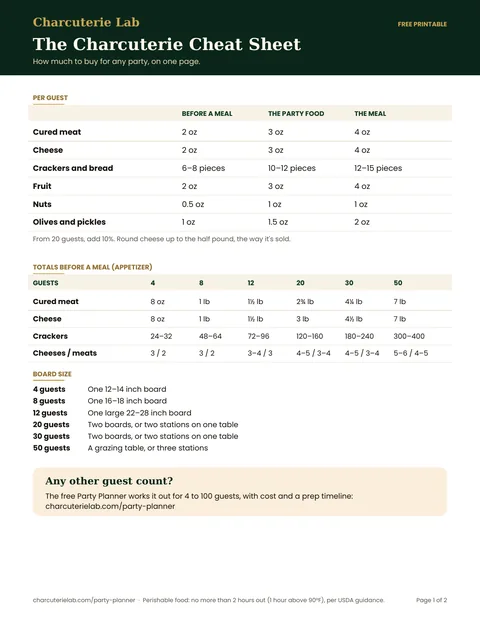
How much to serve: For a board serving 6–8 people: 6–8 oz of brie (roughly one small wheel or a generous portion of a larger one). If brie is the anchor cheese, lean toward 8–10 oz. Remember that brie at room temperature appears and feels more generous than the same weight of a hard cheese.
Best companions on the same board: Brie performs best alongside an aged hard cheese (for contrast), a cured meat that's salt-forward but not spice-forward, a sweet condiment, and fresh fruit. The combination of soft and hard, mild and sharp, sweet and savory creates a board that demonstrates the full range of flavor interaction rather than defaulting to a single note.
Brie Board Idea: "The Orchard Board"
A late-summer board built around brie's affinity for fresh fruit and honey — one of the cleanest demonstrations of the salt-sweet pairing principle.
Ingredients:
- Brie (6–8 oz, half wheel)
- Prosciutto di Parma (3 oz, loosely draped)
- Sliced Honeycrisp apple
- Red grapes
- Walnuts (1/4 cup)
- Fig jam (small bowl)
- Raw wildflower honey (drizzled directly over the brie)
- Baguette slices and water crackers
The Orchard Board works because every element either cuts brie's fat (apple, grapes, sparkling wine if serving drinks) or amplifies its sweetness (honey, fig jam). The prosciutto adds the salt without spice, and the walnuts deliver textural contrast and mild bitterness to keep the board from reading as purely sweet. It's a board built by science — and it shows.
FAQ
Does brie need to be at room temperature to serve?
Yes — and this is non-negotiable. Brie served cold is a fundamentally different eating experience. The fat is firm and muted, the aroma is suppressed, and the flavor barely develops. Allow 20–30 minutes out of the refrigerator before it goes on the board.
Should you eat the rind on brie?
Absolutely. The white rind on brie is Penicillium camemberti mold — the same type used in many aged cheeses — and it's not only safe to eat but central to brie's flavor profile. The rind contributes earthy, mushroomy notes that the interior alone cannot provide. Guests who are unfamiliar with the rind should be encouraged to try it as part of a wedge, not avoid it.
How long does brie last once opened?
Once cut, brie should be wrapped tightly in wax paper or cheese paper (not plastic wrap, which traps moisture and accelerates over-ripening) and refrigerated. It remains at peak quality for 5–7 days after cutting. An uncut wheel, refrigerated, holds well until its use-by date.
Can you bake brie for a charcuterie board?
Baked brie has its place, but it's a different presentation than a traditional board. If you're serving a charcuterie board, room-temperature brie — not baked — gives guests the full range of flavors from rind to interior. Reserve baked brie for standalone appetizers.
How do you know if brie has gone bad?
Over-ripened brie develops a strong ammonia smell (from excess protein breakdown) and may become excessively runny or pinkish near the rind. A slight ammonia smell is normal in very ripe brie; strong, persistent ammonia or off colors are signs the cheese is past its prime. When in doubt, taste a small piece — if the flavor is harsh or unpleasant rather than earthy and complex, set it aside.
The Bottom Line
Brie earns its place on almost every charcuterie board because it does something few other cheeses can: it bridges flavor profiles. Sweet, savory, earthy, rich — brie accommodates all of them. The science of its production, from the live mold on its rind to the fat content of its interior, makes it a natural hub around which pairings organize themselves.
Try this pairing: Ripe brie, a slice of Honeycrisp apple, a small spoonful of wildflower honey drizzled over the top, and a single walnut. That's the salt-sweet-acid-fat-tannin cycle in four bites — and one of the most complete sensory experiences a charcuterie board can offer.
Want more Ingredient Lab deep dives? Subscribe to the Charcuterie Lab Report for weekly pairing science, ingredient guides, and board ideas delivered to your inbox.