The short version
A very dense, very dark rye bread. Real pumpernickel gets its color from being baked low and slow for many hours, not from added molasses — and it tastes sweet-earthy and faintly malty as a result. It's the best base on a board for smoked salmon and blue cheese.
What it is
Traditional Westphalian pumpernickel is coarse whole rye and water, baked at a low temperature for up to sixteen hours in a covered pan. Over that time the starches break down into sugars and the sugars brown, which is where the color, the sweetness and the malt note all come from at once.
- Taste
- sweet-earthy, malty, mildly sour
- Texture
- very dense, moist, close-grained
- Look
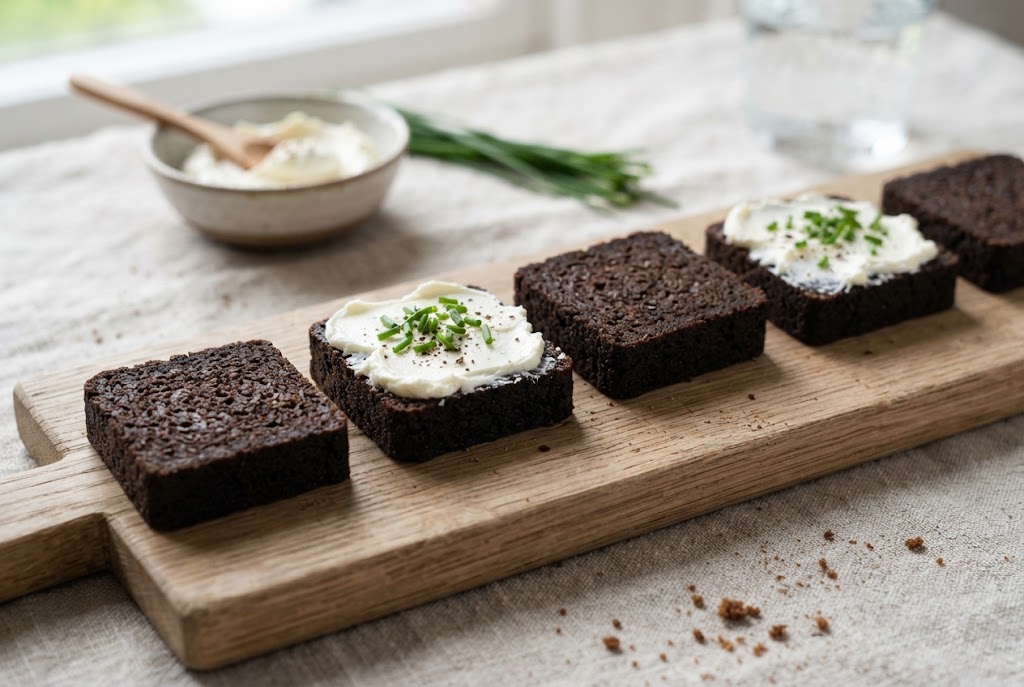
- near-black, tight crumb, no visible holes
The Maillard reaction is the mechanism, and it's also the thing most people get wrong. Real pumpernickel contains no molasses, coffee or caramel color — those are shortcuts American bakeries use to fake the color in a two-hour bake. If you've only had the fake kind, you've had a mildly sweet wheat bread.
What it pairs with — and why
| Pair it with | Why it works |
|---|---|
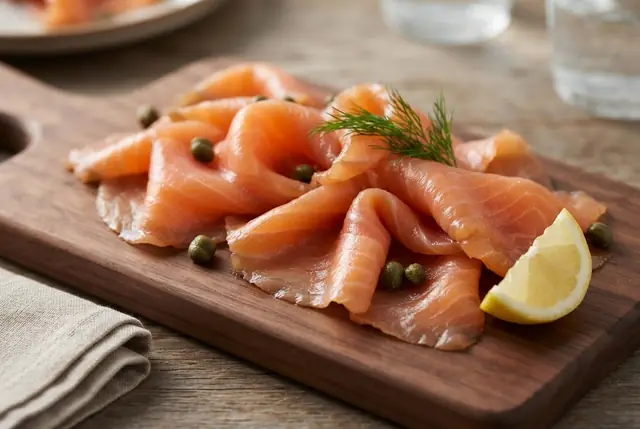
| Smoked salmon and dill | The definitive pairing. Malty sweetness against oily smoke, with the density holding everything up. |
| Cream cheese, capers, red onion | The rest of that same plate. The bread is sturdy enough for all of it at once. |
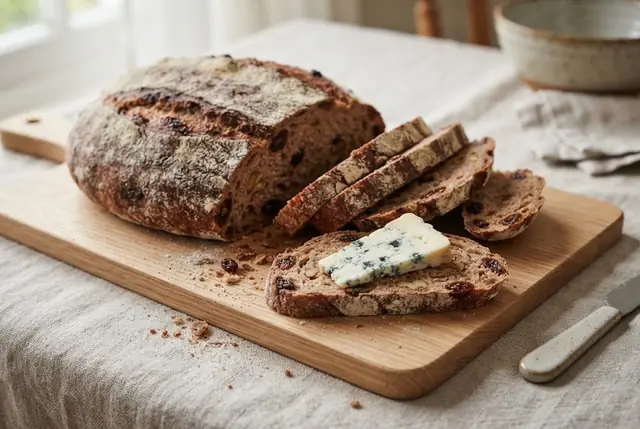
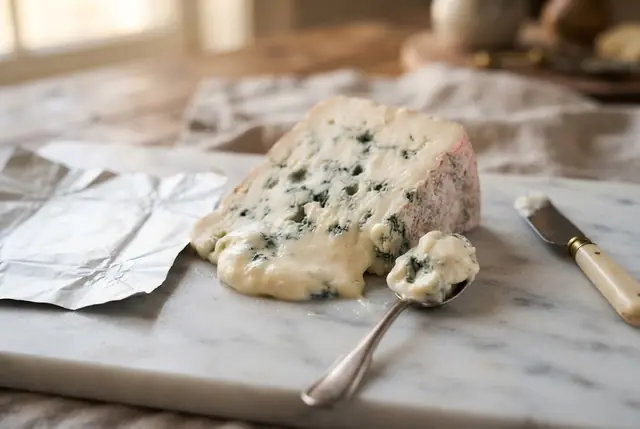
| Blue cheese | Sweet bread and salty funk is the same logic as honey with blue, but savory. |
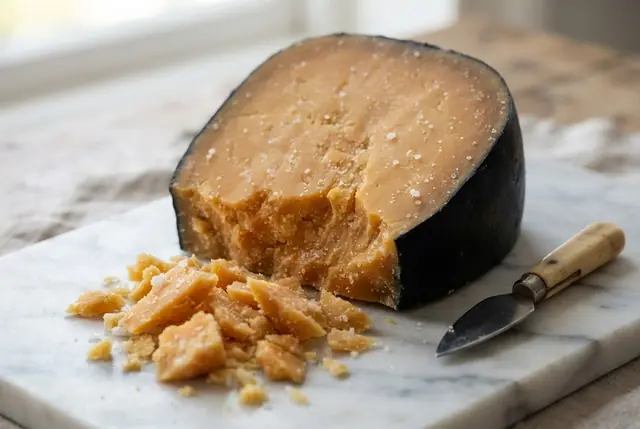
| Aged gouda | Butterscotch notes in the cheese, malt notes in the bread. Direct echo. |
| Cultured butter and radish | Rich, sharp, peppery on a sweet dark base. |
| Pickled herring with horseradish | Traditional and genuinely good if your crowd will try it. |
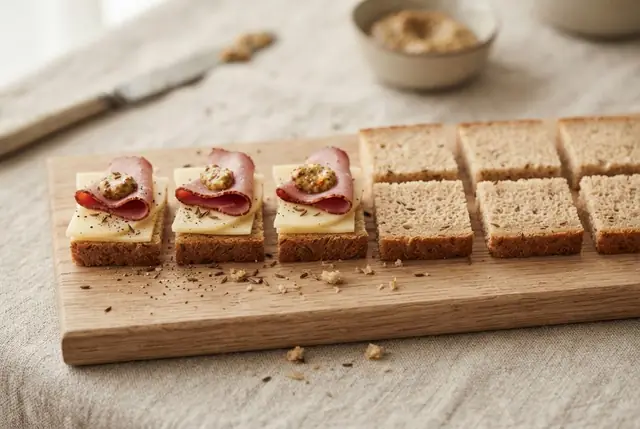
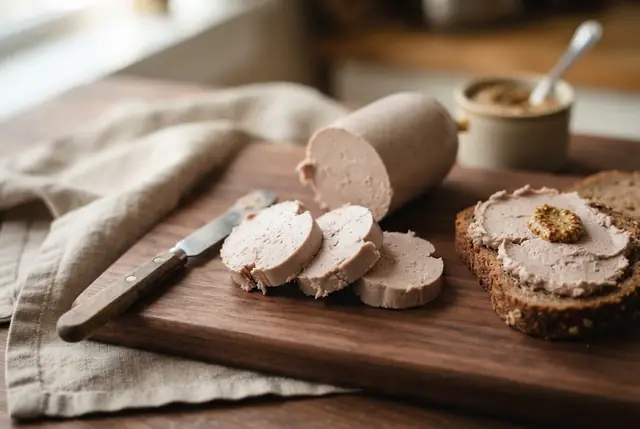
| Liverwurst and mustard | Dense meets dense. Mustard supplies the acid. |
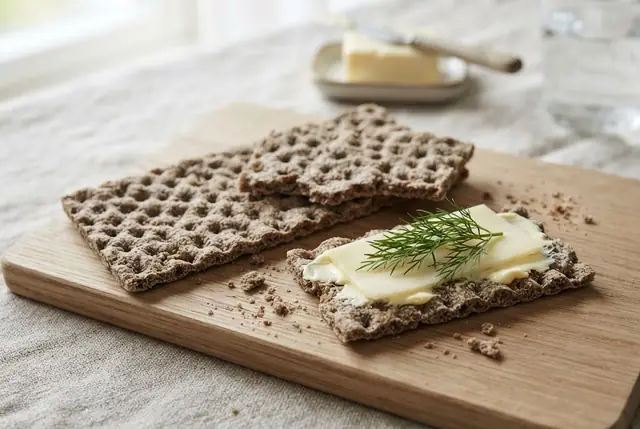
Skip it with: mild fresh cheeses, which vanish, and sweet jams, which double down on sweetness the bread already has. It's an assertive base — treat it like rye crispbread, not like a baguette.
How to prep it for the board
- Cut it thin — about ¼ inch — then quarter the slices. Pumpernickel is heavy; a full slice is three bites too many.
- Serve 2 slices per person, cut into quarters, so 8 small pieces.
- Stack the squares slightly offset so the near-black color reads as a deliberate dark block on the board. It's the strongest visual contrast available in this category.
- Place it beside the smoked fish, which is where it does its best work.
- It holds better than most bread, because it's dense and moist — a fair compromise between cocktail rye and a cracker.
- Fix: slightly dry pumpernickel toasts well and becomes a good base for warm toppings.
What to buy
| Product | Where | Notes |
|---|---|---|
| Mestemacher Pumpernickel (17.6 oz) | Grocery international aisle, Walmart, Amazon | The real German thing, vacuum-packed and shelf-stable. Intense, dense, correct. |
| Rubschlager Cocktail Pumpernickel (16 oz) | Grocery bread aisle, deli case | Pre-cut party squares. The convenient option. |
| Store bakery pumpernickel | Any grocery bakery | Usually the American molasses style. Fine, just not the traditional bread. |
| German or Jewish bakery pumpernickel | Local bakery | Best fresh version. Ask whether it's long-baked. |
| Trader Joe's pumpernickel | Trader Joe's | Seasonal and inconsistent, but cheap when stocked. |
Label check: rye flour first, and no molasses, caramel color or coffee in the list. If those are present, you have rye-flavored wheat bread — still usable, just not the same food.
Skip: sweet dark breads sold as "pumpernickel-style." They're closer to a dessert loaf than to a board base.
Quick FAQ
Does real pumpernickel have molasses in it?
No. Traditional Westphalian pumpernickel gets its color from a very long, low bake. Molasses and caramel color are American shortcuts.
Why is it so dense?
Coarse whole rye has little gluten, so it never traps much air. The long bake does the rest.
How much per person?
2 thin slices, quartered — about 8 small pieces.
What goes on pumpernickel?
Smoked salmon and cream cheese first, then blue cheese, then butter and radish.
Is it gluten-free?
No. Rye contains gluten, and most versions also contain wheat.