The short version
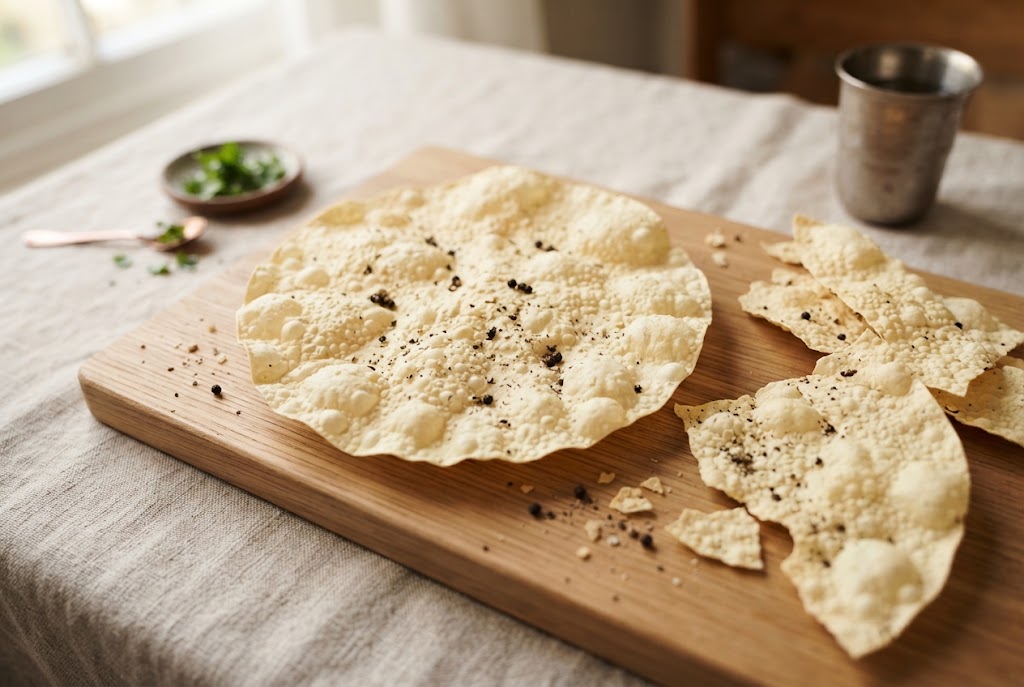
Thin wafers of ground lentil that puff from flat discs into blistered, lacy sheets in about thirty seconds. Naturally gluten-free, a few cents each, and unlike anything else on a board. The most spectacular thing in this entire section for the least money.
What it is
Papadums are made from ground lentil, chickpea or rice flour with salt and usually black pepper or cumin, rolled paper-thin and dried. They arrive as hard, flat, unappetizing discs. Cooked — fried, dry-roasted or microwaved — the trapped moisture flashes to steam and the wafer puffs and blisters instantly.
- Taste
- savory, peppery, faintly earthy from the lentil
- Texture
- impossibly light, airy, shatters at a touch
- Look
- large blistered discs, irregular and translucent in places
Steam is the mechanism, and it's the reason this belongs on a board rather than in a bag. A papadum cooked to order arrives at the table warm, puffed and audibly crisp. Nothing else in this section is made in front of your guests in half a minute, and that theatre is a large part of the appeal.
What it pairs with — and why
| Pair it with | Why it works |
|---|---|
| Mango chutney | The traditional pairing. Sweet, acidic and spiced against a plain savory wafer. |
| Raita and yogurt dips | Cool, thick and mild — the counterweight to pepper and lentil. |
| Whipped feta or labneh | Salty dairy on an earthy base. The pairing that bridges this to a European board. |
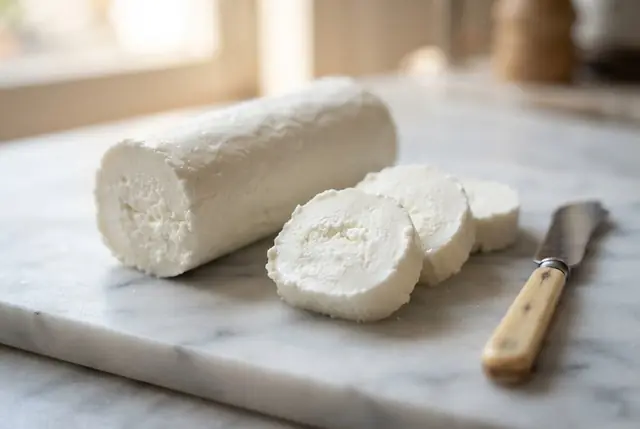
| Fresh goat cheese | Tangy and mild, letting the papadum's pepper come through. |
| Lime pickle, in tiny amounts | Intense, salty, sour. A quarter-teaspoon is plenty. |
| Coriander chutney | Bright and herbal against a warm crisp wafer. |
| Beer, riesling, gin and tonic | Anything cold with bubbles or sweetness against the pepper. |
Skip it with: delicate European cheeses — brie and burrata are lost under the pepper and lentil. And skip stacking anything heavy on them; they're the most fragile thing here after pane carasau.
How to prep it for the board
- Cook them to order, right before serving. This is the whole point.
- Microwave method (easiest): 30–45 seconds on a plate, one at a time. No oil, no mess, and it works remarkably well.
- Dry-roast method: hold over a gas flame or press into a dry hot skillet for 10–15 seconds a side, turning constantly. Better flavor.
- Fry method (traditional): 3–5 seconds in hot oil. Best texture, most effort, and they puff dramatically.
- Break into large shards and pile them. Never serve whole — they're bigger than a bread plate.
- Serve 1–2 per person, broken.
- Fix: they go soft within about twenty minutes in a humid room. Cook in two batches rather than all at once.
What to buy
| Product | Where | Notes |
|---|---|---|
| Deep Papadum | Indian groceries, Amazon, some supermarkets | Widely available in the US. Plain and black pepper are the useful ones. |
| Lijjat Papad | Indian groceries, Amazon | The famous Indian brand, made by a women's cooperative. Excellent. |
| Swad Papad | Indian groceries, Amazon | Reliable and cheap. |
| Patak's Papadums | Grocery international aisle, Whole Foods | The easiest to find in a mainstream supermarket. |
| Any Indian grocery | Local | Best selection and roughly a third of the price. Ask for urad dal papad. |
| Ready-cooked papadums | Grocery international aisle | Convenient, but you lose the warmth and the theatre. |
Label check: urad dal (black gram) or chickpea flour first. Most are naturally gluten-free, but some rice-flour blends add wheat — check if it matters.
Skip: the pre-cooked bagged version if you can cook them yourself. Thirty seconds in a microwave is a genuinely better product.
Quick FAQ
Are papadums gluten-free?
Usually — most are lentil or chickpea flour. Check the label, as a few blends contain wheat.
Can I cook them in the microwave?
Yes, and it's the easiest method. 30–45 seconds on a plate, one at a time, no oil.
How many per person?
1–2, broken into shards.
How far ahead can I cook them?
Twenty minutes at most. They soften. Cook in batches during the party instead.
What do I serve with them on a cheese board?
Mango chutney and whipped feta or goat cheese. That's the bridge between an Indian ingredient and a European board.