The short version
Kiwi earns its place on colour. Nothing else available in February is that green, and the seeded cross-section is one of the better-looking things you can slice. Cut crosswise into wheels, not wedges. Like pineapple, it carries a protein-digesting enzyme — keep it away from cream cheeses and off the board until the last minute.
What it is
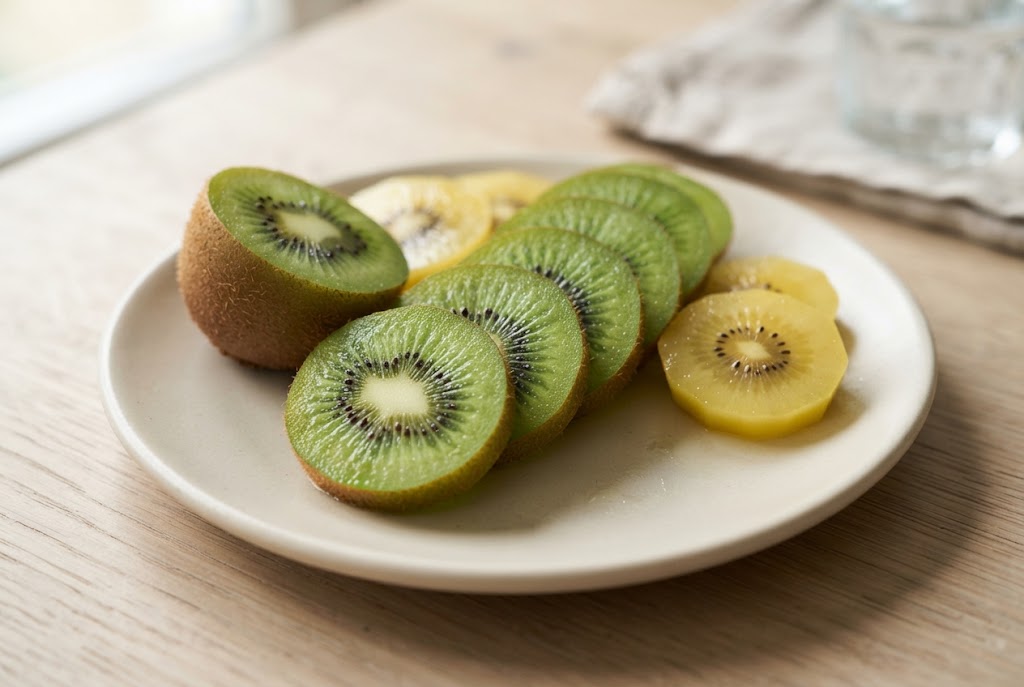
A berry, technically, with fuzzy brown skin and emerald flesh flecked with tiny black seeds. Green (Hayward) is the standard, tart and bright. Gold (SunGold) is smooth-skinned, yellow, sweeter and much lower in acid.
- Taste
- tart, sweet, faintly like strawberry and gooseberry
- Texture
- soft, juicy, with crunchy seeds
- Look
- green wheels with a white centre and a black seed ring
The mechanism is actinidin — kiwi's version of pineapple's bromelain. It breaks down protein, which is why kiwi tingles and why a slice left on burrata for an hour will leave it slack. Against a hard aged cheese there's nothing to break down, so the acid does clean work instead.
What it pairs with — and why
| Pair it with | Why it works |
|---|---|
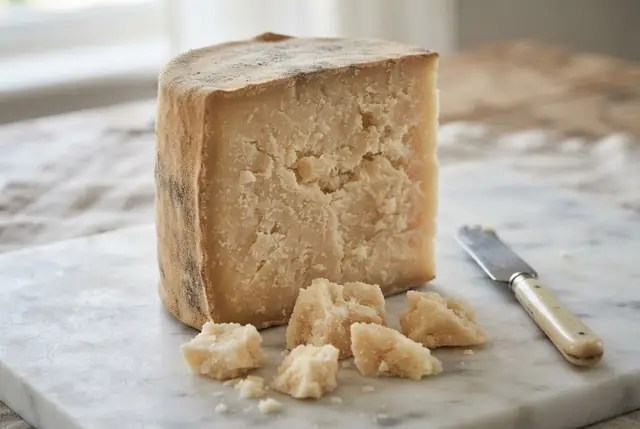
| Aged cheddar | Sharp acid against sharp cheese, and the cheese is dry enough to resist the enzyme. |
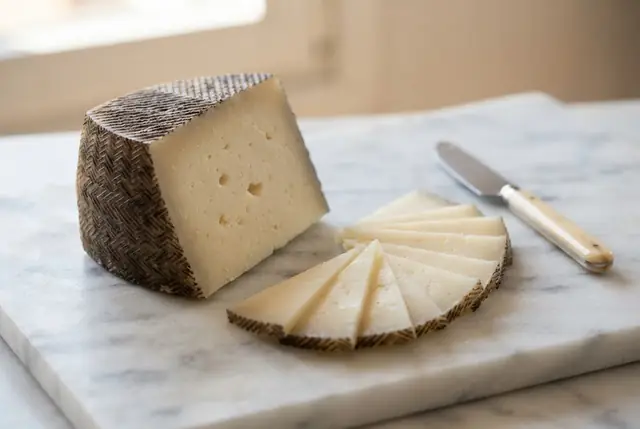
| Manchego | Nutty and salty against bright green acid. |
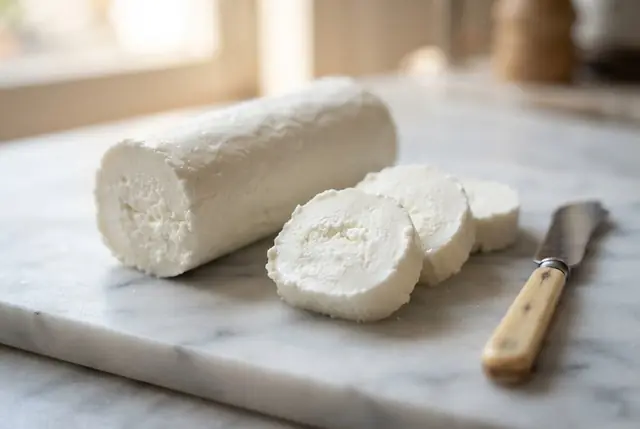
| Fresh goat cheese | Works if you plate it right before serving — tang plus tang, colour plus white. |
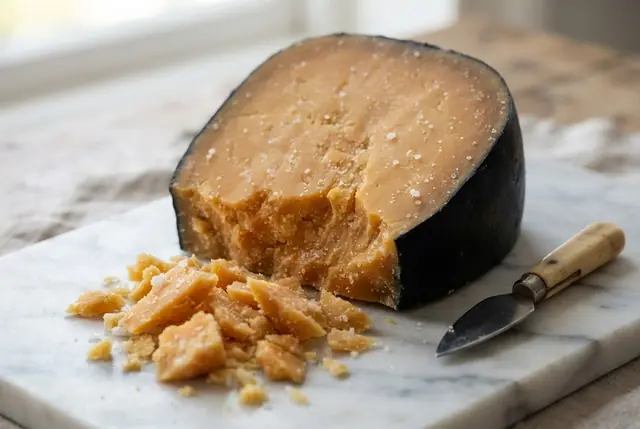
| Aged gouda | Caramel against tart; a bigger contrast than it sounds. |
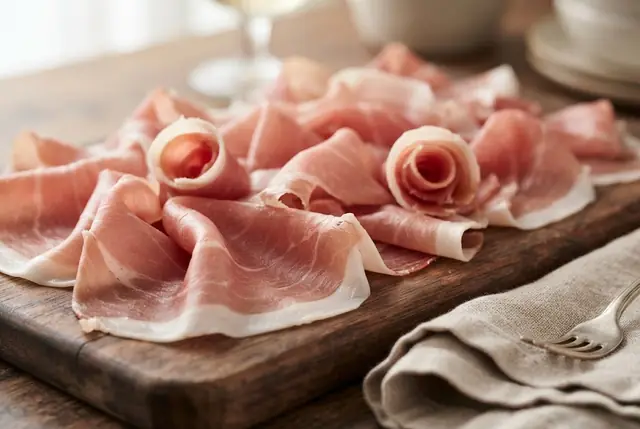
| Prosciutto | Salt and acid. Less obvious than melon and just as good. |
| Gold kiwi with honey and ricotta | Low-acid gold kiwi is safe with mild cheese in a way green kiwi isn't. |
Skip it with: burrata, fresh mozzarella, and anything creamy that will sit on the board for an hour.
How to prep it for the board
- Buy them slightly firm. A soft kiwi collapses under the knife.
- Ripen on the counter with a banana if they're hard — two days, no more.
- Peel with a vegetable peeler — faster and neater than a knife. Or halve and scoop with a spoon if you're serving in cups.
- Slice crosswise into 1/4-inch wheels. The seed ring is the whole reason kiwi is on the board.
- Blot and plate late. Cut kiwi weeps and, with the enzyme, degrades anything creamy it touches.
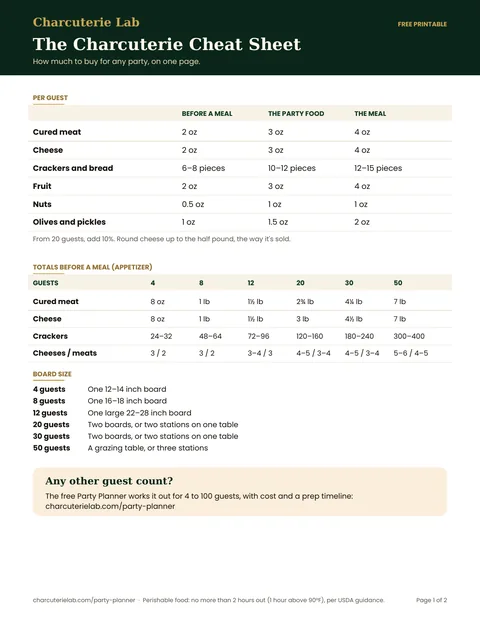
- Serve 1 oz per person — it's a colour accent, not a centrepiece.
- Fix: hard and sour? Two days on the counter next to a banana. There's no quick fix.
What to buy
| Product | Where | Notes |
|---|---|---|
| Green kiwi (Hayward) | Any grocery, year-round | The default. Tart, cheap, reliably green. |
| Gold kiwi (SunGold / Zespri) | Grocery, spring–autumn | Sweeter, smooth-skinned, much lower acid. Safer near soft cheese. |
| Kiwi berries | Farmers markets, Whole Foods, autumn | Grape-sized, fuzzless, eaten whole. Excellent and rarely seen. |
| Dried kiwi | Bulk bins | Chewy and very tart. A niche option. |
Label check: press the shoulder near the stem. A little give means ready; rock hard means a week away.
Skip: kiwis with wet or wrinkled patches — the inside is already mushy.
Quick FAQ
Do I peel kiwi?
Yes, for a board — a vegetable peeler is fastest. The skin is edible but fuzzy and nobody expects it.
Why does kiwi make my mouth tingle?
Actinidin, an enzyme that breaks down protein — the same effect as pineapple.
Green or gold kiwi?
Green is tarter and more striking. Gold is sweeter and works better next to mild cheeses.
How do I slice kiwi for a board?
Crosswise into 1/4-inch wheels, so the seed ring shows.
Will kiwi ruin soft cheese?
If it sits against it, yes — the enzyme degrades the protein and the cheese goes slack. Plate it separately and late.