The short version
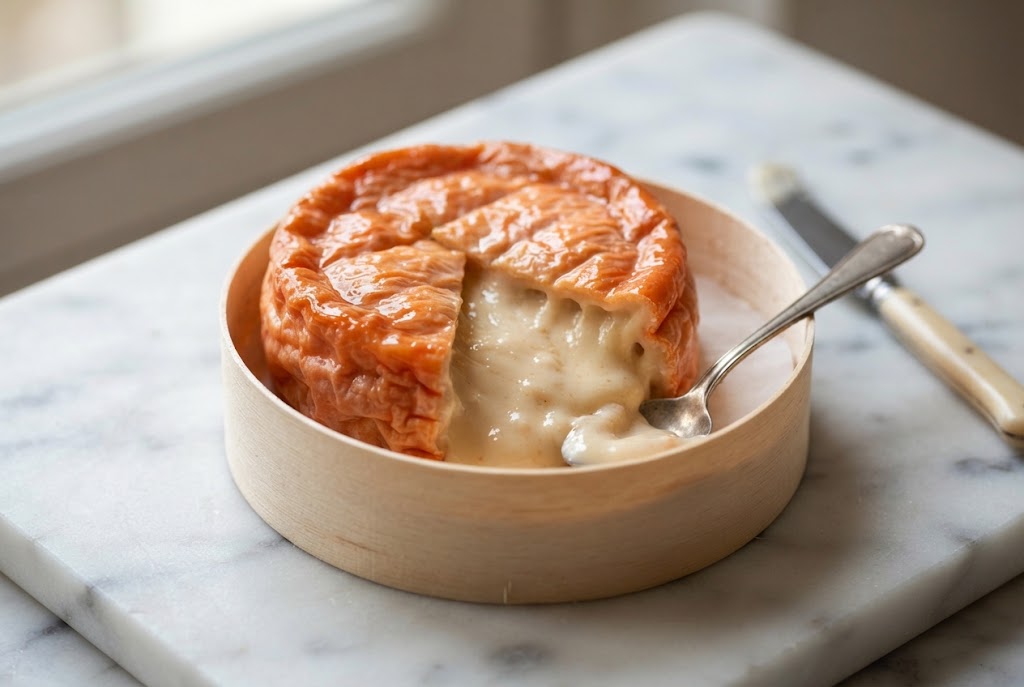
A small Burgundian cheese washed repeatedly in marc de Bourgogne until the rind turns sticky orange and the interior goes almost liquid. It smells enormous and tastes rich, meaty and surprisingly sweet. Serve it with a spoon.
What it is
Époisses AOP comes from a village in Burgundy and was reportedly Napoleon's favorite cheese. During aging the rind is washed with increasingly strong solutions of brine and marc — the pomace brandy of the region — over five to eight weeks. That encourages Brevibacterium linens, the bacterium behind the smell, and breaks the paste down until it's spoonable.
- Taste
- rich, meaty, savory, faintly sweet, less aggressive than the aroma
- Texture
- soft to genuinely liquid at room temperature
- Look
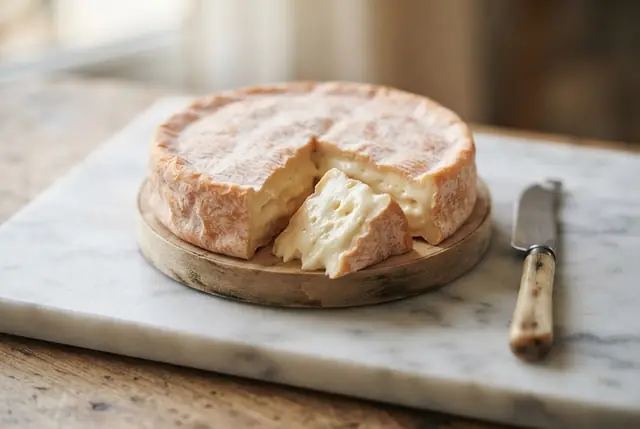
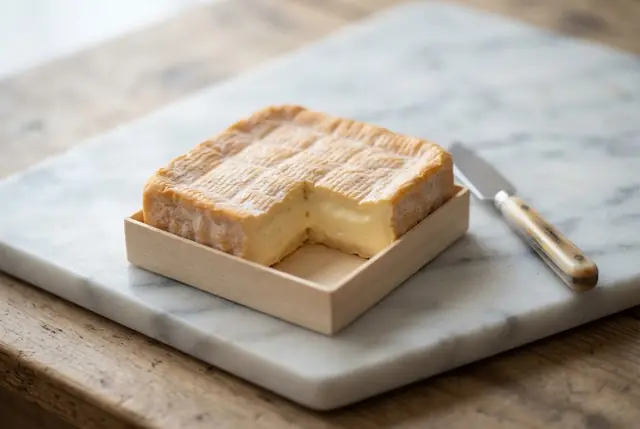
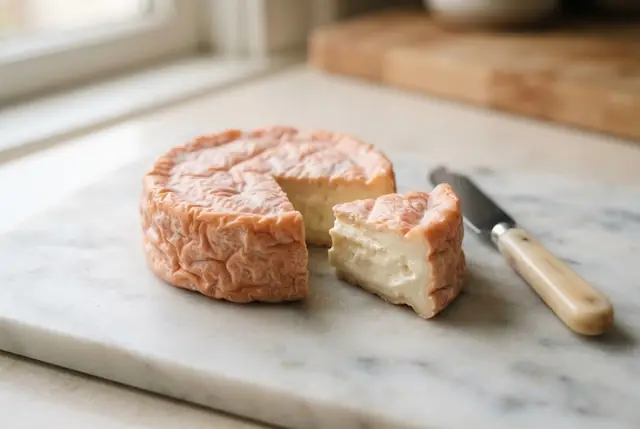
- small round in a wooden box, sticky orange-red rind, pale runny paste
Alcohol washing is the mechanism. Marc both feeds the surface bacteria and keeps competing molds off, so B. linens colonizes the rind unchallenged. Its enzymes then dissolve the paste from the outside in, which is why a ripe Époisses collapses when you cut it and why the box is structural rather than decorative.
What it pairs with — and why
| Pair it with | Why it works |
|---|---|
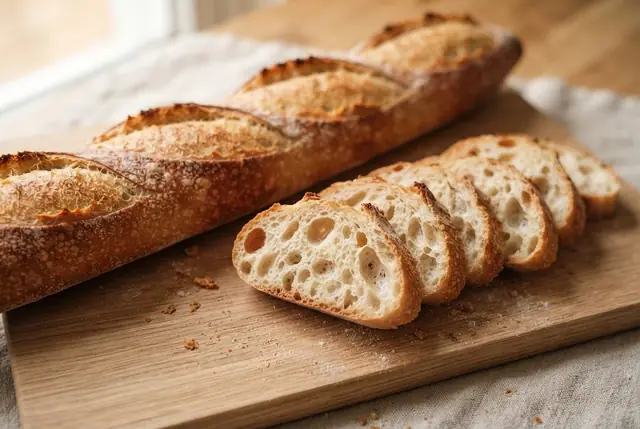
| Baguette | Plain bread and a spoon. This cheese needs a vehicle, not a partner. |
| Marc de Bourgogne or Burgundy | The regional pairing. Alcohol against fat and funk. |
| Cornichons | Sharp vinegar as a reset between rich bites. |
| Boiled potatoes | Spoon it over them warm. A genuine Burgundian dish. |
| Walnuts | Tannin against a very rich paste. |
| Honey | Sweetness rounding the sulphur notes, as with any washed-rind. |
| Champagne or Chablis | Acid and bubbles against saturated fat. |
Skip it with: everything delicate, everything aged and hard, and anything you want to taste afterwards. Époisses colonizes a board — and a refrigerator.
How to prep it for the board
- Temper a full hour. Cold Époisses is firm and closed. At room temperature it should be visibly slumping.
- Serve it in its box. Cut the top off the rind and let people spoon it out. The wooden box is holding the cheese together.
- Serve about 1 oz per person. One small round serves four to six.
- Put it on its own plate, off the main board. The aroma travels and the paste runs.
- Give it a small spoon, not a knife.
- Warn people, then tell them it tastes milder than it smells — which it does, considerably.
- Fix: double-wrap it in the fridge and put it in a sealed container. Otherwise everything you own will smell of it within a day.
What to buy
| Product | Where | Notes |
|---|---|---|
| Époisses de Bourgogne AOP (Berthaut) | Cheese counters, Whole Foods, Murray's | The best-known producer. What most US shops stock. |
| Époisses, cut to order | Cheese counters | Rare — this cheese is usually sold whole in its box. |
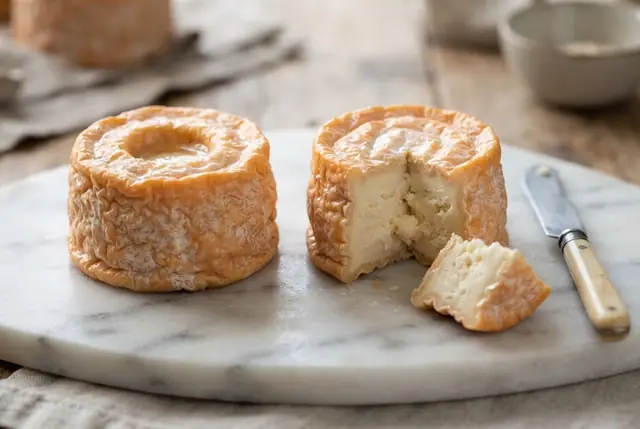
| Langres | Cheese counters, specialty | The Champagne relative with a dimple on top — see its own page. |
| Affidélice | Cheese counters | A Chablis-washed cheese from the same producer. Gentler. |
| Taleggio | Cheese counters, Whole Foods | Much gentler washed-rind, if this is too much — see its own page. |
| Red Hawk | Cheese counters, West Coast | The American washed-rind — see its own page. |
Label check: the AOP mark and a box. Époisses is always sold in a wooden box; a washed-rind cheese without one is something else.
Skip: buying it more than two or three days ahead, and buying it at all for a crowd you don't know. It's genuinely divisive.
Quick FAQ
Is Époisses really banned on French public transport?
It's widely repeated and not actually a law. It is, however, a cheese that would justify one.
How strong is it?
The aroma is among the strongest of any cheese. The taste is much milder than the smell — rich, meaty and faintly sweet.
Can you eat the rind?
Yes, though most people spoon the paste out and leave it.
How do I serve it?
In its box, top cut off, with a spoon and plain bread.
How much per person?
About 1 oz. One small round serves four to six.