The short version
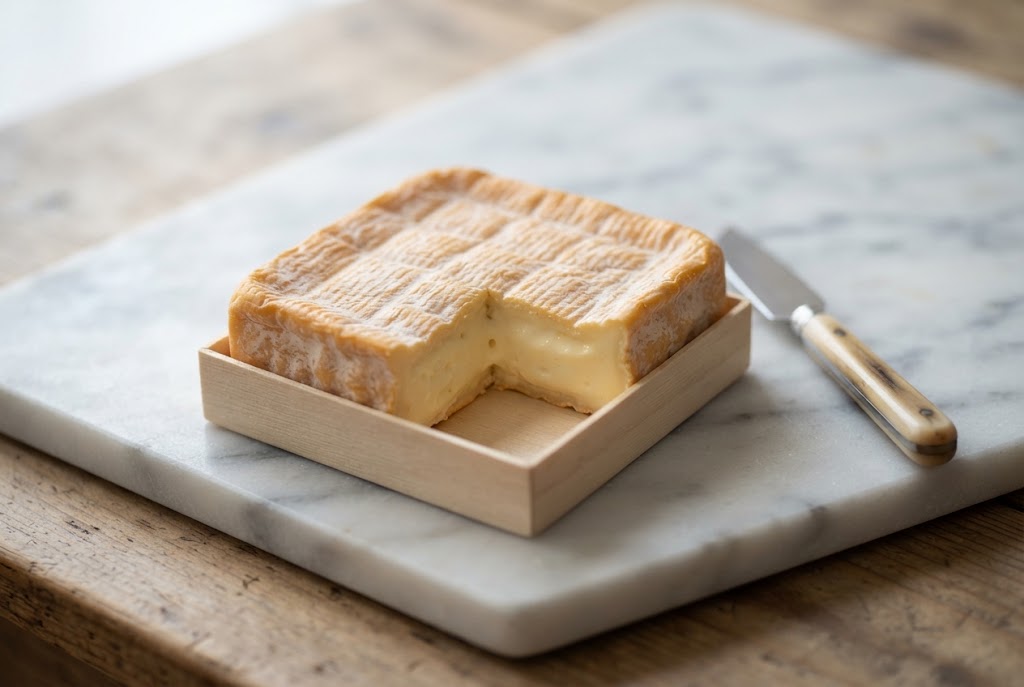
A square Normandy cheese with a washed golden rind and a supple, rich paste. It's been made since at least the 12th century, which makes it one of the oldest cheeses still in production. Funkier than Camembert, gentler than Époisses.
What it is
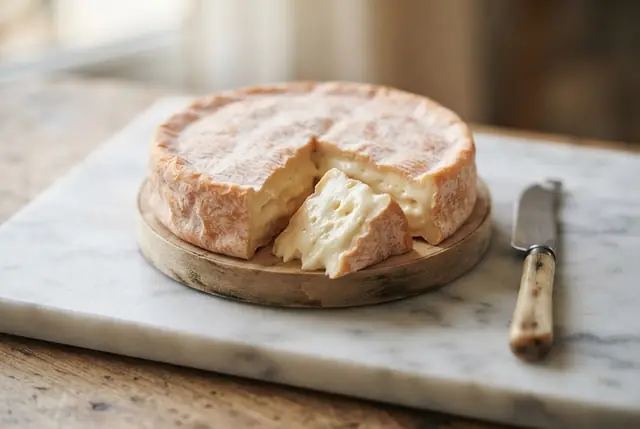
Pont-l'Évêque AOP comes from Normandy, named for a town between Caen and Deauville. It was originally called angelot and monks were making it in the 1100s. The square shape comes from the wooden molds; the rind is brine-washed and brushed during a six-week aging, developing a golden-orange color and a light barnyard aroma.
- Taste
- rich, savory, faintly sweet and fruity, mild barnyard funk
- Texture
- supple and soft, springy rather than runny
- Look
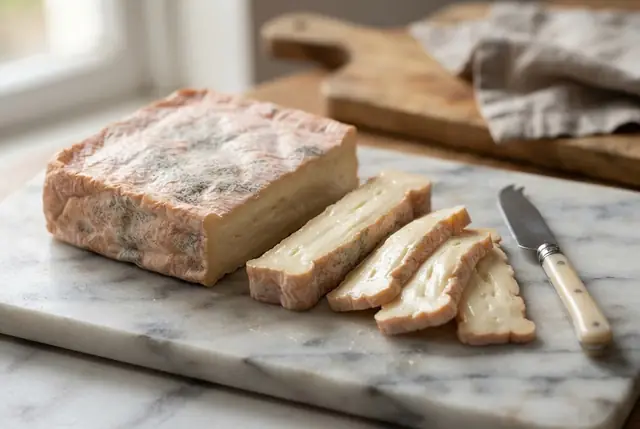
- small square, straw-gold washed rind with fine ridges from the mold
Restrained washing is the mechanism. Pont-l'Évêque is washed and brushed rather than soaked repeatedly in brine and spirit, so surface bacteria develop enough to add savory depth without dissolving the paste. The result sits between a bloomy-rind and a full washed-rind cheese — the aroma of the latter with the structure of the former.
What it pairs with — and why
| Pair it with | Why it works |
|---|---|
| Dry cider | The Normandy pairing. Acid and light sweetness against a rich washed-rind. |
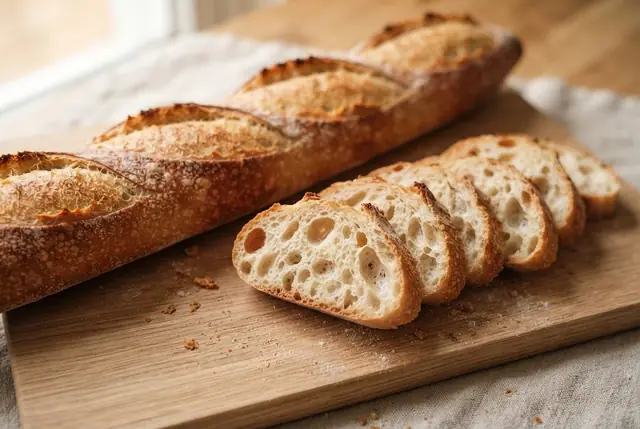
| Baguette | Plain bread under a soft aromatic cheese. |
| Apple | Normandy grows apples. Acid against fat, and it's regionally correct. |
| Calvados | The local apple brandy. Strong enough to stand up. |
| Walnuts | Tannin cutting a rich paste. |
| Cornichons | Sharp vinegar as a reset. |
| Honey | Sweetness rounding off the funk. |
Skip it with: delicate fresh cheeses in the same corner. It's mild for a washed-rind but still travels.
How to prep it for the board
- Temper 45 minutes.
- Cut it into squares or rectangles from the square block, keeping rind on each piece. The shape is distinctive — don't cut it into wedges.
- Serve 1–1.5 oz per person. One small square serves four to six.
- Put cider or apple beside it. The Normandy pairing is genuinely the best one.
- Place it in the middle of the board's intensity range.
- The rind is edible and part of the flavor, though some trim it.
- Fix: an ammonia smell that doesn't fade means it's over-ripe. A light barnyard note is correct.
What to buy
| Product | Where | Notes |
|---|---|---|
| Pont-l'Évêque AOP | Cheese counters, Whole Foods, Murray's | The real thing. Pasteurized versions are what reach the US. |
| Livarot | Cheese counters, specialty | The other Normandy washed-rind, bound in reed strips. Stronger. |
| Camembert de Normandie | Cheese counters | The bloomy-rind Normandy neighbor — see its own page. |
| Reblochon-style | Cheese counters | Similar gentleness, Savoie rather than Normandy — see its own page. |
| Taleggio | Whole Foods | The easiest washed-rind to find — see its own page. |
| Saint-Nectaire | Cheese counters, Whole Foods | Earthy, supple, Auvergne. A good relative. |
Label check: the AOP mark and a square shape with fine ridge marks from the mold. Round "Pont-l'Évêque-style" cheeses are something else.
Skip: buying it far ahead. Like all washed-rinds it ripens on and tips into ammonia.
Quick FAQ
How old is Pont-l'Évêque?
Monks were making a version of it in the 12th century, which makes it one of the oldest French cheeses still produced.
Is it as strong as Époisses?
No. It's a gentle washed-rind — aromatic, but supple and mild on the palate.
Why is it square?
The traditional wooden molds. The fine ridges on the rind come from the same molds.
Can you eat the rind?
Yes, and it's where much of the flavor is. Some people trim it.
What's the traditional pairing?
Dry Normandy cider, or Calvados. Apples in any form.