The short version
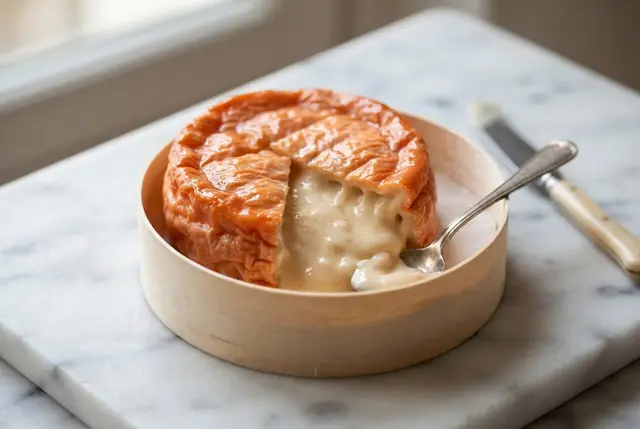
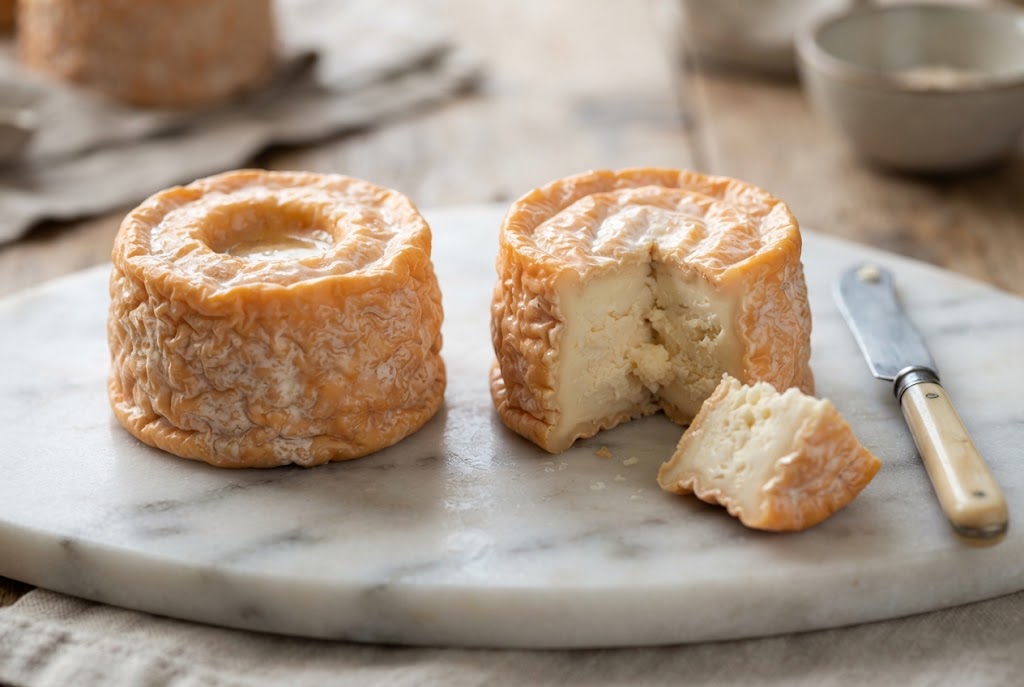
A small orange washed-rind cheese from the Champagne region with a concave dimple — the fontaine — in its top. You pour champagne or marc into the well and let it soak in. This is the traditional service, not a party trick.
What it is
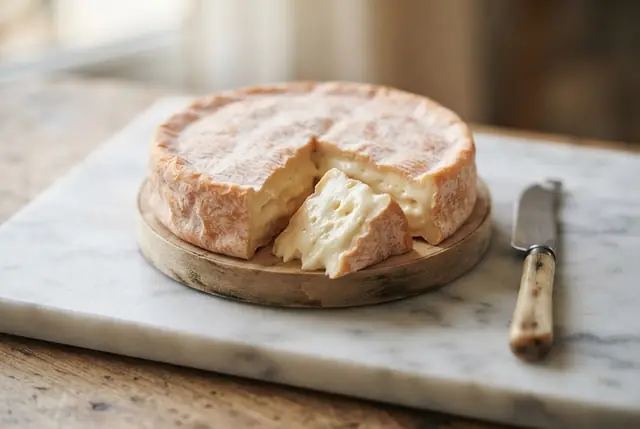
Langres AOP is made in Champagne-Ardenne from cow's milk, washed with brine and annatto during a five-week aging. Unlike most cheeses it's never turned during ripening, which is why the top sinks into a well as the paste settles. The rind is washed to a deep orange; the paste stays firm at the center and softens toward the edge.
- Taste
- rich, savory, tangy, moderately funky, less intense than Époisses
- Texture
- soft and creamy near the rind, firmer in the middle
- Look
- small orange cylinder with a distinct hollow in the top
Not turning the cheese is the mechanism, and it's the rare case where a production shortcut became the defining feature. Wheels are normally flipped so they settle evenly. Leaving Langres alone lets gravity pull the paste down and the surface sink — creating a well that some enterprising cheesemaker eventually decided to fill.
What it pairs with — and why
| Pair it with | Why it works |
|---|---|
| Champagne, poured into the well | The traditional service. Let it soak twenty minutes before serving. |
| Marc de Champagne | The stronger regional version of the same idea. |
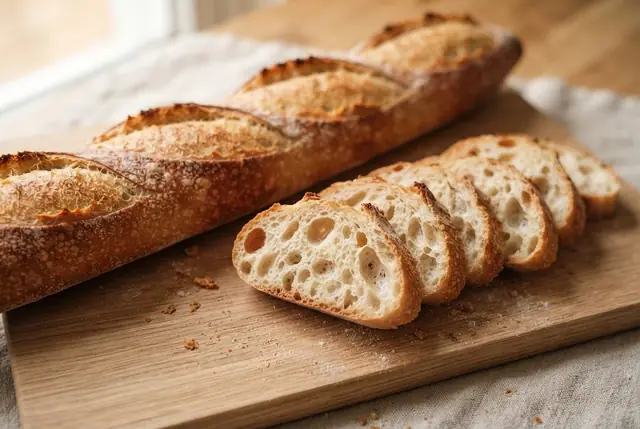
| Baguette | Plain bread and a spoon. Nothing should compete. |
| Cornichons | Sharp acid against a rich washed-rind paste. |
| Walnuts | Tannin against a very high-fat washed-rind paste. |
| Honey | Sweetness against funk, as with any washed-rind. |
| Champagne, alongside as well as inside | Acid and bubbles against saturated fat. |
Skip it with: delicate cheeses nearby and aged hard cheeses. Like all washed-rinds it takes over its corner of the board.
How to prep it for the board
- Pour a splash of champagne or marc into the well twenty minutes before serving. It soaks in and perfumes the paste. This is the point of the cheese.
- Temper a full hour.
- Serve it whole on its own small plate with a spoon, and let people take from the top down.
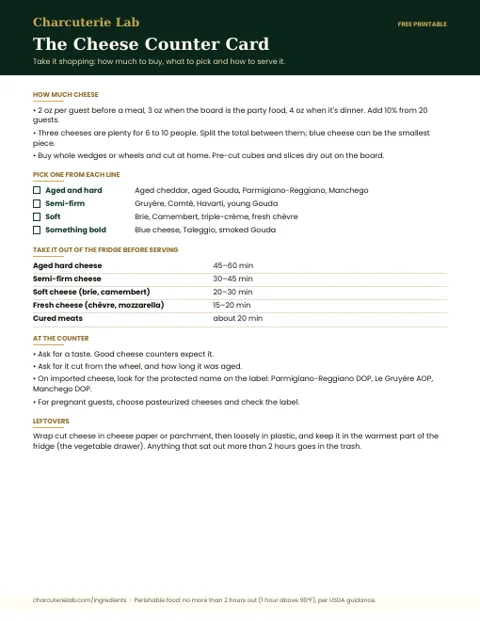
- Serve about 1 oz per person. One small cheese serves four to six.
- Give it its own plate and knife. The aroma travels.
- The rind is edible but many trim it.
- Fix: if it's firm all the way through it's young. Give it a few more days wrapped in the fridge.
What to buy
| Product | Where | Notes |
|---|---|---|
| Langres AOP | Cheese counters, specialty shops, Murray's | The real thing, in small and large formats. Buy the small one. |
| Époisses | Whole Foods, cheese counters | The better-known Burgundian relative — see its own page. |
| Affidélice | Cheese counters | Chablis-washed, from the Époisses producer. Gentler. |
| Chaource | Cheese counters | The other Champagne cheese — bloomy rind, mild, excellent. |
| Taleggio | Whole Foods | The gentle washed-rind starting point — see its own page. |
| Red Hawk | Cheese counters, West Coast | The American washed-rind — see its own page. |
Label check: the AOP mark and a visible well in the top. A flat-topped orange cheese isn't Langres.
Skip: the large format for a board. The small cheeses are the right size and the well is proportionally deeper.
Quick FAQ
Do you really pour champagne into it?
Yes. It's the traditional service — a splash in the well twenty minutes before serving, left to soak in.
Why does it have a hollow in the top?
It's never turned during ripening, so the paste settles and the surface sinks. Most cheeses are flipped; this one isn't.
How strong is it?
Moderately — noticeably milder than Époisses, stronger than Taleggio.
Can you eat the rind?
Yes, though many people trim it.
How much per person?
About 1 oz. One small cheese serves four to six.