The short version
The easiest nut to eat and the least interesting to pair. Cashews are soft, sweet, mild and completely without bitterness, which makes them a crowd-pleaser and a poor contrast ingredient. Where they earn a place is on fusion and tropical boards, and beside anything spicy.
What it is
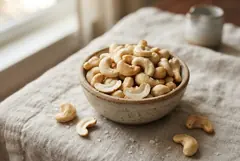
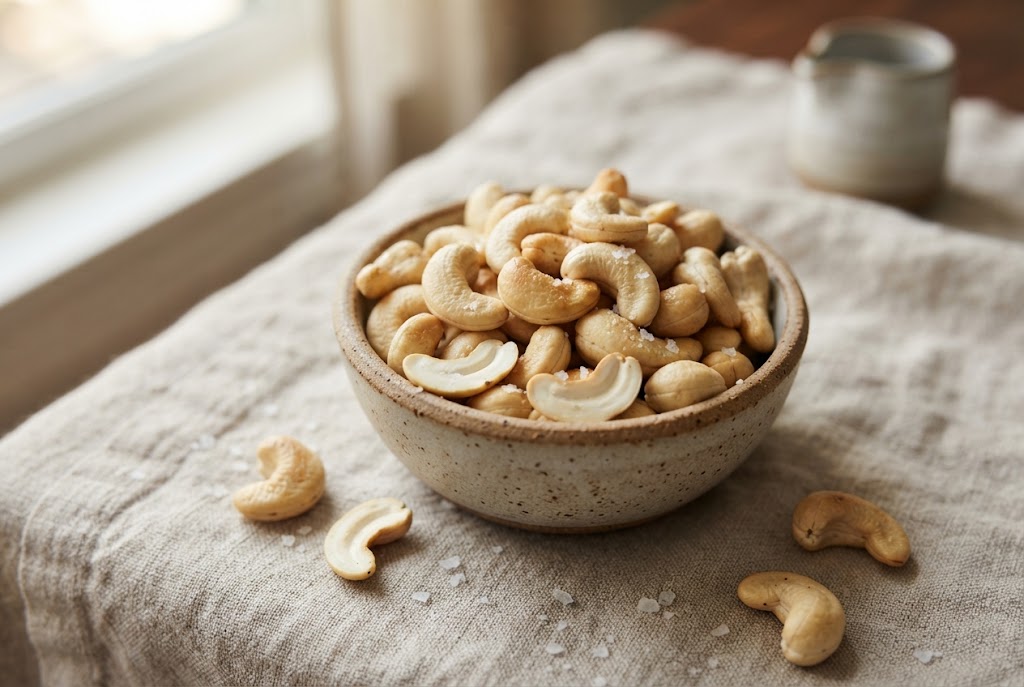
The seed of the cashew apple, always sold roasted — raw cashews are never truly raw, since the shell contains a caustic oil related to poison ivy that requires heat processing. Sold whole, halves or pieces, salted or unsalted.
- Taste
- sweet, milky, buttery, barely bitter
- Texture
- softer and denser than other nuts; crumbles rather than snaps
- Look
- pale ivory crescents
The mechanism is softness. Cashews are the only common nut with real give, which means they don't provide the crunch contrast a board usually wants from nuts. What they do provide is a creamy, sweet buffer against heat and spice — which is why they appear in curries, in Sichuan cooking, and beside chilli-cured meats.
What it pairs with — and why
| Pair it with | Why it works |
|---|---|
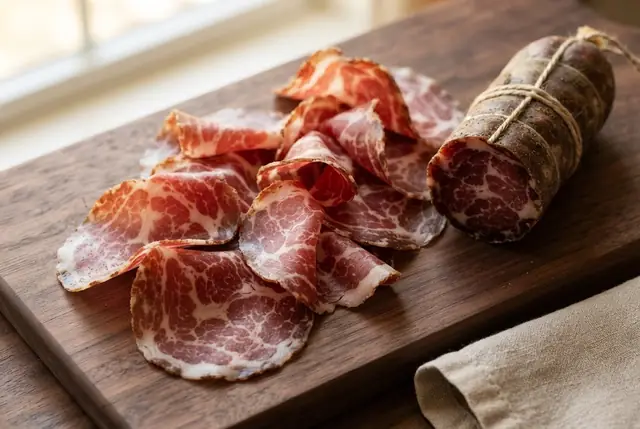
| Spicy coppa and soppressata | Fat and sweetness absorbing chilli heat. The most useful thing cashews do on a board. |
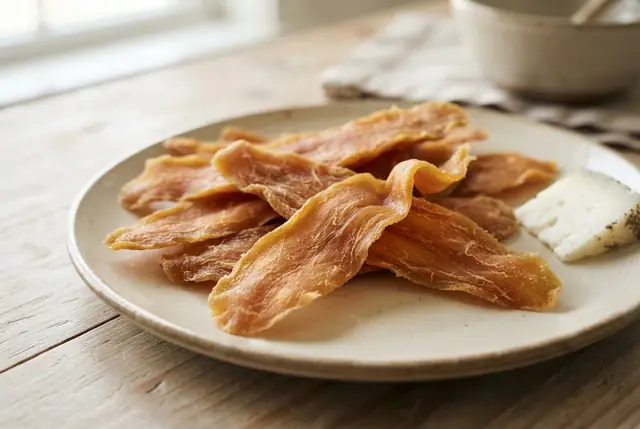
| Dried mango | Both sweet, both soft, both tropical. A coherent corner of a fusion board. |
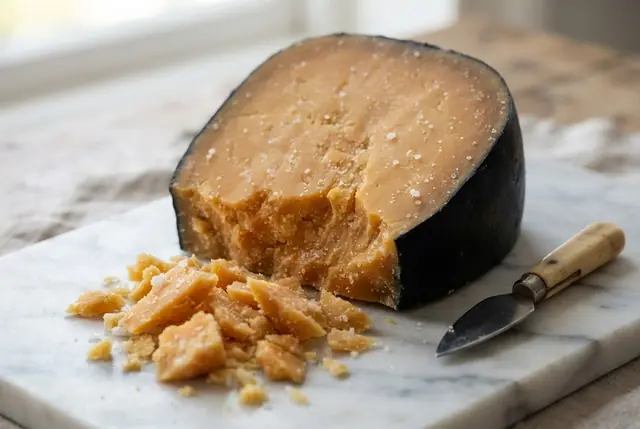
| Aged gouda | Caramel and butterscotch in the cheese; sweet milky nut alongside. |
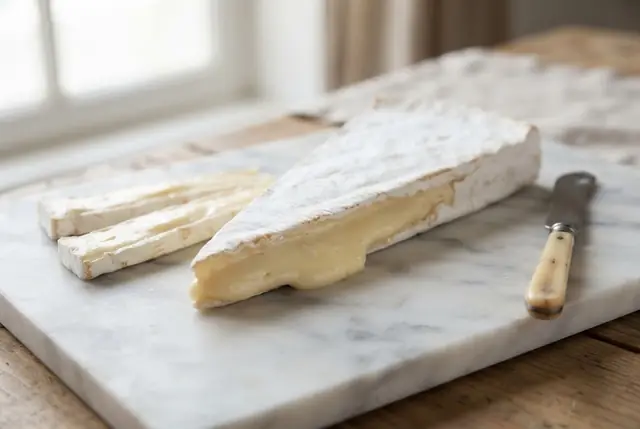
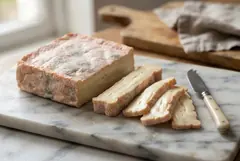
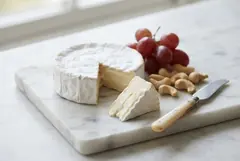
| Brie | Soft against soft — unusual, and it works if the rest of the board has crunch. |
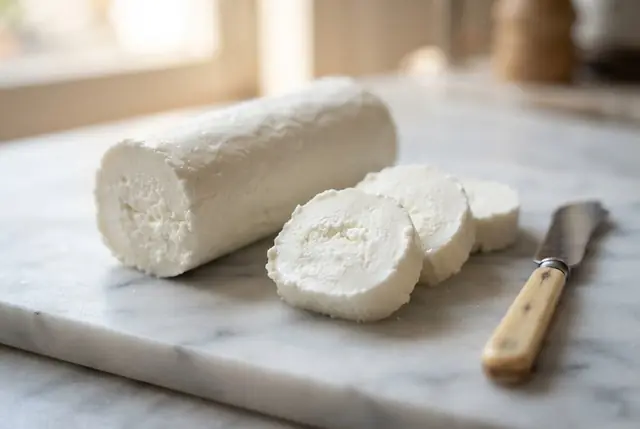
| Fresh goat cheese | The tang supplies the edge the cashew doesn't have. |
| Curry-spiced or honey-roasted | Cashews take flavour coatings better than any other nut. |
Skip it with: boards built on contrast. If everything else is soft, cashews add nothing.
How to prep it for the board
- No prep. Buy roasted and salted.
- Serve in a bowl. Cashews shed a fine oily dust that gets on everything.
- Use whole cashews. Pieces look like an ingredient.
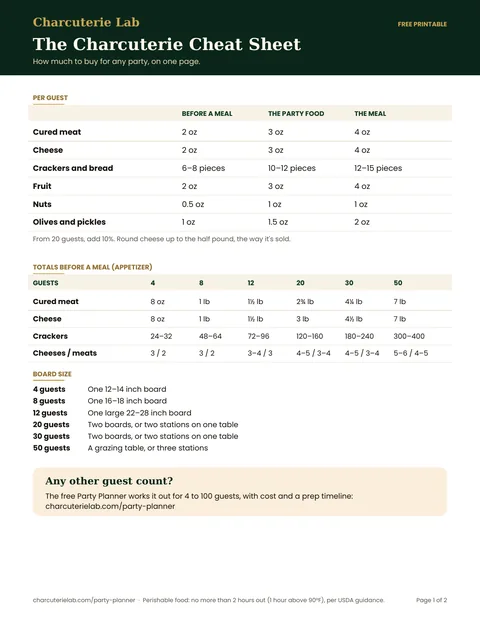
- Serve 1 oz per person — people eat a lot of these.
- Pair them with something crunchy elsewhere on the board, since they can't supply crunch themselves.
- Look for spiced versions — curry, chilli-lime, honey-roasted all work better here than they would on a harder nut.
- Fix: soft and stale? 300°F for eight minutes restores some crispness, though cashews never get properly hard.
What to buy
| Product | Where | Notes |
|---|---|---|
| Roasted salted whole cashews | Any grocery, Costco | The default. Whole, not pieces. |
| Jumbo cashews | Costco, specialty | Larger and better-looking on a board. |
| Curry or chilli-lime cashews | Trader Joe's, Whole Foods | Where cashews get interesting. Excellent on fusion boards. |
| Honey-roasted cashews | Grocery | Sweet version, dessert corner. |
| Raw cashews | Health stores | Soft and bland. For cooking, not boards. |
Label check: whole cashews cost more than pieces for a reason — pieces are broken and stale faster. Check for oil separation in the bag.
Skip: cashew pieces and anything heavily coated in maltodextrin.
Ranked picks: our top-rated mixed nuts are Kirkland Signature Extra Fancy Salted Mixed Nuts (4.5 out of 5), and the best-tasting mix in a published test is Trader Joe's Fancy Mixed Nuts. See the full ranking of the best mixed nuts.
Quick FAQ
Are cashews good on a charcuterie board?
They're a crowd-pleaser but a weak contrast — soft, sweet, and low in bitterness. Best on fusion boards and beside spicy meats.
Why are cashews always sold roasted?
The shell contains a caustic oil related to poison ivy, so they're always heat- processed. Even "raw" cashews have been steamed.
What goes with cashews?
Spicy cured meats, dried mango, aged gouda, and fresh goat cheese.
Whole or pieces?
Whole. Pieces are broken, stale faster, and look like a baking ingredient.
How much per person?
About an ounce. People eat more cashews than any other nut.