The short version
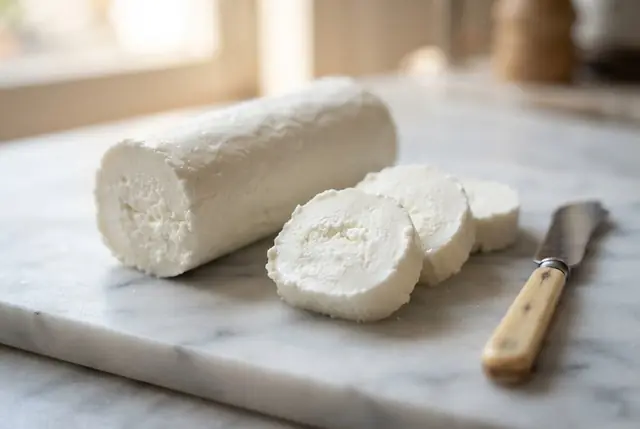
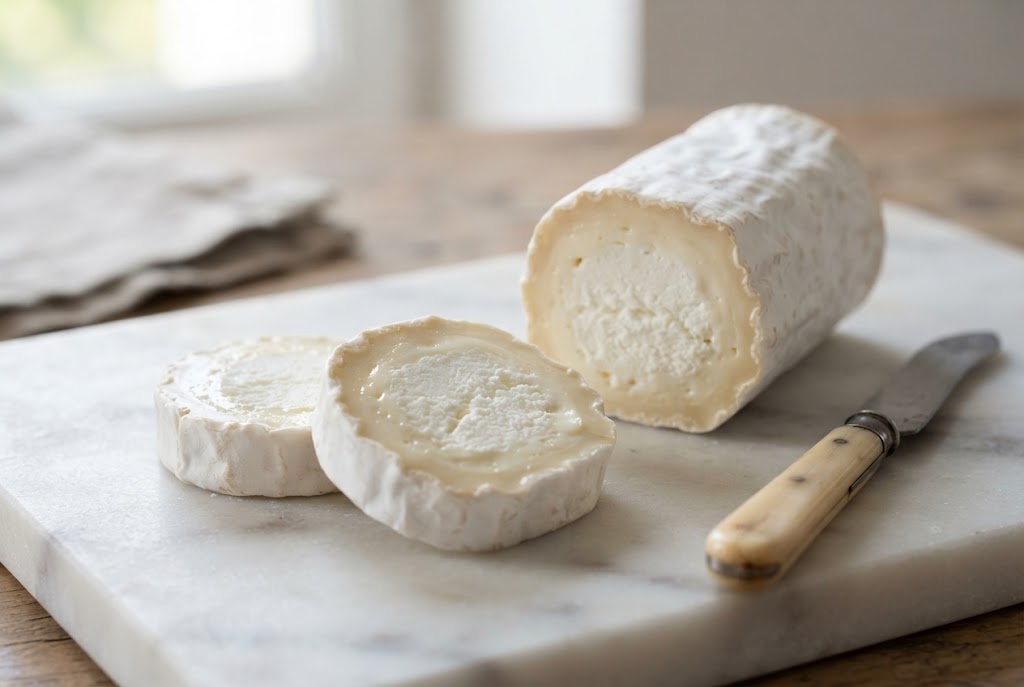
A French goat's-milk log aged five to ten weeks, with a bloomy white rind. Cut a slice and you get a soft, almost liquid ring just under the rind and a firm, chalky core in the middle. Two textures, one cheese, and it's excellent value.
What it is
Bucheron — bûcheron means woodcutter — is a bûche, or log, of pasteurized goat's milk cheese ripened with a white bloomy mold. The mold works from the outside in, so the outer paste breaks down first while the center stays firm. Cheesemongers call the visible boundary the creamline.
- Taste
- tangy and lemony at the core, richer and more mushroomy at the edge
- Texture
- runny ring under the rind, chalky and dense in the center
- Look
- white log with a bloomy rind and a visible creamline in cross-section
Directional ripening is the mechanism. Surface mold produces enzymes that break down proteins and fats from the outside inward, and in a log of this diameter the process reaches equilibrium before it finishes. The result is a cheese that is genuinely two things at once, which is rare and worth pointing out at the table.
What it pairs with — and why
| Pair it with | Why it works |
|---|---|
| Honey | Sweet against goat's-milk acid. The core pairing for any chèvre. |
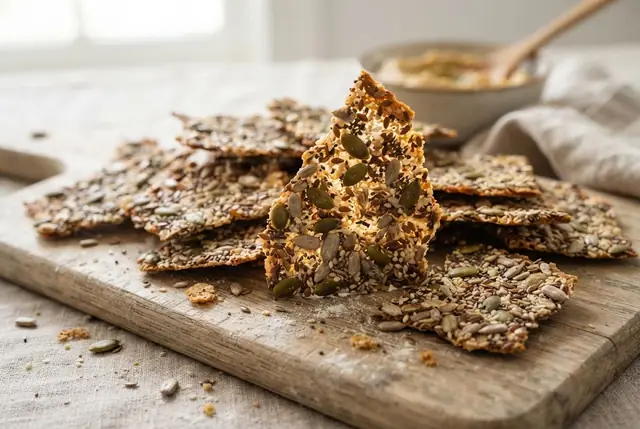
| Seeded crackers | Bitter seed oil and crunch against tang and chalk. |
| Fig jam and cherry preserve | Dense fruit sweetness with a bright, acidic cheese. |
| Walnuts and pistachios | Tannin and crunch, and pistachio green against white paste looks good. |
| Beets | Earthy and sweet against sharp — the salad, taken apart. |
| Fresh thyme | Goat cheese takes herbs better than any other family. |
| Sancerre, Sauvignon Blanc, dry rosé | High-acid Loire whites. The regional pairing. |
Skip it with: blue cheese, which flattens it, and everything crackers, where garlic fights the tang.
How to prep it for the board
- Cut discs with dental floss or a wire, not a knife. A blade drags the soft outer ring into the chalky center and ruins the cross-section.
- Lay the discs flat so the creamline shows. That ring is the reason to buy this cheese rather than a plain chèvre.
- Temper 30 minutes — the outer ring should be visibly soft.
- Serve 1–1.5 oz per person.
- Point out the two textures. People assume it's one cheese ripening unevenly; telling them it's deliberate changes how they eat it.
- Eat the rind or trim it — it's edible and mild.
- Fix: if the whole log is chalky through, it's young. A few more days in the fridge will widen the creamline.
What to buy
| Product | Where | Notes |
|---|---|---|
| Bucheron / Bûcheron | Cheese counters, Whole Foods, most grocery cheese cases | Widely available and consistently good value. |
| Couronne Lochoise | Cheese counters, specialty | A crown-shaped relative, ash-coated. Excellent. |
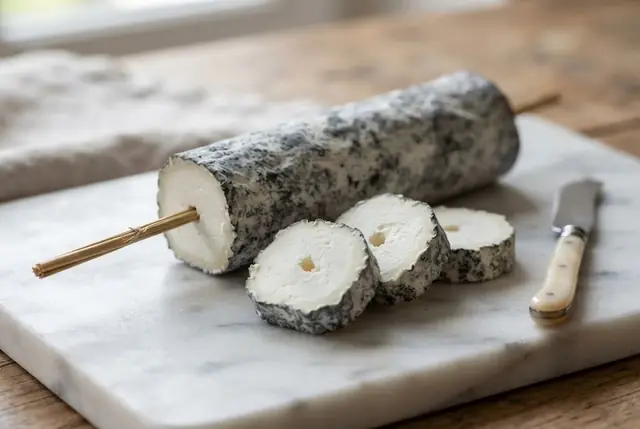
| Sainte-Maure de Touraine | Cheese counters, specialty | Ash-coated log with a straw through it — see its own page. |
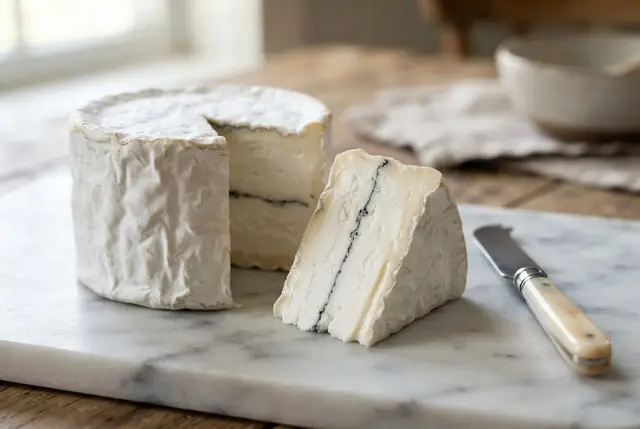
| Humboldt Fog | Whole Foods, cheese counters | The American answer, with an ash line — see its own page. |
| Valençay | Cheese counters, specialty | Ash-covered pyramid. Same family, more dramatic. |
| Fresh chèvre | Any grocery | The young, unaged version — see its own page. |
Label check: buy a piece cut from the log so you can see the creamline. A wide soft ring means a well-ripened cheese; an all-chalk cross-section means it's young.
Skip: pre-wrapped whole logs if the counter will cut one. You want to see the cross-section before you buy.
Quick FAQ
Why is the middle chalky and the outside runny?
The bloomy rind ripens the cheese from the outside inward. In a log this thick, the center hasn't broken down yet — and that contrast is the point.
Is the chalky part underripe?
No. It's characteristic of the style and it's supposed to be there.
How do I slice it cleanly?
Dental floss or thin wire. A knife drags the soft ring into the core.
Can you eat the rind?
Yes. It's thin and mild.
How much per person?
1–1.5 oz.