The short version
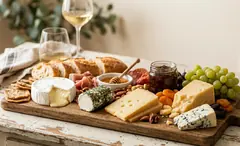
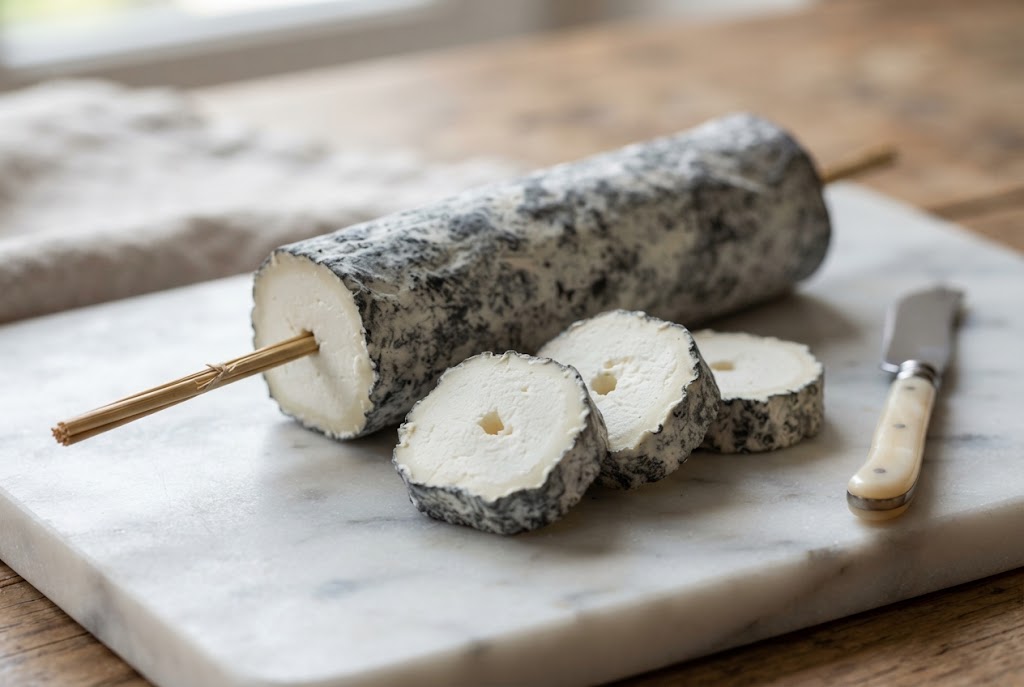
A tapered goat's-milk log from the Loire, coated in vegetable ash with a piece of rye straw running lengthwise through the center. Bright, lemony and dense. The straw has a job, and pulling it out at the table is a small piece of theatre.
What it is
Sainte-Maure de Touraine AOP comes from the Touraine region of the Loire Valley. The log is delicate and the straw is structural — it supports the cheese while it drains and ripens, and it's stamped with the producer's number, making it a traceable mark of authenticity as well as a spine.
- Taste
- lemony, tangy, nutty, gently goaty
- Texture
- dense and chalky in the middle, softer under the rind with age
- Look
- tapered grey-black ash log with a straw protruding from one end
Structural support is the mechanism, and it's an honest piece of engineering. Fresh goat curd at this moisture level would slump and crack under its own weight in a long thin shape. The straw carries the load until the paste firms up — a solution that predates any thought of it looking impressive on a board.
What it pairs with — and why
| Pair it with | Why it works |
|---|---|
| Sancerre and Loire Sauvignon Blanc | The regional pairing, and a benchmark for goat cheese and wine generally. |
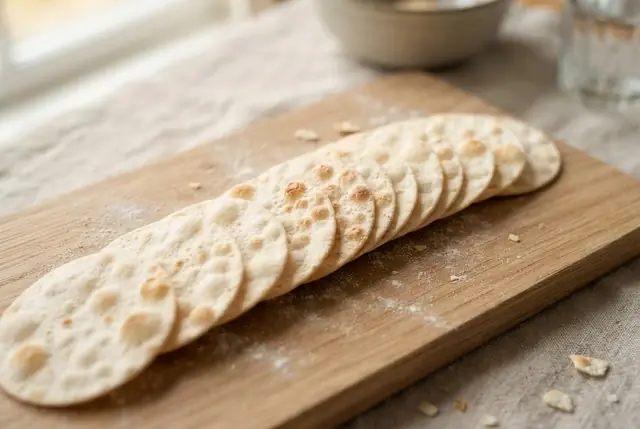
| Water crackers | Quiet, dry and plain under an expensive, delicate cheese. |
| Honey | Sweet against goat acid. |
| Fresh figs and cherries | Loire fruit with Loire cheese. |
| Walnuts | Tannin and crunch against dense chalk. |
| Cherry or apricot preserve | Fruit sweetness against sharp tang. |
| Fresh thyme and cracked pepper | Simple seasoning that flatters rather than competes. |
Skip it with: blue cheese and everything crackers. This is a delicate, expensive cheese and both erase it.
How to prep it for the board
- Leave the straw in until the cheese is on the board, then pull it out in front of people. It's a small moment and it's free.
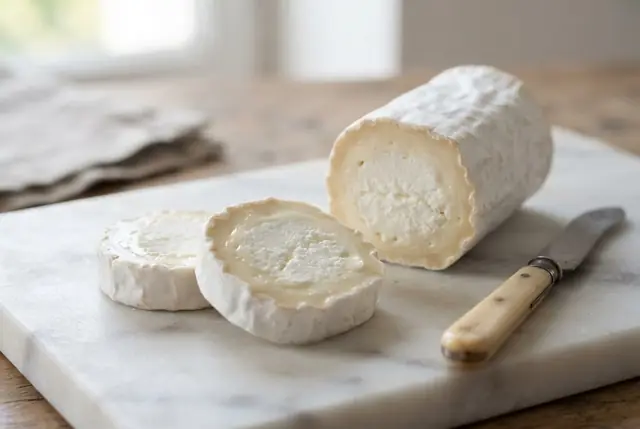
- Cut discs with floss or a wire. A blade drags the ash into the paste and greys the whole slice.
- Lay the discs so the ash edge shows against the white interior.
- Temper 30 minutes.
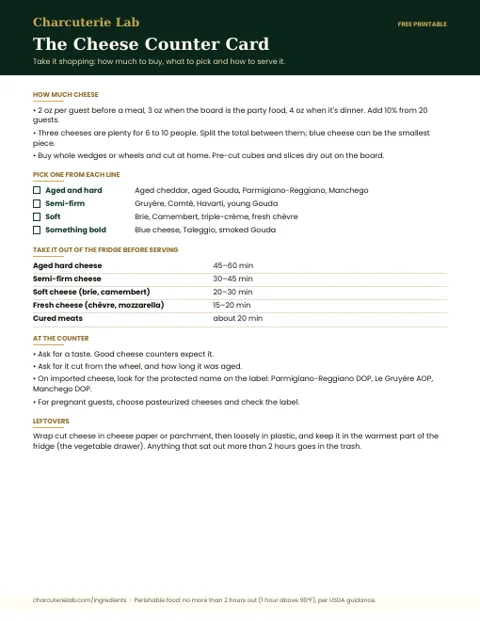
- Serve 1–1.5 oz per person. One log serves six to eight.
- The ash and rind are edible. Say so — people hesitate.
- Fix: cracked or crumbling? It's dried out. Trim the ends and use the middle.
What to buy
| Product | Where | Notes |
|---|---|---|
| Sainte-Maure de Touraine AOP | Cheese counters, specialty shops, Murray's | The real thing, with a numbered straw. |
| Sainte-Maure (non-AOP) | Grocery cheese case, Whole Foods | Pasteurized versions without the straw. Cheaper, milder, fine. |
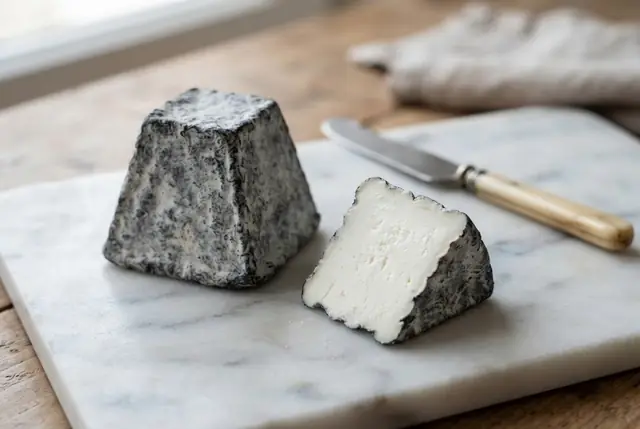
| Valençay | Cheese counters, specialty | The ash-covered pyramid from the same region — see its own page. |
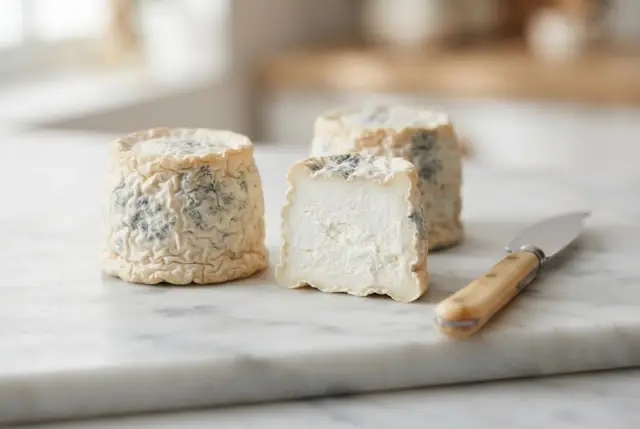
| Selles-sur-Cher | Cheese counters, specialty | Ash-coated disc, same family, gentler. |
| Bucheron | Grocery cheese case | The everyday aged goat log at a fraction of the price. |
| Humboldt Fog | Whole Foods | The American ash cheese — see its own page. |
Label check: the straw with a stamped producer number is the AOP mark. No straw means it isn't the protected cheese.
Skip: buying it for a big crowd. It's expensive, delicate and small — one log is a centerpiece, not a volume cheese.
Quick FAQ
What's the straw for?
Structural support. The log is fragile while it drains and ripens, and the straw holds it together. It's also stamped with the producer's number as a mark of authenticity.
Do I remove the straw?
Yes, before slicing. Pull it out at the table — it's a nice moment.
Can you eat the ash?
Yes. Vegetable ash is edible, essentially tasteless, and helps the rind develop.
How do I slice it cleanly?
Floss or thin wire. A knife drags the black ash through the white paste.
How much per person?
1–1.5 oz. One log serves six to eight.