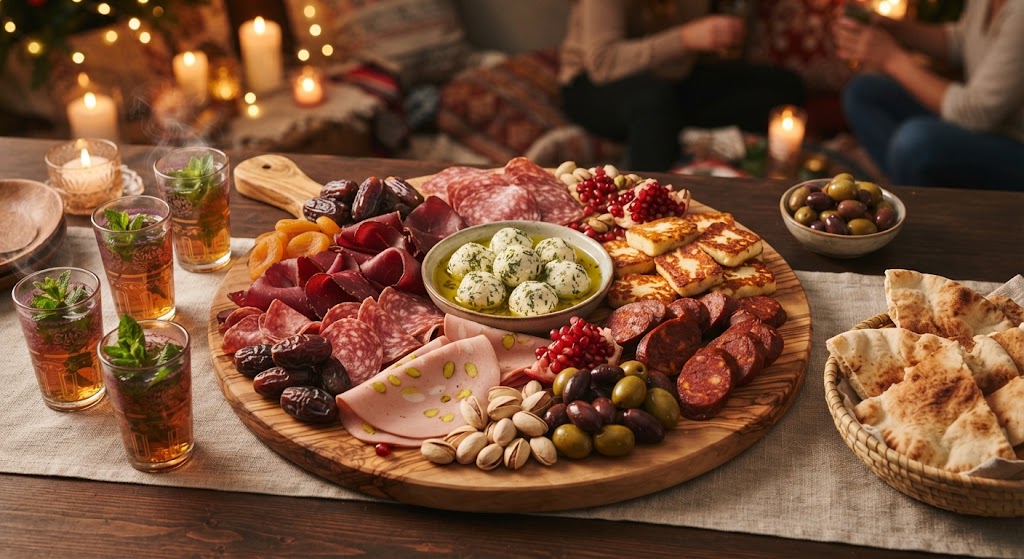
Quick Answer: Build it from halal-certified beef, turkey and chicken: bresaola, beef salami, beef pepperoni, halal mortadella, sujuk and basturma. Choose cheese made with microbial or vegetable rennet, and check jams, mustards and candy for wine and gelatin. Pork-free isn't the same as halal, so look for a certification mark on the meat.
The short version
Meat
Certified beef, turkey, chicken, lambBresaola, beef salami, beef pepperoni, halal mortadella, sujuk, basturma.
Cheese
Microbial or vegetable rennetOr a halal mark. Halloumi, akkawi and labneh are often certified.
Check
Gelatin, wine, lardHidden in candy, dips, mustard, jam and some crackers.
Most charcuterie guides assume pork. A halal board just starts from different meats, and some of the best ones (sujuk, basturma, bresaola) come from traditions that never used pork in the first place.
Practice varies between communities and individuals, especially on cheese rennet and trace alcohol. If you're hosting, the simplest move is to ask your guest what they look for.
Mixed diets at the party? The Mixed-Diet Party Planner $5 · printable PDF
What makes a board halal
- No pork or pork-derived ingredients. That includes lard and most gelatin.
- Meat from halal-certified producers. Beef, lamb, chicken and turkey need to be slaughtered according to halal requirements. Pork-free alone isn't enough.
- No alcohol as an ingredient. Wine-washed cheese, liqueur jams, and wine in mustard.
- No cross-contact. Separate boards and knives if non-halal meat is also being served.
Look for a certification mark from a recognized body. In the US, common ones include IFANCA, ISNA, HFSAA and HMS.
The meats
| Meat | What it is | Board role | Swap for |
|---|---|---|---|
| Beef bresaola | Lean air-cured beef, deep red | Elegant, lean contrast | Prosciutto |
| Beef salami | Fermented, dry-cured beef sausage | The anchor | Genoa or hard salami |
| Beef pepperoni | Smoky, spicy, firm | Heat and color | Pork pepperoni |
| Turkey salami | Milder, lighter salami | Crowd-pleaser | Cotto salami |
| Halal mortadella | Beef or chicken, often with pistachios | Soft, rich, folds beautifully | Pork mortadella |
| Sujuk | Spiced, garlicky dry beef sausage from Turkey and the Levant | The bold, spicy one | Chorizo or soppressata |
| Basturma | Air-dried beef in a fenugreek and paprika crust | Showpiece, intense | Coppa or bresaola |
| Beef pastrami | Brined, spiced, smoked beef | Hearty, smoky | Ham |
| Smoked salmon | Cold-smoked fish | Brunch boards, luxury touch | Prosciutto |
Tip: sujuk is even better warmed. Slice it, crisp it in a dry pan for a minute per side, and serve it warm alongside the cold meats.
For more on the lean beef star of the board, see our bresaola deep dive.
The cheese: watch the rennet
Rennet is the enzyme that sets milk into cheese. Traditional rennet comes from calves, so where it comes from matters to many people who keep halal.
| Rennet on the label | What it means | Usually |
|---|---|---|
| Microbial enzymes, microbial rennet | Made by fermentation, no animal | Widely accepted |
| Vegetable rennet | From plants such as thistle | Widely accepted |
| Halal certification mark | Certified by a halal body | Accepted |
| "Enzymes" with no detail | Could be animal or microbial | Contact the maker or skip it |
| Animal rennet, calf rennet | From calves | Avoid unless certified halal |
Usually easy: many supermarket cheddars, Monterey Jack, mozzarella, cream cheese and feta use microbial enzymes. Check the label each time, because it varies by brand. Often halal-certified: halloumi, akkawi, Nabulsi, labneh balls and other Middle Eastern cheeses, which also look great on a board.
Check carefully: Parmigiano-Reggiano is required to use calf rennet. Many traditional Manchego, Gruyère, Comté and Pecorino cheeses do too. And skip anything washed or soaked in wine or beer, like "drunken" goat cheese.
Hidden ingredients to check
- Gelatin. Usually pork unless labeled otherwise. Found in gummies, marshmallows, some yogurts, some dips and some candy.
- Wine in mustard. Traditional Dijon is made with white wine. Yellow and many whole-grain mustards aren't. Read the label.
- Alcohol in jams and chutneys. Some fig, cherry and onion jams include port, brandy or wine.
- Lard. In some crackers, pie crusts and shortbread.
- Pork-based meat sticks and pâtés. Many "beef" sticks and pâtés use pork casings or pork fat. Look for certified products.
Where to buy halal charcuterie
- Halal butchers and Middle Eastern, Turkish or South Asian grocers. The widest selection, and the best place for sujuk, basturma and halal mortadella.
- Midamar. A long-running US halal brand that sells halal classic salami, beef pepperoni and deli meats online.
- Nema Halal. Makes a halal mortadella with pistachios, sold through Middle Eastern grocers.
- Brother & Sister. Their halal-certified smoked beef bresaola has turned up at some Costco locations, though availability is limited.
- Almas Food and Yummy Yum Food. California makers of halal deli meats, sold through specialty grocers.
Stock changes often, so check the certification on the package itself rather than assuming a brand's whole line is halal.
A halal board for 8
About 2 oz of meat and 2 oz of cheese per person for an appetizer board. Scale with our per-person guide.
Meat (1 lb total)
- 4 oz halal beef salami
- 4 oz beef bresaola
- 4 oz halal mortadella with pistachios
- 4 oz sujuk, sliced and warmed
Cheese (1 lb total)
- 6 oz aged white cheddar (microbial enzymes)
- 4 oz halloumi, grilled or pan-seared
- 6 oz herbed labneh balls or whipped feta
Everything else
- Medjool dates and dried apricots
- Green and black olives
- Pomegranate seeds and red grapes
- Pistachios or marcona almonds
- Honey and fig jam (check for alcohol)
- Yellow mustard or a wine-free whole-grain mustard
- Pita chips, crackers (check for lard) and warm flatbread
- Cucumber and cherry tomatoes
Drinks: mint tea, pomegranate spritzers and sparkling water. Our zero-proof pairing guide has more.
Hosting tips
- Ask, don't guess. Some guests only need pork-free; others check rennet and trace alcohol. A quick question saves a lot of label reading.
- Keep packaging until the party. Guests who keep halal will appreciate being able to see the certification.
- Serving a mixed crowd? Make the halal board its own board with its own knives, rather than a corner of a bigger one.
- Ramadan and Eid. Ramadan begins in early February 2027, with dates set by the moon. An iftar board is traditionally opened with dates and water, so put the dates front and center.
Get weekly board ideas in the Charcuterie Lab Report newsletter.
FAQ
Can charcuterie be halal?
Yes. Charcuterie just means cured and prepared meats, and many are made from beef, turkey, chicken, lamb or duck. Halal-certified beef bresaola, beef salami, beef pepperoni, turkey salami, halal mortadella, sujuk and basturma all work on a board. The meat needs to come from a halal-certified producer, not just be pork-free.
What cheese is halal for a charcuterie board?
Look for cheese made with microbial or vegetable rennet, or with a halal certification mark. Many supermarket cheddars, mozzarellas and cream cheeses use microbial enzymes. Middle Eastern cheeses like halloumi, akkawi and labneh are often halal-certified. Parmigiano-Reggiano and many traditional European cheeses are made with calf rennet, so check the label.
What should I check for besides pork?
Gelatin, which is often pork-derived, in gummies, marshmallows and some yogurts and dips. Wine or spirits in mustard, jam, chutney and wine-soaked cheeses. Lard in some crackers and pastries. And cross-contact if halal and non-halal meats share a board or a knife.
Where can I buy halal charcuterie?
Halal butchers and Middle Eastern, Turkish and South Asian grocery stores carry the widest selection, including sujuk and basturma. Brands such as Midamar sell halal salami and deli meats online. Some warehouse clubs and large supermarkets carry halal-certified bresaola or deli meats, but stock varies by location.
Is a pork-free board the same as a halal board?
No. A pork-free board can still include beef or chicken that wasn't slaughtered according to halal requirements, cheese made with animal rennet, or ingredients made with alcohol. For a guest who keeps halal, look for certification on the meat and check every packaged ingredient.