Quick Answer: The 10-second answer:
- Top of the board: UMAi Dry Charcuterie Kit — Cure whole cuts in your fridge
- Starter culture: Bactoferm T-SPX — For Italian-style salami
- Essential: Curing Salt: Instacure (Prague Powder) #1 and #2 — The nitrite that makes it safe
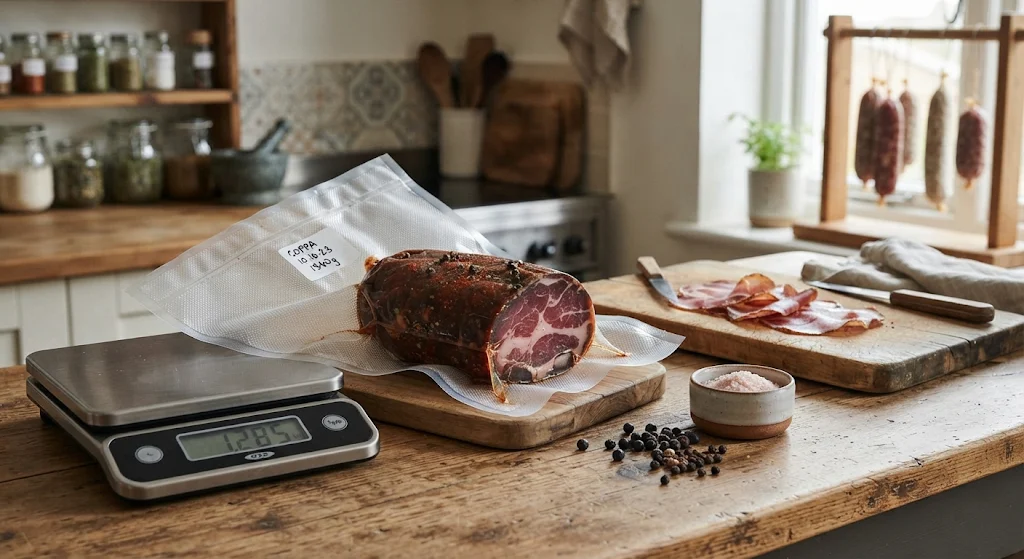
Curing your own charcuterie used to mean building a humidity-controlled curing chamber. Breathable dry-aging bags changed that: the meat dries in your regular refrigerator while the bag keeps out mold and odors. Whole-muscle cuts like coppa and bresaola are the easiest place to start; fermented salami is the next step and needs a starter culture and more care.
Which one should you buy?
Planning a board? Classic Board Blueprint v2 $4 · printable PDF
All 4 picks
Prices are maker and retailer listings checked November 13, 2026.
Best for beginners
UMAi Dry Charcuterie Kit
- Includes
- 3 large and 2 small bags, Instacure #2, juniper
- Cures
- Coppa, bresaola, lomo, duck
- Time
- 1 to 6 months
Why it's here: Everything for your first whole-muscle cure: breathable bags that seal without a vacuum sealer, curing salt and juniper berries, with step-by-step instructions and videos.
Watch out: Bags are single-use and add real cost per project, and some buyers report seal failures, so follow the sealing instructions exactly.
Why we picked it (sources)
Kit contents from its retail listing (listing); a home cook's write-up of curing with UMAi bags (Modernist Pantry).
Best for salami
UMAi Dry Salami (Dry Sausage) Kits
- Casing
- Breathable, 50 or 70 mm
- Needs
- Grinder, cure #2, starter culture
- Makes
- Salami, soppressata, chorizo
Why it's here: UMAi's breathable sausage casings let salami dry in the fridge too. Home cooks report good first batches of soppressata and venison salami.
Watch out: Check which version you're buying: some spice packets don't include the salt, Instacure #2 or starter culture you also need.
Why we picked it (sources)
A home cook's UMAi soppressata thread lists what the spice blend does and doesn't include (Smoking Meat Forums); verified buyer reviews of the salami kits (UMAi Dry reviews).
Starter culture
Bactoferm T-SPX
- Ferments at
- 64 to 75°F
- Profile
- Mild, slow acidification
- Storage
- Freezer
Why it's here: The go-to culture for southern European salami. It lowers the pH safely and develops the color and gentle tang of Italian salami and French saucisson.
Watch out: It's alive: freeze it the day it arrives, and if the powder is clumped instead of loose, it may be dead.
Why we picked it (sources)
The Sausage Maker lists $28.99, fermenting range and freezer storage (The Sausage Maker).
Essential
Curing Salt: Instacure (Prague Powder) #1 and #2
- #1
- Nitrite: bacon, cooked sausage
- #2
- Nitrite plus nitrate: long dry cures
- Color
- Dyed pink so it isn't mistaken for salt
Why it's here: Curing salt is the ingredient that protects slow-dried meat from botulism. Cure #2 releases nitrite slowly over weeks, which is why salami and long dry cures use it.
Watch out: Use exactly what a tested recipe says, weighed on a gram scale. Never substitute table salt or guess.
Why we picked it (sources)
Composition and use of Prague Powder #1 and #2 (Smoking Meat Forums). Our explainer: why cured meat doesn't spoil.
Safety rules for curing at home
- Follow a tested recipe from the kit maker or a trusted book; don't improvise salt or cure amounts.
- Weigh everything in grams, including the meat, on a digital scale.
- Use cure #2 for long dry cures and cure #1 for things you'll cook.
- Weigh the meat as it dries. Most cures are done when they've lost about a third of their starting weight.
- Know your molds. Even white mold is normal; fuzzy green or black mold, or slime, means throw it out.
- Skip home-cured meat for pregnant guests and anyone with a weakened immune system.
The science behind it: why cured meat doesn't spoil. Or buy the real thing: the best salami brands.
Home curing questions
Can you cure meat in a regular fridge?
Yes, with breathable dry-aging bags like UMAi Dry, which let moisture out while keeping mold and odors away.
What is the easiest charcuterie to make at home?
Whole-muscle cuts like coppa, bresaola and lomo. Salami is harder because it needs grinding, a starter culture and fermentation.
Do I need curing salt?
Yes, for anything dried slowly. The nitrite in curing salt prevents botulism. Use the amount a tested recipe specifies.
What is the difference between cure #1 and cure #2?
Cure #1 contains nitrite and is for bacon and cooked sausages. Cure #2 adds nitrate, which releases nitrite slowly over a long dry cure.
How do you know when cured meat is done?
Weigh it. Most dry cures are ready when they have lost about a third of their starting weight.
How we picked these, and sources
Home curing kits haven't been tested side by side, so we don't give star ratings. Picks come from maker instructions and listings, home curers' reports and verified buyer reviews. This guide isn't a substitute for a tested recipe. Checked November 13, 2026.
Learn the science in why cured meat doesn't spoil, then compare your results with the best salami brands. Every guide is on our charcuterie buying guides page.
Get one board idea a week, plus the free charcuterie cheat sheet, when you join the Charcuterie Lab newsletter.