The short version
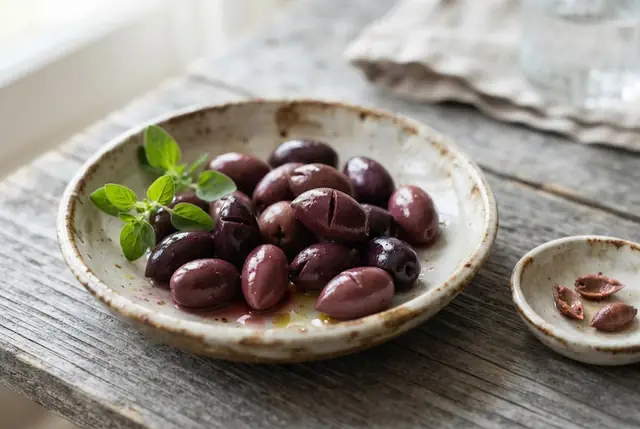
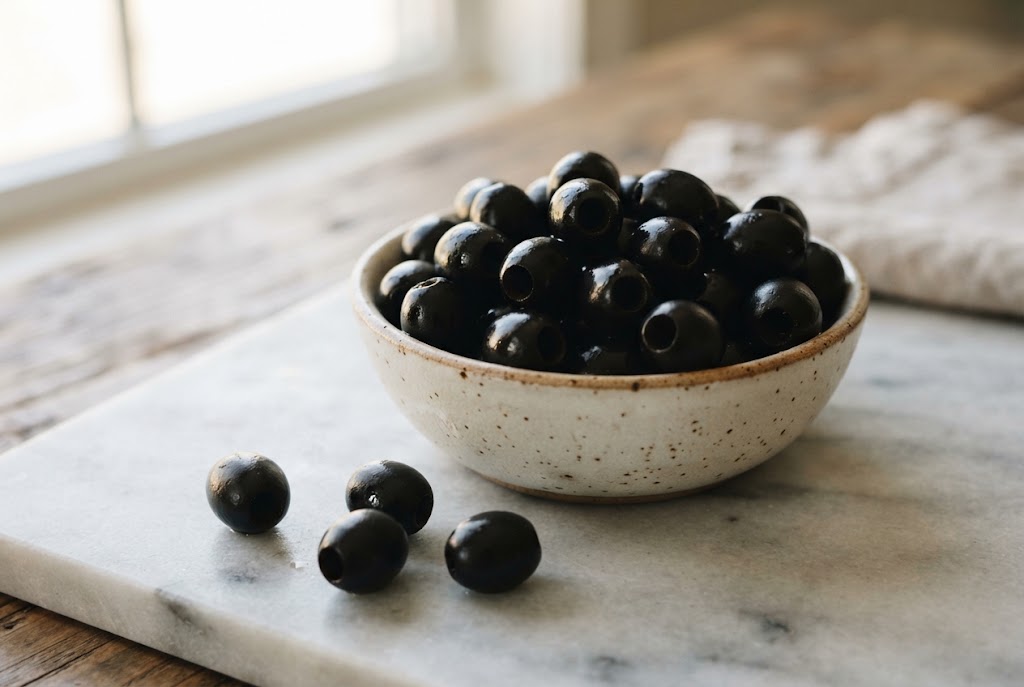
The pitted black olives from the can, the ones every kid has worn on their fingers at Thanksgiving. They're mild, soft and buttery, with almost none of the bitterness or salt of a Greek olive. Put them out for the holiday relish tray crowd, and set a kalamata beside them for the olive lovers.
What it is
These are California-style ripe olives, mostly the Manzanilla variety, and much of the US supply is grown in California's Central Valley. The process was developed by Freda Ehmann in the 1890s. Despite the name, they're picked green, cured in a series of lye baths with air bubbled through the tanks, then canned. A little iron salt sets the color.
- Taste
- mild, buttery and only lightly salty
- Texture
- soft, tender and smooth, almost creamy
- Look
- uniformly jet-black, glossy and round, usually pitted
The color and mildness come from fast oxidation. Lye breaks down the bitter compound oleuropein in hours instead of the months a natural brine takes. Bubbling air through the tanks oxidizes the olive's phenolic compounds, which turn dark, and ferrous gluconate binds to them to fix the black. Canning and sterilizing give the soft texture.
What it pairs with — and why
| Pair it with | Why it works |
|---|---|
| Kalamata olives | Serve mild and bold side by side. Guests can choose. |
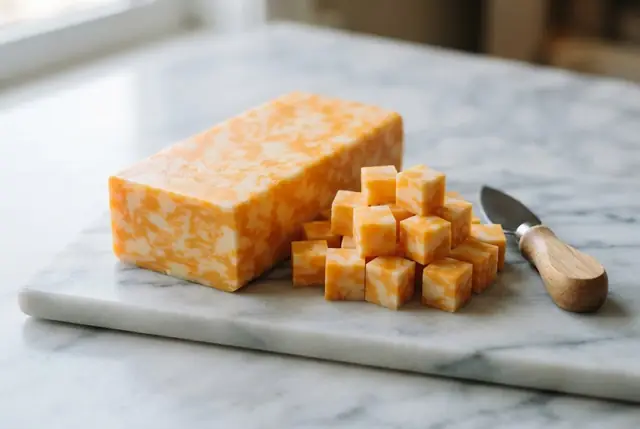
| Colby Jack or cheddar cubes | Mild cheese and mild olive for a kid-friendly corner. |
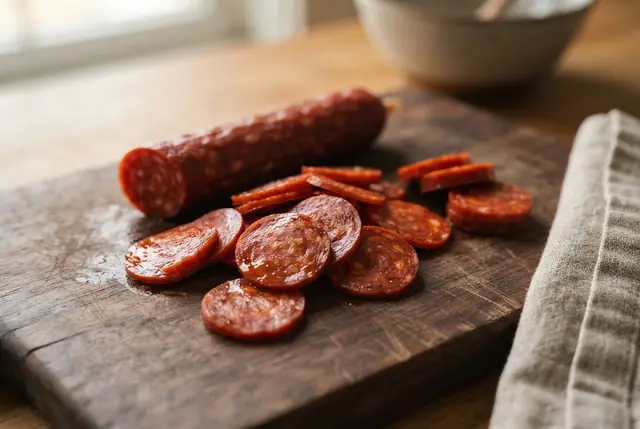
| Pepperoni | Pizza toppings on a board. |
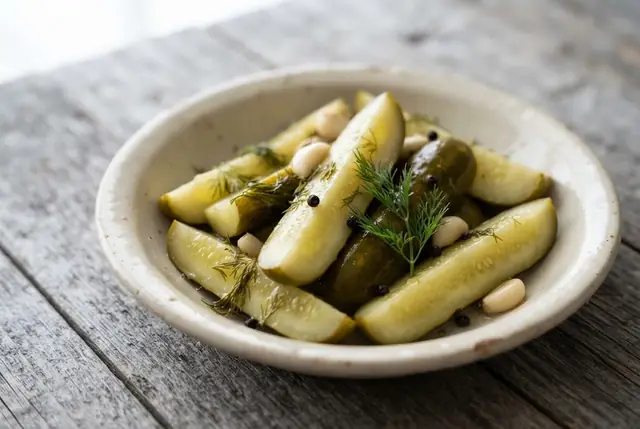
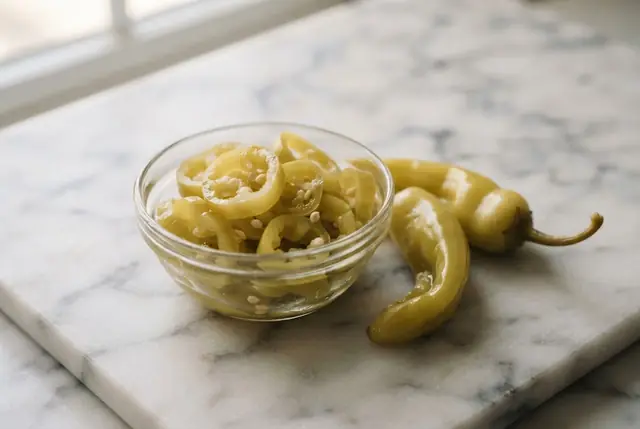
| Dill pickles and banana peppers | A classic American relish tray. |
| Cream cheese | Stir chopped olives into it for a retro spread. |
| Lager or a light red | Easy, crisp drinks. |
Skip it with: dessert items. Even mild olives taste odd next to chocolate and caramel.
How to prep it for the board
- Drain them well and pat dry so the brine doesn't spread.
- Serve them in a small bowl; they roll off a flat board.
- Serve 4 to 5 olives per person.
- Toss them with a little olive oil, lemon zest and chili flakes to make them taste homemade.
- Keep a few on the side for kids to put on their fingertips. It's tradition.
- Fix: if they taste of the can, rinse them and soak 10 minutes in cold water with a pinch of salt.
What to buy
| Product | Where | Notes |
|---|---|---|
| Lindsay Large Pitted Ripe Olives | Most grocery stores | The classic can. |
| Early California Ripe Olives | Most grocery stores | Widely sold, consistent. |
| Pearls (Musco Family Olive Co.) Black Ripe Olives | Most grocery stores | California-grown, also in no-drain cups. |
| Store brand ripe olives | Kroger, Walmart, Aldi | Fine for a board. |
| Kalamata olives | Olive bar, jarred | The bold Greek olive. See its own page. |
Ranked picks: our top-rated board olive is Mezzetta Castelvetrano, and the best value is Trader Joe's Organic Olive Trio. See the full ranking of the best olives for charcuterie.
Label check: "California ripe olives" means the mild canned style. "Kalamata," "oil-cured" or "Niçoise" are naturally ripened black olives with much more flavor.
Quick FAQ
Why do canned black olives taste so mild?
They're picked green, cured quickly in a lye solution, and darkened with air instead of being fermented for months. That skips most of the bitter, salty, fermented flavor of Greek olives.
Are canned black olives really ripe?
No, despite the name ripe olives. They're picked green and turned black by oxidation during curing.
What is the ferrous gluconate in black olives?
An iron salt that fixes the black color so it doesn't fade. It's a safe, common food additive.
Are black olives good on a charcuterie board?
Yes, especially on kids', holiday and budget boards. Serve them next to a bolder olive like kalamata for contrast.
What size black olives should I buy?
Large or jumbo pitted olives look best on a board and fit nicely on a fingertip.