The short version
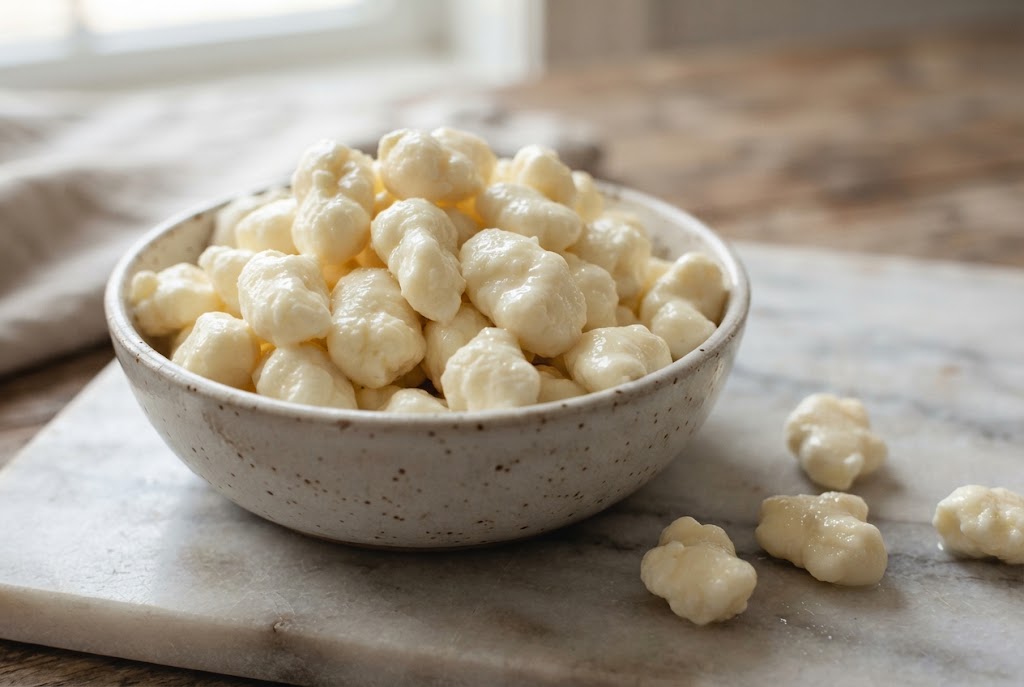
Fresh, bite-sized pieces of young cheddar, sold before the curd ever becomes a block. Mild, salty, milky and springy, and the fresh ones squeak against your teeth. They're the easiest cheese on any board: no cutting, no knife, and nobody needs to be told what they are in the Midwest.
What it is
Cheesemakers making cheddar cut the milled curd into pieces, salt them and press them into blocks to age. Cheese curds are those pieces, bagged and sold instead. Most are a day or two old. Ellsworth, Wisconsin, has been called the Cheese Curd Capital of Wisconsin since 1984, and the curds have spread everywhere from Costco to poutine shops.
- Taste
- mild, milky and salty, like the freshest cheddar you've had
- Texture
- springy, rubbery in a good way, and squeaky when fresh
- Look
- irregular white or orange nuggets about the size of a thumb
The squeak is protein. In fresh curd the casein strands are long and tightly linked by calcium, so they rub and squeak against tooth enamel. As days pass, acid from the cultures dissolves some of that calcium, the strands relax and the squeak fades. A few seconds of warmth tightens things up again, which is why the microwave trick works.
What it pairs with — and why
| Pair it with | Why it works |
|---|---|
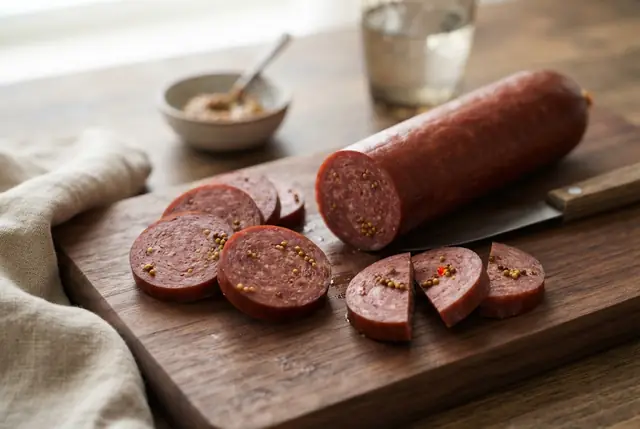
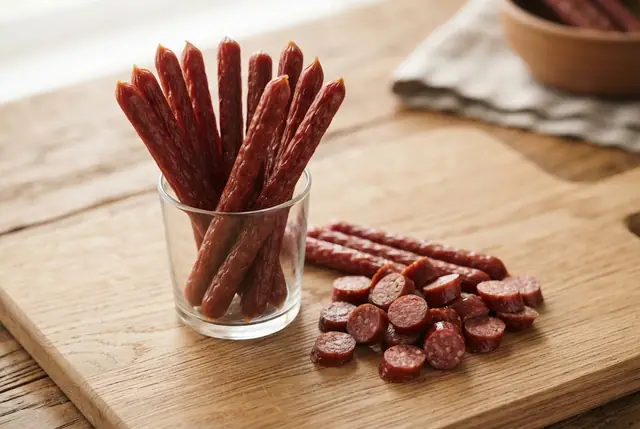
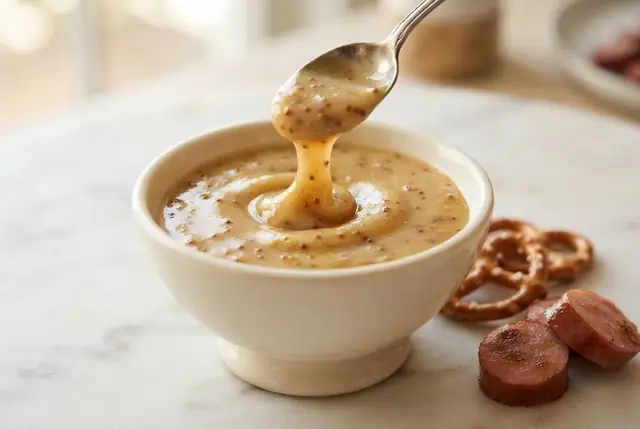
| Summer sausage or meat sticks | Smoky, tangy meat against mild, milky cheese. A Wisconsin tailgate staple. |
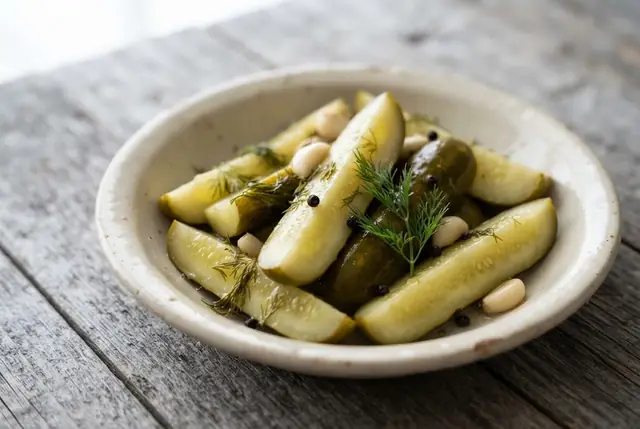
| Dill pickles | Sour crunch cuts the richness. |
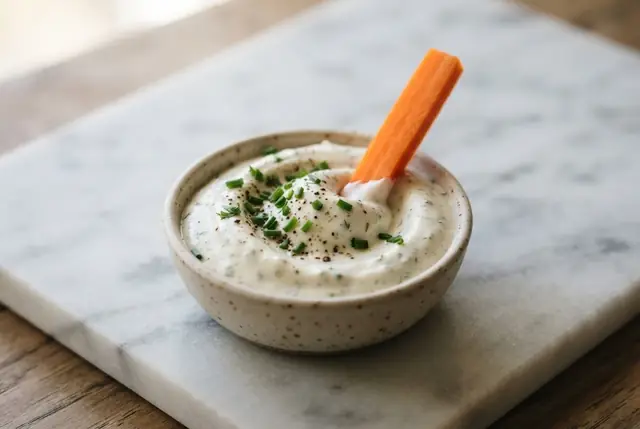
| Ranch dip or honey mustard | Curds are built for dipping. |
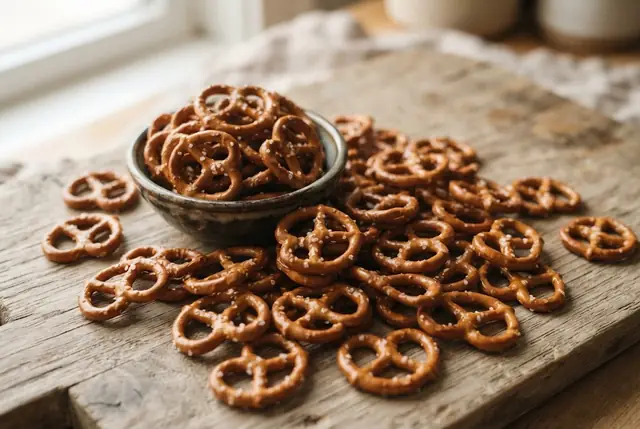
| Mini pretzels | Salt and crunch next to springy and soft. |
| Pepper jelly | Sweet heat on a bland, salty bite. |
| Spotted Cow, a pilsner or a lager | Cold, crisp beer is the traditional partner. |
Skip it with: other mild fresh cheeses like fresh mozzarella. They taste too alike. Put curds next to something with age or smoke instead.
How to prep it for the board
- Buy them close to party day. Fresh curds squeak; week-old curds don't.
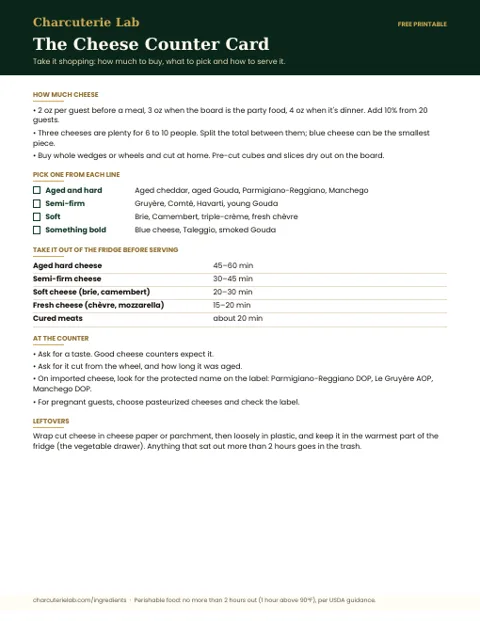
- Let them sit out 30 minutes. Cold curds are rubbery and quiet.
- Warm them 5 to 10 seconds in the microwave right before serving if the squeak is gone.
- Serve about 1.5 oz per person.
- Pile them in a bowl or a loose heap. Their shape is the charm.
- Fix: if they've gone oily from sitting near a heat source, chill them 10 minutes and they firm up.
What to buy
| Product | Where | Notes |
|---|---|---|
| Ellsworth Creamery Cheddar Curds | Costco, Midwest grocers, online | The best-known brand. Plain white or orange. |
| Henning's Cheese curds | Wisconsin grocers, online | Small family maker from Kiel, Wisconsin. |
| Local creamery curds | Farmers markets, cheese shops | Ask what day they were made. Same-day is ideal. |
| Store brand curds | Kroger, Meijer, Woodman's | Fine for a board, warm them first. |
| Flavored curds (garlic, ranch, cajun) | Midwest grocers | Fun on a game-day board; keep one plain bag too. |
Label check: look for a "made on" or "best by" date. The closer to production, the better the squeak.
Skip: breaded frozen curds for a cold board. Those are for frying, not snacking.
Quick FAQ
What are cheese curds?
Fresh pieces of cheddar curd, sold before they're pressed into a block and aged. They're usually a day or two old.
Why do cheese curds squeak?
Fresh curds have long, tightly bound protein strands that rub against your teeth. As the curds age, acid loosens the strands and the squeak fades.
How do you bring the squeak back?
Microwave a bowl of curds for 5 to 10 seconds. Warming loosens the fat and tightens the bite, and most curds up to two weeks old will squeak again.
Do cheese curds need to be refrigerated?
For storage, yes. Wisconsin purists keep same-day curds at room temperature for the squeak, but anything older belongs in the fridge.
What goes with cheese curds on a board?
Summer sausage, meat sticks, dill pickles, pretzels and ranch or honey mustard for dipping.