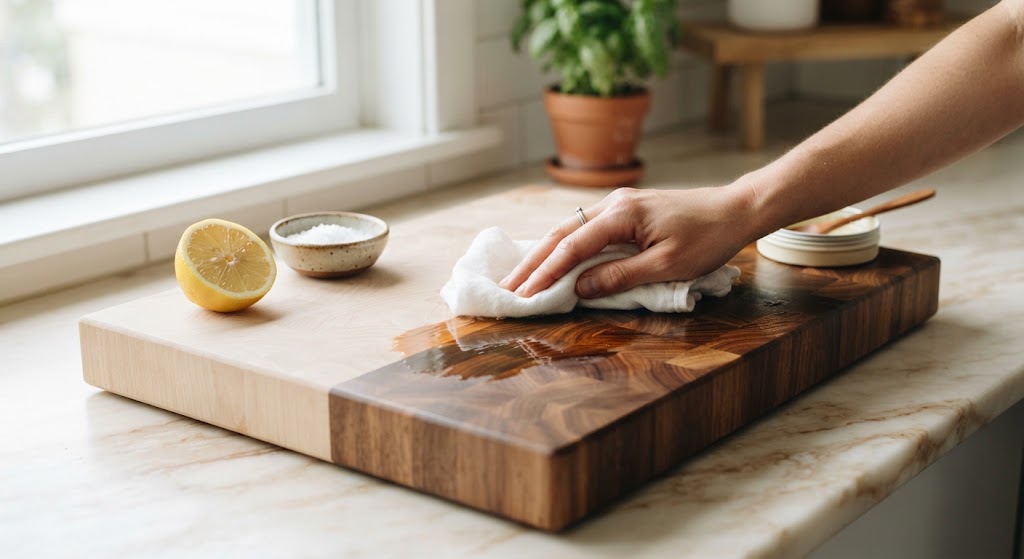
Quick Answer: Wash by hand with warm water and mild soap, dry it standing on edge, and oil it monthly with food-grade mineral oil or board cream. Never soak it or put it in the dishwasher. Salt and lemon remove smells; fine sandpaper fixes stains and rough spots.
Board care in four rules
Wash
Warm water, mild soap, quick rinseBoth sides, even if you only used one.
Dry
Towel, then stand it on edgeAir on both faces keeps it from warping.
Oil
Mineral oil or board cream, monthlyNever olive or vegetable oil.
Never
Dishwasher or soakingThe fastest way to crack a board.
Got a new board for the holidays, or noticed yours looking dry and gray? A good wooden board can last decades with about five minutes of care a month.
Building your first board? Classic Board Blueprint v2 $4 · printable PDF
How to clean it after every use
- Scrape off food with a bench scraper or the back of a knife.
- Wash both sides with warm water, a soft sponge and a small amount of mild dish soap. Wash both sides even if you used one, so the wood stays evenly moist.
- Rinse quickly. Don't hold it under running water for long.
- Towel dry right away.
- Stand it on its edge to finish drying, so air reaches both faces. Drying flat traps moisture on the bottom and is how boards warp.
Why it matters: wood swells when it absorbs water and shrinks as it dries. If one side gets wetter than the other, the board bends. If it soaks for a long time, glue joints loosen and the wood can split.
How to oil it
Oil fills the wood's pores so water, juice and fat can't soak in. A well-oiled board resists stains, smells and cracking.
What to use:
| Product | Use it? | Why |
|---|---|---|
| Food-grade mineral oil | Yes | Never goes rancid, cheap, sold as cutting board oil |
| Board cream (mineral oil plus beeswax) | Yes | The wax adds a water-resistant layer and a soft sheen |
| Fractionated coconut oil | Okay | Stays liquid and resists rancidity, but costs more |
| Olive, vegetable, canola or regular coconut oil | No | Goes rancid in the wood: sticky surface, sour smell |
| Furniture polish or wood finishes | No | Not food safe |
How to oil:
- Start with a clean, completely dry board.
- Pour a tablespoon or so of oil on the surface and rub it in with a soft cloth or paper towel, following the grain. Do all sides and edges.
- Let it soak in for at least a few hours, ideally overnight.
- Wipe off the excess so it isn't greasy.
- Optional: finish with a thin layer of board cream and buff it.
How often: about once a month with regular use, or anytime the wood looks pale or chalky. The water test: sprinkle a few drops of water on the board. If they bead up, you're fine. If they soak in, oil it.
Seasoning a brand-new board
New boards are often thirsty, even if they arrived "pre-oiled." Before first use, oil the board, let it soak in for a few hours, and repeat 3 or 4 times over a day or two until the wood stops absorbing it quickly. Then wipe off the excess and finish with board cream. It's a little work up front, and the board will stain far less afterward.
Stains, smells and rough spots
| Problem | Fix |
|---|---|
| Garlic, onion or cheese smell | Coarse salt and half a lemon: scrub, wait 5 minutes, rinse, dry, oil |
| Stubborn smell | Paste of baking soda and water; same method |
| Disinfecting | Wipe with undiluted white vinegar, let it sit a few minutes, rinse and dry |
| Light stains (wine, beet, berry) | Salt and lemon, or baking soda paste |
| Deep stains, knife marks, rough or fuzzy grain | Sand lightly with fine sandpaper (about 220 grit), following the grain, then oil well |
| Mild warp | Lay it flat, slightly damp on the concave side, with a weight on top for a day. Severe warps are permanent |
The mistakes that ruin boards
- The dishwasher. Heat and long soaking can warp, split and unglue a board in a single cycle.
- Soaking it in the sink. Same problem, slower.
- Cooking oil. Turns rancid inside the wood.
- Bleach. Dries and discolors the wood. Vinegar is gentler.
- Storing it wet or in a hot spot. Next to the stove or dishwasher vent, the board dries unevenly and cracks.
- Skipping oil for months. Dry wood cracks, especially in winter when indoor air is dry.
Raw meat? Charcuterie is ready to eat, so a charcuterie board doesn't face the same risks as a cutting board used for raw chicken. If you ever cut raw meat on it, wash it right away with hot soapy water and wipe it with vinegar.
Marble, slate and other boards
- Marble. Stays naturally cool, which is great for cheese. But acids like lemon juice, vinegar and wine can etch the surface, leaving dull spots. Wipe spills quickly, wash with mild soap, and skip the salt-and-lemon trick.
- Slate. Looks dramatic, but scratches easily. Wash by hand and rub in a little mineral oil to deepen the color. Use soapstone chalk to label cheeses right on the board.
- Bamboo. Care for it like wood: hand wash, dry on edge, oil monthly.
- Acacia, walnut, olive wood. Same routine. Darker woods hide stains better; light woods like maple show them more.
Shopping for a new one? See the best charcuterie boards and what size board you need.
Get weekly board ideas in the Charcuterie Lab Report newsletter.
FAQ
How do you clean a wooden charcuterie board?
Scrape off food, wash both sides with warm water and a little mild dish soap, rinse quickly, and towel dry. Then stand the board on its edge to air dry completely. Never soak it or put it in the dishwasher, which can warp and crack the wood.
What oil should I use on a charcuterie board?
Food-grade mineral oil, or a board cream made from mineral oil and beeswax. Avoid olive, vegetable and other cooking oils, which can turn rancid in the wood and leave a sticky, sour-smelling surface.
How often should you oil a charcuterie board?
About once a month with regular use, or whenever the wood looks pale, dry or chalky. A quick test: sprinkle a few drops of water on the board. If they bead up, the board is fine. If they soak in, it's time to oil.
How do you get a smell out of a wooden board?
Sprinkle coarse salt over the board, scrub with half a lemon, let it sit for five minutes, then rinse, dry and oil. For stubborn smells, a paste of baking soda and water works the same way, and a wipe with white vinegar helps disinfect.
Can you use a marble or slate board for charcuterie?
Yes. Marble stays cool, which is great for cheese, but acids like lemon juice, vinegar and wine can etch it, so wipe spills quickly. Slate scratches easily and looks best with a light coat of mineral oil. Wash both by hand with mild soap.