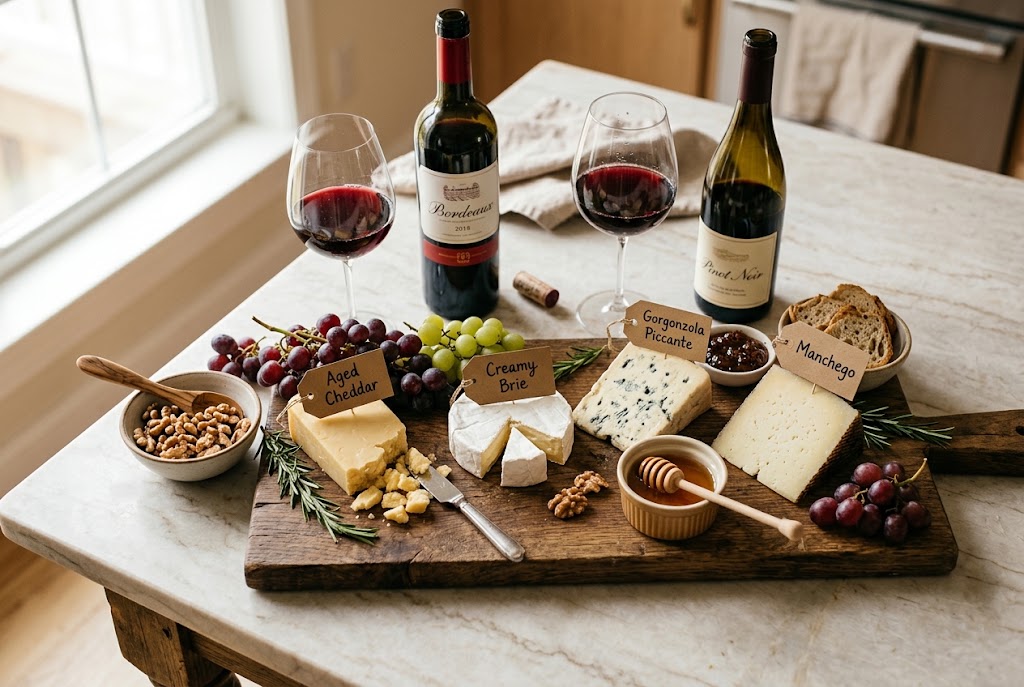
Charcuterie Board with Wine and Cheese
Quick Answer: Build the charcuterie board around the wine, not the other way around. Choose your wine first, then select cheese and meat that work with it. Light red (Pinot Noir) → aged gouda, manchego, mild salami. Sparkling → triple-crème, prosciutto, Parmigiano. Crisp white → Gruyère, coppa, fresh chèvre. Full red → aged hard cheese only. The wine-first approach integrates the board before you start shopping.
The Wine-First Principle
The single most important decision in building a wine and cheese charcuterie board is choosing the wine before buying any food.
Most people do it backwards: they build a board they like and hope the wine will pair. This works occasionally but fails regularly because the cheese and meat selection wasn't built with the wine's specific flavor and structural characteristics in mind.
The wine-first approach: choose the bottle, identify its key characteristics (tannin level, acidity, body, flavor profile), then select cheese and meat that align with those characteristics. The board becomes integrated rather than assembled.
Building Around Sparkling Wine
Why sparkling wine is the most forgiving pairing: Three mechanisms work simultaneously. Carbonation physically scrubs fat from the palate between sips — each sip resets the palate more completely than still wine. High natural acidity (Champagne averages pH 2.9–3.2) cuts through fat at the molecular level. The yeasty-brioche secondary fermentation notes in quality sparkling wine resonate with aged cheese and cured meat through shared Maillard reaction compounds.
Board for sparkling wine / Champagne:
- Cheese: triple-crème brie (Saint-André, Brillat-Savarin), Parmigiano-Reggiano aged 24+ months, aged manchego curado
- Meats: prosciutto di Parma, thin-sliced coppa
- Condiments: honeycomb, fig jam
- Crackers: neutral water crackers, thin flatbread
- Fruit: green grapes, pear slices, dried apricots
The triple-crème's high fat content is exactly what Champagne's carbonation and acidity is built to handle. Parmigiano's crystalline intensity resonates with the wine's complexity.
Building Around Light Red Wine
Light reds (Pinot Noir, Gamay/Beaujolais, Barbera d'Asti): These wines have high acidity and low-to-moderate tannins — the most board-friendly red wine profile. The acidity cuts fat without the tannin level that strips delicate meats.
Board for light red wine:
- Cheese: aged gouda (18+ months), aged manchego (semi-curado to curado), Gruyère Premier Cru
- Meats: prosciutto, coppa, mild salami (avoid heavily spiced options that fight the wine's fruit)
- Condiments: honey, fig jam, grainy mustard
- Crackers: water crackers, seeded crackers
- Fruit: Bosc pear, red grapes, dried cherries or cranberries
Aged gouda's caramel notes resonate with Pinot Noir's red fruit character. Gruyère's nuttiness complements Beaujolais's earthiness. Both work because their fat structures match the wine's moderate tannin level.
Building Around Crisp White Wine
Crisp whites (Albariño, dry Riesling, Chablis, Grüner Veltliner): These wines have high acidity and no tannins — they cut fat cleanly without any binding activity. The mineral and citrus notes in crisp whites resonate with herbal and delicate elements.
Board for crisp white wine:
- Cheese: Gruyère, Comté, aged Gouda (younger, 12 months), fresh chèvre log
- Meats: bresaola, coppa, prosciutto di Parma
- Condiments: Dijon mustard, herb-marinated olives, cornichons
- Crackers: water crackers, rosemary flatbread
- Fruit: Granny Smith apple slices, green grapes, cucumber rounds
Albariño's natural salinity resonates with the curing salt in prosciutto and bresaola. Dry Riesling's acidity cuts through Gruyère's fat with precision. The mineral quality in Chablis amplifies the saline element in aged cheeses.
Building Around Full Red Wine
Full-bodied reds (Cabernet Sauvignon, Barolo, Rioja Gran Reserva, aged Burgundy): These wines have high tannins and require the board to be built specifically around aged hard cheeses. The tannins bind to fat — in high-aged-cheese context, this softens both the wine and the cheese. In soft-cheese or delicate-meat context, it strips both.
Board for full red wine:
- Cheese: extra-sharp aged cheddar (24+ months), aged manchego viejo, Parmigiano-Reggiano, aged Pecorino Romano
- Meats: salami, soppressata — avoid prosciutto and bresaola (tannins strip the delicate fat)
- Condiments: fig jam, grainy mustard (no honey — it fights the tannins)
- Crackers: whole grain crackers, seeded flatbread
- Fruit: dried figs, fresh pear (in small amounts), walnuts
The crystalline protein structure of aged hard cheeses provides the binding sites for the wine's tannins. Without aged hard cheese to absorb the tannins, a full red creates harshness on the palate.
Setting Up a Wine and Cheese Tasting
When the board is intended as a structured pairing experience rather than casual grazing:
Label the clusters. A small note card or chalk label near each cheese-meat cluster indicating "Pairs with [wine]" guides guests through the intended pairings rather than leaving them to guess.
Sequence the board. Arrange from lightest to fullest: sparkling or white wine cluster at one end, light red in the middle, full red at the other end. Guests naturally progress through the board in intensity order.
Serve wines in separate glasses. One glass per wine per person keeps the pairing experiences distinct. Water between tastings — it cleanses the palate without interfering with the pairing the way bread does.
Start neutral. Begin the tasting with a water cracker and a neutral cheese before moving to pairings — it resets the palate for the first structured combination.
Building more boards? The Charcuterie Lab ebook covers 50 boards with wine pairing guides, exact quantities, and shopping lists for every occasion.
The Charcuterie Lab Takeaway
A wine and cheese charcuterie board is built wine-first. Sparkling covers the widest range. Light reds work with the most cheese types. Crisp whites pair with delicate meats and herbal cheeses. Full reds require aged hard cheese and cannot accommodate soft or fresh selections. Choose the wine, identify its characteristics, build the board around them.
FAQ
What is the best wine and cheese combination for a charcuterie board? Sparkling wine with triple-crème brie and prosciutto is the most reliable high-impact combination: carbonation cuts fat, high acidity contrasts richness, and brioche notes resonate with aged cheese. For red wine: Pinot Noir with aged gouda, manchego, and mild salami. For white: Chardonnay or Grüner Veltliner with Gruyère and coppa.
What cheese goes best with red wine? Light reds (Pinot Noir, Gamay) work with mild to semi-firm cheeses: aged gouda, aged manchego, young Gruyère. Full reds (Cabernet, Barolo) require aged hard cheeses with enough protein structure to absorb tannins: extra-sharp cheddar, Parmigiano-Reggiano, aged manchego viejo. Avoid pairing any red wine with soft fresh cheeses — tannins create a bitter-chalky sensation.
What cheese goes with white wine on a charcuterie board? Crisp whites (Albariño, Chablis, dry Riesling) work with semi-firm and fresh cheeses: Gruyère, Comté, fresh chèvre. Oaked Chardonnay pairs with richer, more complex semi-firm cheeses. Avoid pairing white wine with blue cheese — the wine lacks the tannin structure that blue cheese needs to be balanced. Use a sweet wine (Sauternes) with blue cheese instead.
How do you set up a wine and cheese tasting with a charcuterie board? Label each cheese-meat cluster with its intended wine pairing. Serve wines in separate glasses (one per wine per guest). Build the board so the lightest-wine cluster (sparkling or crisp white) is at one end and the fullest-bodied-wine cluster (aged hard cheese + full red) is at the other. Guests progress through the board as they progress through the wines.
How much wine do you need for a wine and cheese charcuterie board? One standard bottle (750ml) serves 4–5 people at standard tasting portions (2–3 oz per pour). For a tasting of three wines with 8 guests, you need three bottles total — one of each. For a single-wine pairing event, one bottle per 4 guests is standard. Include water between tastings — it helps clear the palate between wines without interfering with the cheese pairing.