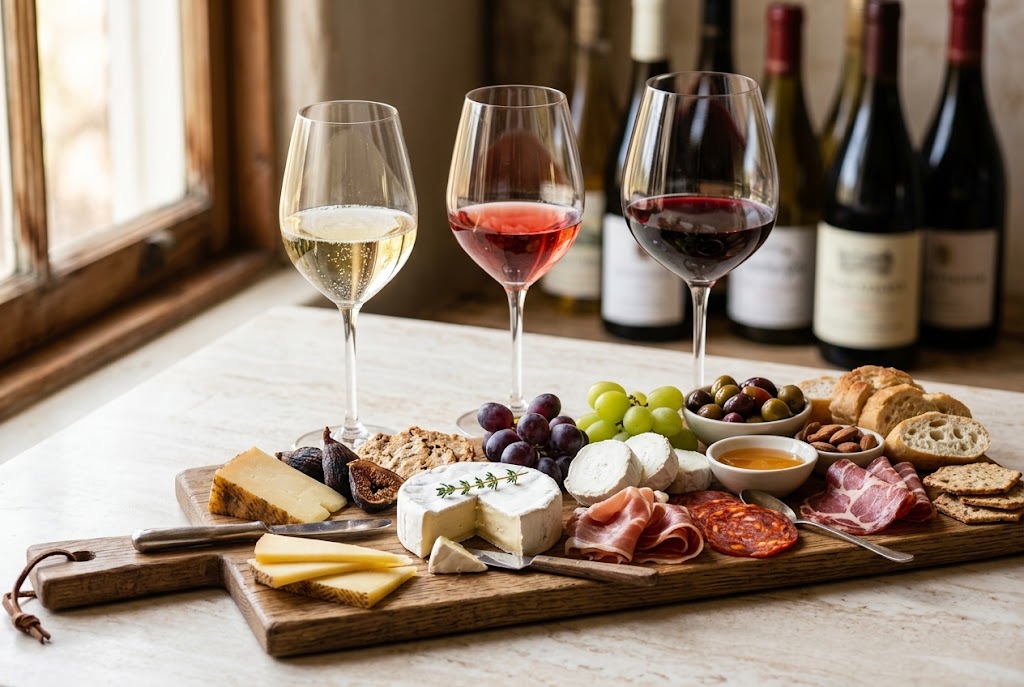
Wine Pairing for a Charcuterie Board
Quick Answer: Champagne or sparkling wine is the most versatile charcuterie board wine — carbonic acid cuts fat, and the acidity bridges cheese and cured meat equally. For still wine, a medium-bodied Pinot Noir is the safest red; a dry Chenin Blanc or Vermentino handles lighter boards. Match the wine's weight to the board's dominant flavor intensity.
The Three Axes of Charcuterie Board Wine Pairing
Pairing wine with a charcuterie board is not about finding one wine that works with everything — it's about understanding the three flavor axes the board presents:
Fat: Cured meats and most cheeses are fat-rich. Wine cuts fat through two mechanisms: acidity (which refreshes the palate) and tannins (which bind to fat and protein, clearing the mouth). High-fat boards need wines with at least one of these.
Salt: The cure in most charcuterie is predominantly salt. Salt amplifies flavor and lowers perception of bitterness in wine. Salty foods make tannic wines seem smoother and fruity wines seem more vivid. This is why salt-heavy boards can handle wines that might otherwise seem too bold.
Funk: Aged and washed-rind cheeses, blue cheeses, and heavily fermented meats introduce volatile aromatic compounds. Wines with their own complexity (yeast character, terroir notes, oxidative aging) pair better with funky boards than clean, fruit-forward styles.
Best Wines for Common Board Types
Mixed board (aged cheese + cured meat): Champagne or Crémant d'Alsace is the top choice. Carbonic acid cuts fat; low dosage balances salt; autolytic yeast notes (brioche, toast) resonate with fermented meat aromatics. This is the wine that works when you're not sure what else to choose.
Pinot Noir (Burgundy or lighter Californian) is the best still red — medium body, low tannin, bright cherry acidity that complements both aged cheese and cured meat without overpowering either.
Aged cheese-forward board (cheddar, gouda, manchego): Côtes du Rhône (Grenache/Syrah/Mourvèdre blend) or a California Zinfandel. Both provide fruit depth and moderate tannin that bind to hard-cheese fat. Cabernet Sauvignon works with aged cheddar specifically but can overpower softer cheeses.
Dry oloroso Sherry is the underused expert pick — its oxidative nutty notes resonate directly with aged cheese's Maillard compounds and the salt does something remarkable with the fortified wine's fruit. Serve at room temperature.
Fresh cheese-forward board (chèvre, brie, ricotta): Sancerre (Sauvignon Blanc) or Pouilly-Fumé. The Loire Valley's grassy, mineral whites match chèvre's lactic acidity and clean flavor. For brie and triple-crème, Champagne or a dry Crémant works best.
Cured meat-forward board (prosciutto, salami, coppa): Barbera d'Asti — high natural acidity without heavy tannin cuts through cured fat and doesn't compete with spice-cured flavors. Prosecco is the regional Italian pairing for prosciutto. Dry rosé from Provence handles the full range of cured meats.
Blue cheese board: Sauternes or a late-harvest Riesling. The logic is contrast: high sugar in the wine suppresses the blue's ammonia bitterness and the wine's acidity cleans the fat. Port is the alternative — it overwhelms the cheese intentionally in a way that works as a pairing even though the blue is technically lost.
Common Mistakes
Serving a heavily tannic red with fresh cheese. Tannins + lactic acid in fresh cheese = metallic, bitter finish. Avoid Barolo, Cabernet Sauvignon, and Nebbiolo with chèvre, ricotta, and mild brie.
Pairing bold reds with prosciutto. Prosciutto is delicate. A 14.5% Cabernet overwhelms it entirely. Go lighter and higher-acid.
Serving wine too warm (red) or too cold (white). Red wine served at room temperature in summer (20°C+) reads as flabby and alcoholic. Light reds like Pinot Noir are best at 14–16°C. Sparkling wine should never exceed 8°C. White wine served straight from a commercial refrigerator (4°C) suppresses all aroma — bring it to 10–12°C before serving.
Choosing only one wine. A diverse board benefits from two styles — one sparkling or white for lighter elements, one medium red for the aged and cured anchor.
Building more boards? The Charcuterie Lab ebook covers 50 boards with exact wine pairings, quantities, and the science behind every element.
The Charcuterie Lab Takeaway
Match wine weight to board intensity. When in doubt, sparkling wine covers the full board better than any single still wine. For a still red, go medium-bodied and high-acid rather than tannic. Serve temperatures matter: light reds at 14–16°C, whites and rosé at 10–12°C, sparkling at 6–8°C. And if you're running aged hard cheeses, try a dry oloroso Sherry — it's the underused pairing that consistently surprises.
FAQ
What wine goes best with a charcuterie board? For a mixed board, Champagne or sparkling wine is the most versatile choice — carbonic acid cuts fat, and the acidity works with both cheese and cured meat. For still wine, a medium-bodied red like Pinot Noir handles both aged cheese and cured meat without overwhelming. Avoid tannic reds with fresh or mild cheeses.
Does red or white wine go better with charcuterie? It depends on what's dominant on your board. Heavy cured meats and aged hard cheeses favor medium-bodied reds. Fresh cheeses, smoked salmon, and light boards favor whites and rosé. A sparkling wine covers both situations. The common mistake is defaulting to a full tannic red that overwhelms everything.
What wine pairs with prosciutto on a charcuterie board? Prosecco or Champagne is the classic pairing — the bubbles and acidity cut through prosciutto's fat and salt and the yeast notes in aged sparkling wine resonate with the cure. For still wine, a light Pinot Grigio or dry Vermentino works well. Avoid heavily oaked or tannic wines, which clash with prosciutto's delicacy.
What wine goes with aged cheddar on a charcuterie board? A full-bodied Cabernet Sauvignon or Côtes du Rhône works well with aged cheddar — the wine's tannins bind to the fat and the fruit notes provide contrast to the sharp, crystalline cheese. A dry hard cider is also an excellent non-wine option that pairs strongly with cheddar.
Can you serve both red and white wine with a charcuterie board? Yes, and it's often the best approach for a diverse board. One sparkling or white for the fish, fresh cheese, and delicate meat elements; one medium-bodied red for the aged cheeses and stronger cured meats. Keep the whites chilled and have them available as an option rather than serving only one style.