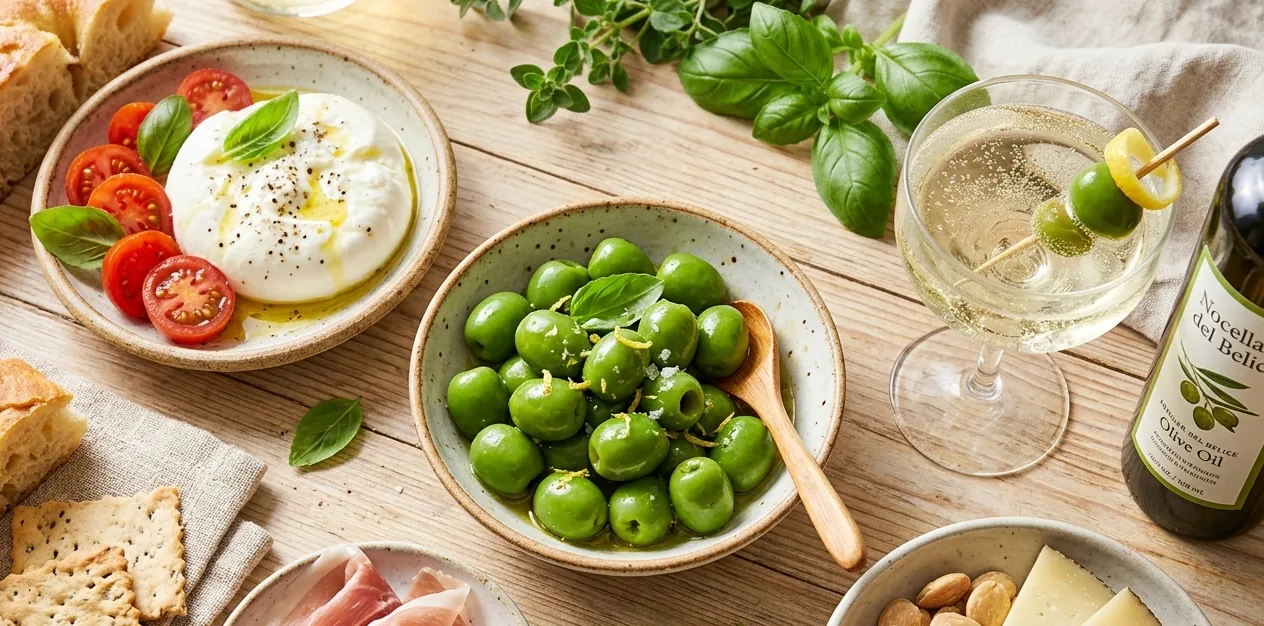
Castelvetrano Olives: The Ultimate Ingredient Deep Dive + Pairing Guide
Castelvetrano olives are the gateway olives - bright green, buttery, and mild enough to convert even olive skeptics. Unlike the briny, bitter olives many people grew up avoiding, Castelvetranos are sweet, meaty, and surprisingly approachable. They come from a single town in Sicily and have a flavor profile that's completely unique in the olive world.
In this deep dive, we'll explore what makes Castelvetrano olives special, how to pair them, and how to use them to build boards that feel fresh, vibrant, and irresistible.
What Are Castelvetrano Olives?
Castelvetrano olives (also called Nocellara del Belice) are bright green olives grown exclusively in the Belice Valley of Sicily, near the town of Castelvetrano. They're harvested young, which gives them their vibrant color and mild, buttery flavor. Unlike most olives, which are cured in brine for months, Castelvetranos are cured gently to preserve their natural sweetness and crisp texture.
Flavor profile:
- Mild and buttery
- Slightly sweet
- Crisp and meaty
- Almost no bitterness
- Fresh, clean finish
Texture:
- Firm and meaty
- Crisp bite, not mushy
- Smooth, thick flesh
- Large pits, easily removed
Castelvetranos are often called "the butter of olives" because of their rich, smooth texture and mild flavor. They're the opposite of sharp, briny kalamata olives.
How Castelvetrano Olives Are Made
Castelvetranos are harvested young and cured using a lye process followed by brining in lightly salted water. This gentle curing preserves their bright green color and sweet flavor.
The process: 1. Harvested young, still green 2. Treated with lye to remove bitterness 3. Rinsed thoroughly 4. Brined in lightly salted water 5. Sometimes finished with olive oil
What this process does:
- Removes harsh bitterness and keeps natural sweetness
- Preserves bright color and visual appeal
- Maintains firm texture and crisp bite
Flavor Profile & What Makes Them Unique
Mild & Approachable
Castelvetranos have almost no bitterness, making them perfect for people who think they don't like olives. They're sweet, buttery, and incredibly easy to eat.
Meaty Texture
The thick, firm flesh makes them satisfying and substantial. They don't get lost on a board - they hold their own.
Visual Pop
The bright green color adds freshness and visual interest to boards that might otherwise feel heavy or brown.
Best Pairings for Castelvetrano Olives
Cheeses
- Fresh mozzarella - mild meets mild, fresh pairing
- Burrata - creamy richness with olive's texture
- Manchego - nutty, firm cheese with buttery olive
- Aged cheddar - sharp cheese balanced by mild olive
- Feta - salty, tangy cheese with sweet olive
Meats
- Prosciutto - delicate, salty with mild, sweet
- Salami - rich fat balanced by fresh olive
- Mortadella - mild, fatty meat with crisp olive
- Bresaola - lean beef with buttery richness
Fruits & Vegetables
- Cherry tomatoes - fresh, acidic, Mediterranean pairing
- Roasted red peppers - sweet, smoky with mild olive
- Artichoke hearts - similar buttery quality
- Sun-dried tomatoes - concentrated sweetness
Crackers & Bread
- Focaccia - Italian pairing, oil-rich bread
- Plain crackers - neutral base for olives to shine
- Breadsticks - crisp texture contrast
Condiments
- Olive oil, high-quality - amplifies olive flavor
- Lemon zest - brightens and refreshes
- Fresh herbs like basil and oregano - Mediterranean harmony
Drinks
- Prosecco - bubbles and acidity refresh
- Vermouth - herbaceous, olive-forward
- Gin martini - classic olive pairing
- White wine like Vermentino or Pinot Grigio - crisp and light
Pairing Science: Why These Work
1. Mild + Bold
Castelvetranos' mildness balances strong flavors like aged cheddar, salty prosciutto, or funky cheeses. They provide relief without disappearing.
2. Buttery + Fresh
The buttery richness pairs beautifully with fresh, acidic elements like tomatoes, lemon, or white wine. The contrast keeps the pairing light.
3. Meaty + Creamy
The firm, meaty texture contrasts with creamy cheeses like burrata or fresh mozzarella, creating textural interest.
4. Mediterranean Harmony
Castelvetranos pair naturally with other Mediterranean ingredients like tomatoes, olive oil, basil, and mozzarella because they share similar flavor compounds.
Common Mistakes with Castelvetrano Olives
❌ Serving them straight from the fridge Cold olives have muted flavor. Fix: Let them sit at room temperature for 15 to 20 minutes.
❌ Drowning them in brine Too much brine makes them soggy and overly salty. Fix: Drain well and toss with olive oil before serving.
❌ Not warning guests about pits Castelvetranos usually have pits, which can surprise guests. Fix: Provide a small dish for pits or mention they're not pitted.
❌ Pairing only with other mild ingredients Castelvetranos can handle bold flavors. Fix: Try them with aged cheddar, spicy salami, or blue cheese.
How to Use Castelvetrano Olives on a Charcuterie Board
Best placement
- In a small dish, not scattered
- Near fresh cheeses and tomatoes
- As a color pop against brown meats
Best serving style
- Drained and tossed with olive oil
- Garnished with lemon zest or fresh herbs
- In a small bowl with a spoon or pick
Serving size: 1/2 to 3/4 cup for 6 to 8 people
Castelvetrano Board Idea: "The Mediterranean Fresh Board"
Ingredients
- Castelvetrano olives, in a small dish
- Fresh mozzarella or burrata
- Prosciutto
- Cherry tomatoes
- Roasted red peppers
- Fresh basil
- Focaccia bread
- High-quality olive oil, for drizzling
- Balsamic glaze
This board feels fresh, bright, and Mediterranean, anchored by those beautiful green olives.
FAQ
Do Castelvetrano olives have pits? Most do, yes. They're usually sold with pits intact to preserve texture and flavor.
Can you buy them pitted? Yes, but pitted versions often have softer texture. Whole olives with pits taste better.
What if I don't like olives? Castelvetranos are the best gateway olive, mild, buttery, and barely bitter. If you don't like these, you probably don't like olives.
How long do they last? Unopened: 1 to 2 years. Opened: 2 to 3 weeks in the fridge, kept submerged in brine or oil.
What's the difference between Castelvetrano and Nocellara del Belice? Same olive, different names. Nocellara del Belice is the olive variety; Castelvetrano refers to the town where they're grown.
Conclusion
Castelvetrano olives are a charcuterie board essential because they bring mild, buttery flavor, meaty texture, and vibrant color to any spread. They pair beautifully with fresh mozzarella, salty prosciutto, cherry tomatoes, and crisp white wine. Once you understand the science - mild + bold, buttery + fresh, Mediterranean harmony - building fresh, approachable boards becomes effortless.
Want more Ingredient Lab deep dives? Subscribe to the Charcuterie Lab newsletter for weekly pairing science, ingredient guides, and board ideas.